

White Sea Petroglyphs
70.7 km1.3k4
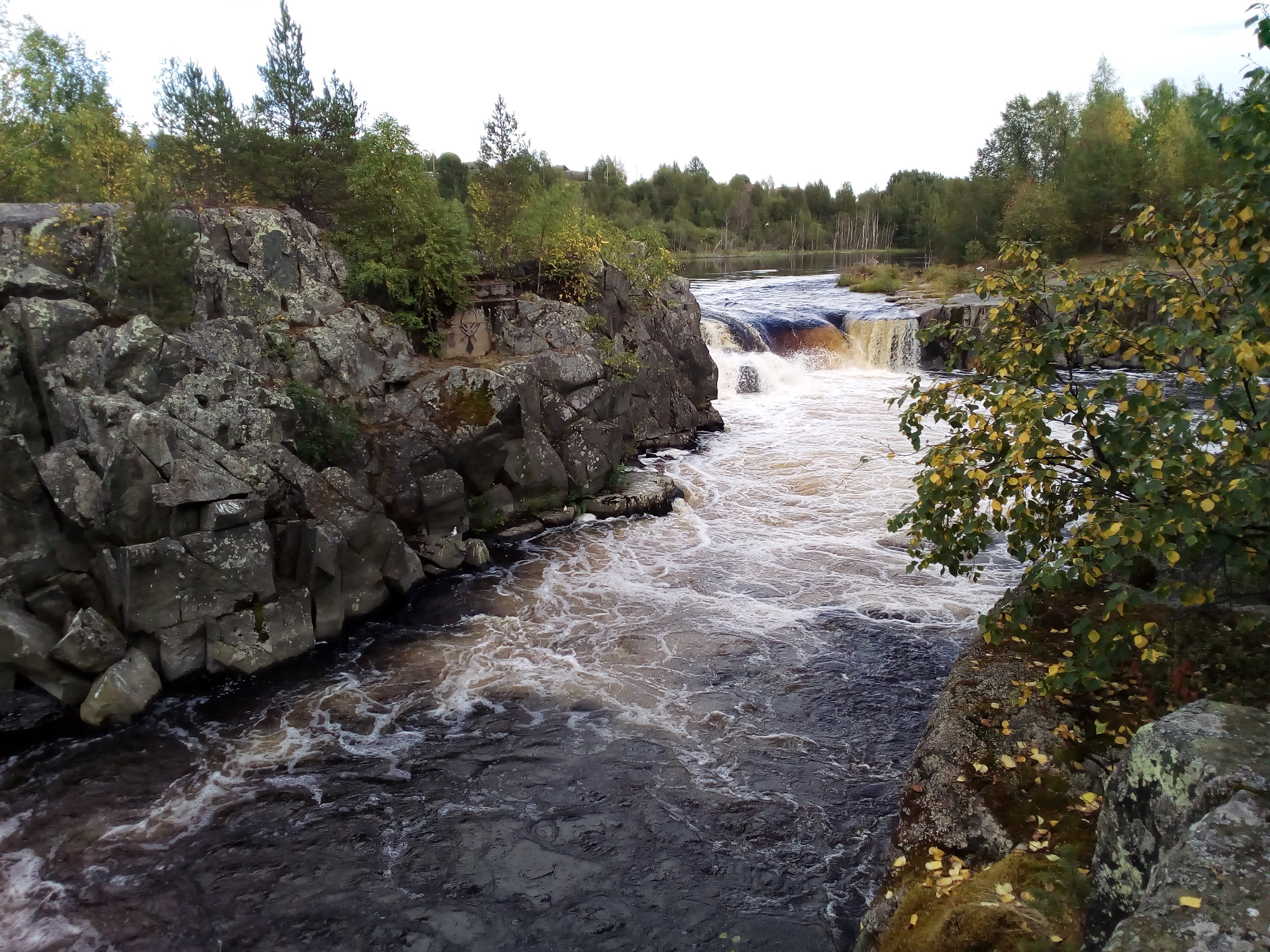
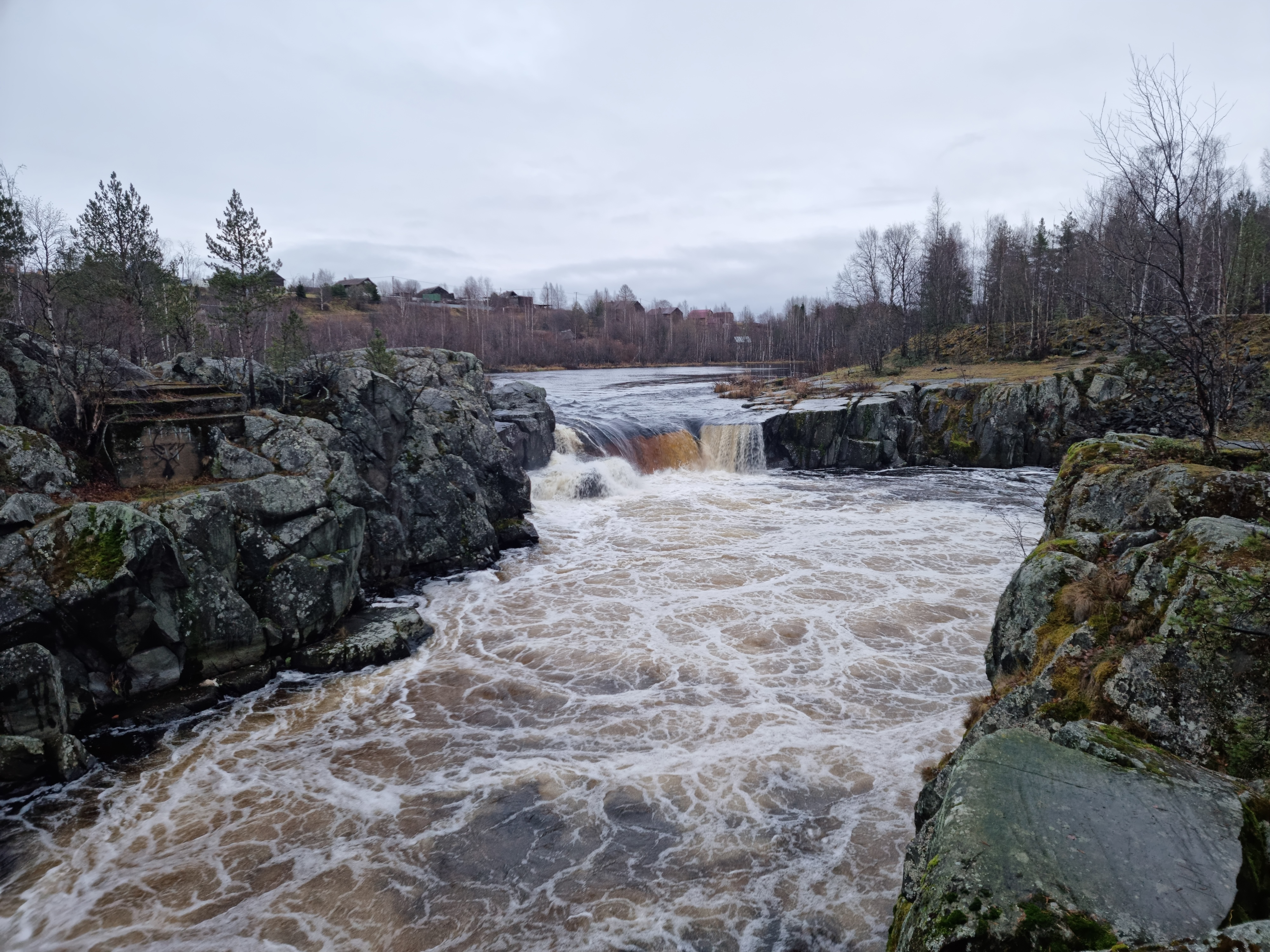
Voitsky Padun is a former waterfall on the Nizhny Vyg River where it flows out of Lake Vygozero, near the settlement of Nadvoitsy in the Segezha district of the Republic of Karelia. Until the 1930s it was one of the best-known waterfalls in Karelia, and in the 18th century the Voitsky mine next to it produced the first ore gold found in Russia. The White Sea–Baltic Canal took most of its water, but the rocky bed of the falls and the remains of the mine can still be seen.
Sources give the height of the drop as anywhere from 4 to 7 metres. Before 1933 the river split into three channels. The right one, Melnichny (Mill), was named after a mill on its bank and was used to pass floated timber. The middle one, Sredinnaya Pad or Yelovy, carried the most water. The left one, Bokovoy or Tolcheya, was the wildest; the mine's ore-crushing and washing mill stood on it.
The name Nadvoitsy is explained as "above the roar", the roar being the noise of falling water.
When the White Sea–Baltic Canal was built in 1933, the level of Vygozero was raised by more than 6 metres and the Vyg was sent along a new course through locks and dams. The waterfall as it had been disappeared. The Mill channel dried up, and the middle channel survived best. In early August 2024, after an accident on the canal, the falls almost completely ran dry.
A copper vein on the bank of the Vyg was found by a peasant, Taras Antonov, who reported it to Petrozavodsk in 1737. The mine worked on and off from 1742 to 1794. In November 1744 the first ore gold in the Russian Empire was found here, and by decree of Empress Elizabeth mining began for the treasury. The ore was crushed and washed at the mill by the left channel of the waterfall.
Over its life the mine produced more than 102 tonnes of copper and about 74 kilograms of gold. Work stopped in 1794, and the steam engine was taken to the St Petersburg Mint. Since 1998 the Voitsky copper mine has been a regional historical monument, and in 2000 a memorial to Russia's first gold mine was put up there. Today the mine is abandoned, with heaps of waste rock left on the site.
One legend says the remnants of the False Dmitry's army drowned in the falls in the 17th century; another tells the same of Polish noblemen. The poet Gavriil Derzhavin saw the waterfall at the end of the 18th century. Mikhail Prishvin described it in his travel sketches "In the Land of Unfrightened Birds" (1907): "A rumble, chaos! It is hard to collect one's thoughts." In 1911 it appeared in A. P. Nechaev's book "In the World of Spray and Foam". A street in Nadvoitsy is named after Prishvin.
From the Kola highway, coming from the south, turn off to Segezha and drive on to Nadvoitsy; coming from the north, take the turn straight to Nadvoitsy. The road runs through the settlement to Lock No. 10 of the White Sea–Baltic Canal, and the waterfall is about a kilometre beyond it: you can drive in summer and walk in winter. In winter the road is cleared but not gritted.
The high bank gives a view over the river, and the Vyg is fished for zander. Nearby are Lock No. 10 and the Church of the Entry into Jerusalem in Nadvoitsy, consecrated in 2017.
No votes yet



No reviews yet. The first one helps the next travellers.