 Religious building


Labyrinths of Zayatsky Island
0.4 km1.6k2

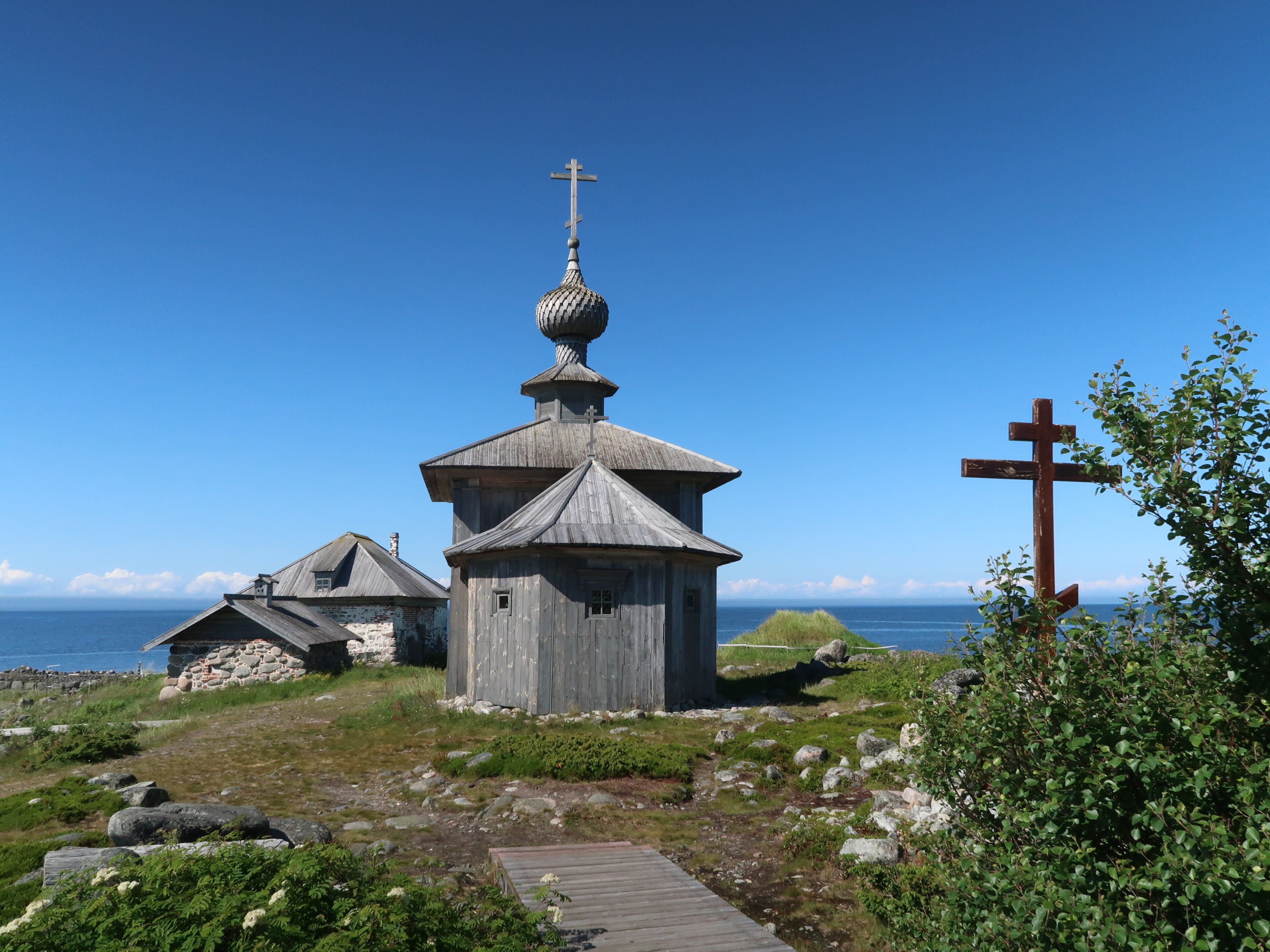
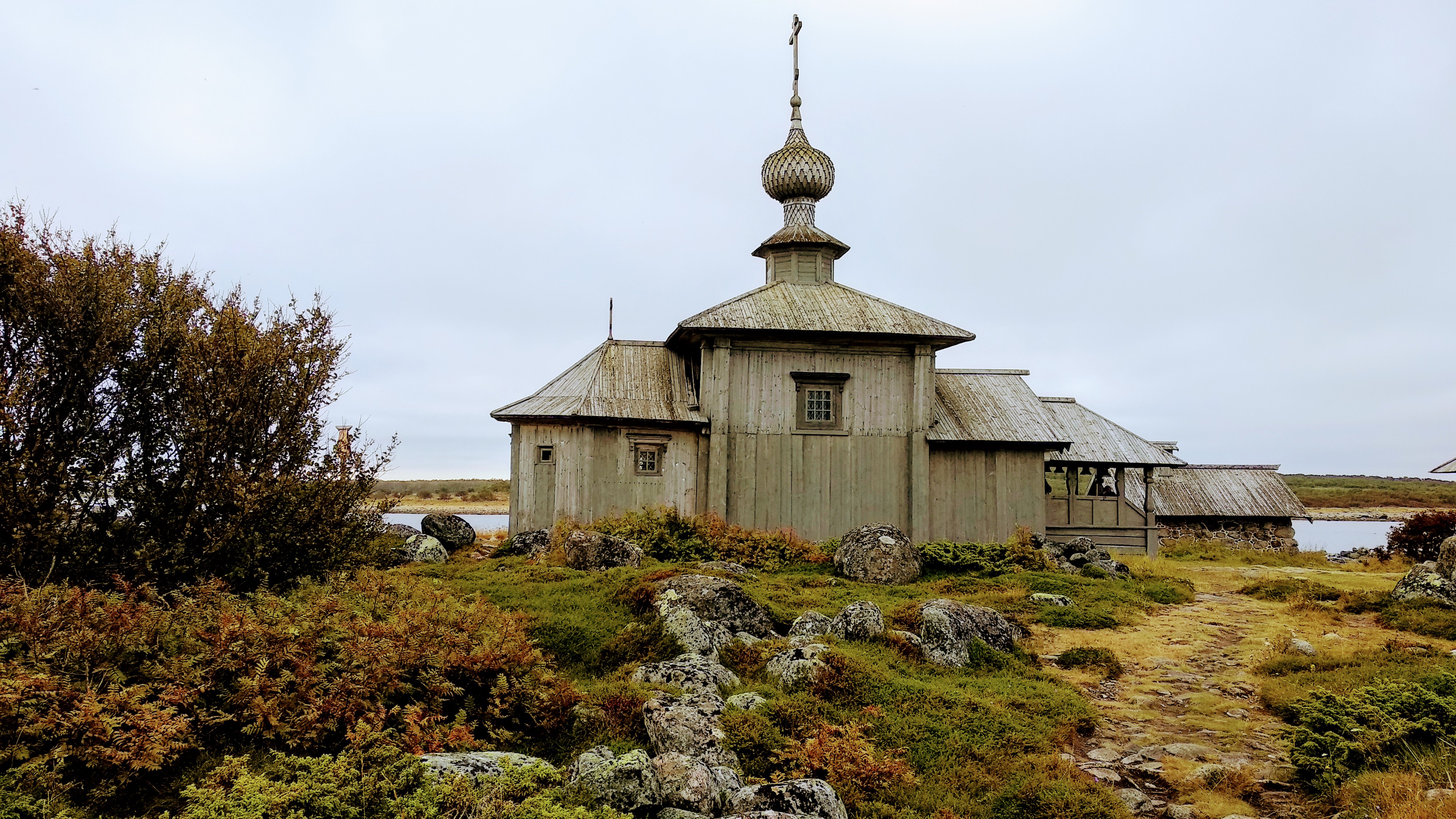

St. Andrew's Skete, also called St. Andrew's Hermitage, stands on Bolshoy Zayatsky Island in the Solovetsky archipelago, a few kilometres south-west of Bolshoy Solovetsky Island. The island is small, about 1.25 square kilometres. The skete's main building is the wooden Church of St. Andrew the First-Called, built in 1702 and one of the oldest surviving examples of wooden architecture in the Russian North.
The monks began to use the island in the mid-16th century under Abbot Philip, later Metropolitan of Moscow. He had a stone chamber, a kitchen and a small harbour built from boulders; the harbour is thought to be one of the oldest surviving in Russia. A wooden cross of that time asked every visitor to carry stones to the back of the harbour to shield it from the waves.
In 1691 a chapel built by the streltsy during the Solovetsky Uprising was moved to the island. In 1702, on his second visit to Solovki, Peter the Great ordered a church dedicated to St. Andrew, patron saint of the Russian navy. Tradition says the tsar worked on it himself, and the place is often linked to the story of the St. Andrew's naval ensign.
In the 18th century the skete served as the monastery's "customs post", inspecting incoming ships. During the Crimean War British sailors looted it. In the 1920s, under the Solovki prison camp, it housed a punishment cell for women, and afterwards the buildings were left to decay.
Services resumed in the 1990s, the restoration of the church was completed in 2009, and its iconostasis is now being recreated. The feast days are St. Andrew's Day (13 December) and the Synaxis of the Twelve Apostles (13 July).
The island is also home to one of the largest groups of prehistoric sanctuaries in northern Europe: more than ten stone labyrinths up to 25 metres across and hundreds of stone heaps, dated to the second and first millennia BC. What they were for is still debated.
The island can only be reached by boat on a guided tour from Solovetsky village during the summer season, and visitors must keep to the boardwalk trail.
No votes yet



No reviews yet. The first one helps the next travellers.