

Monument to Su-15 (Karelia)
49.6 km1.4k1
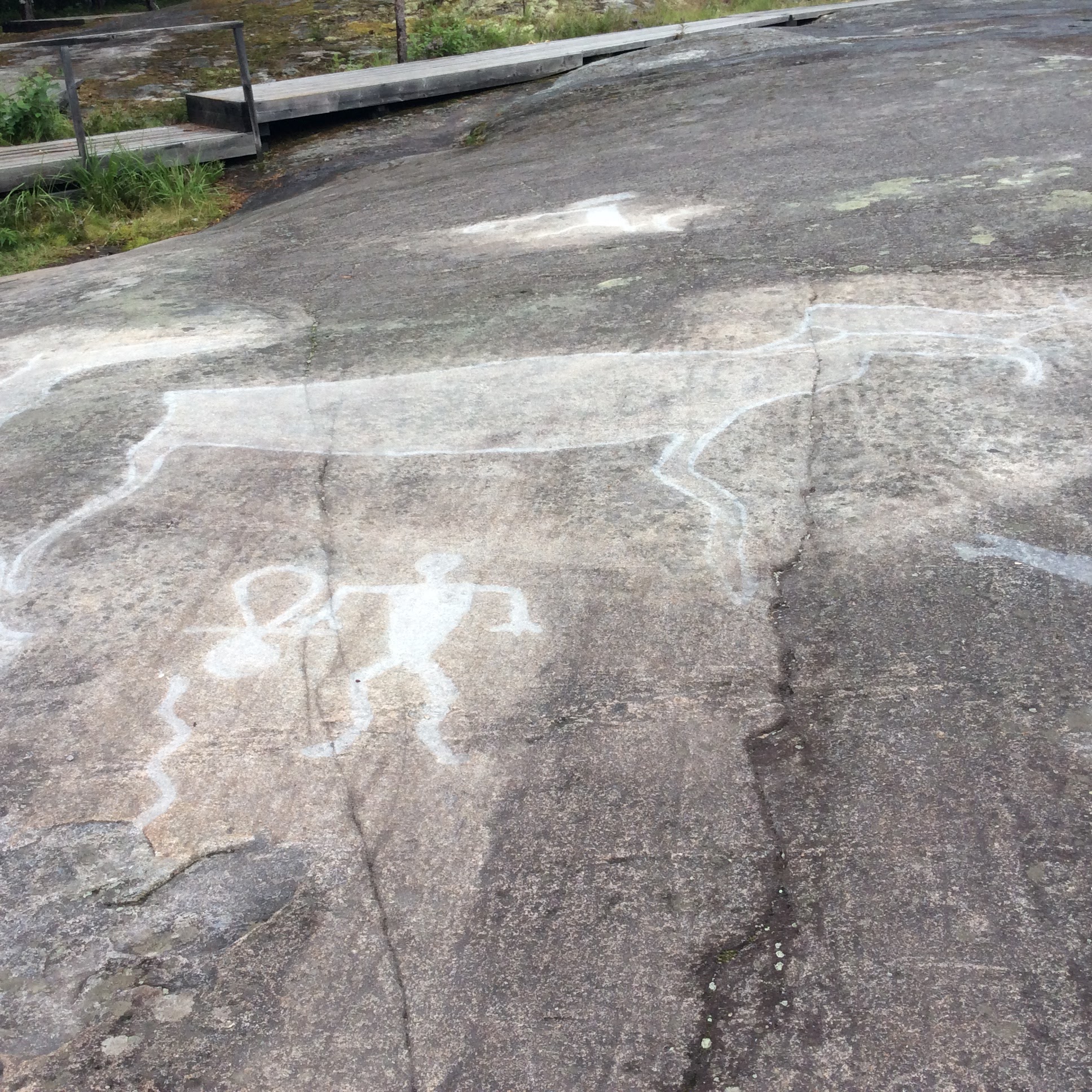
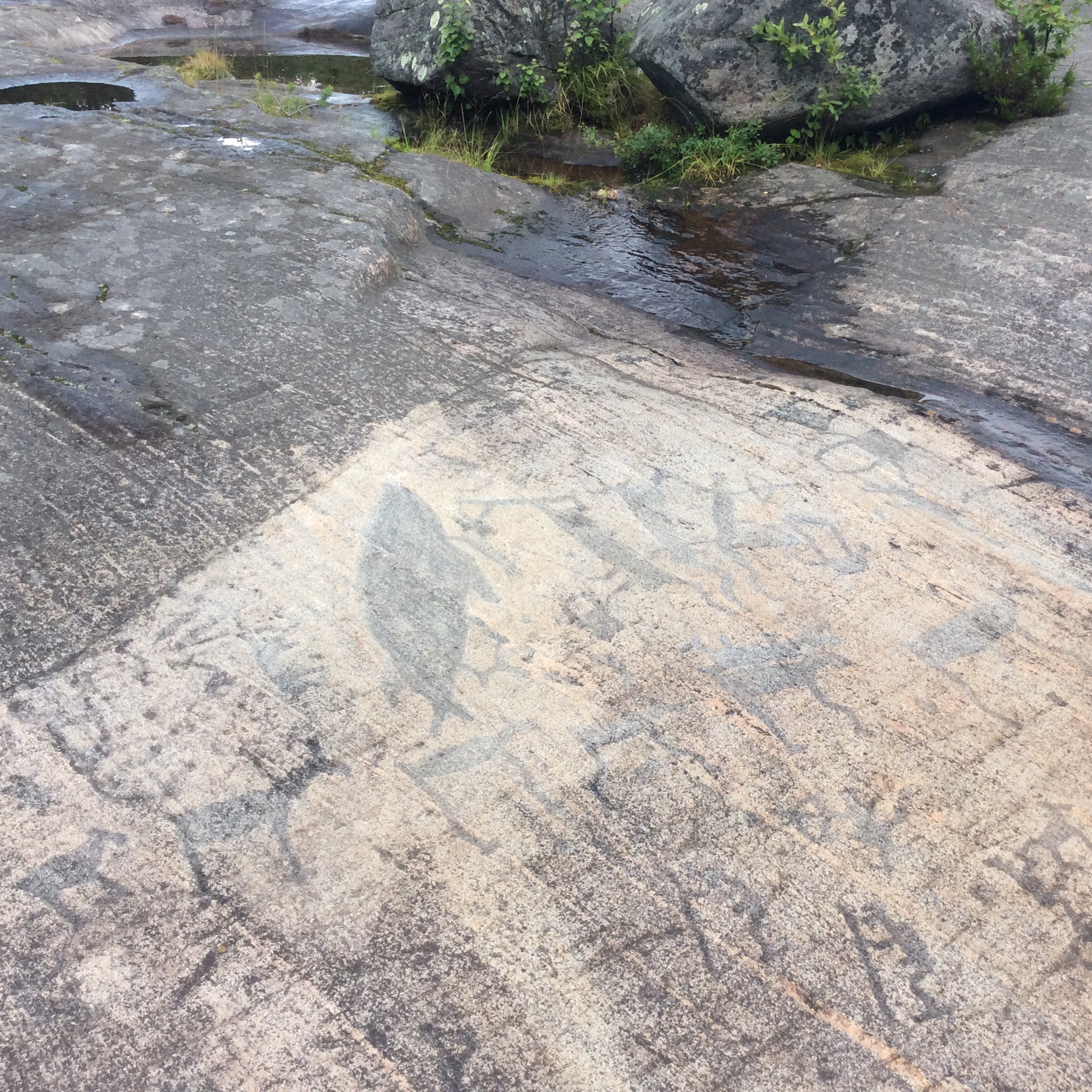
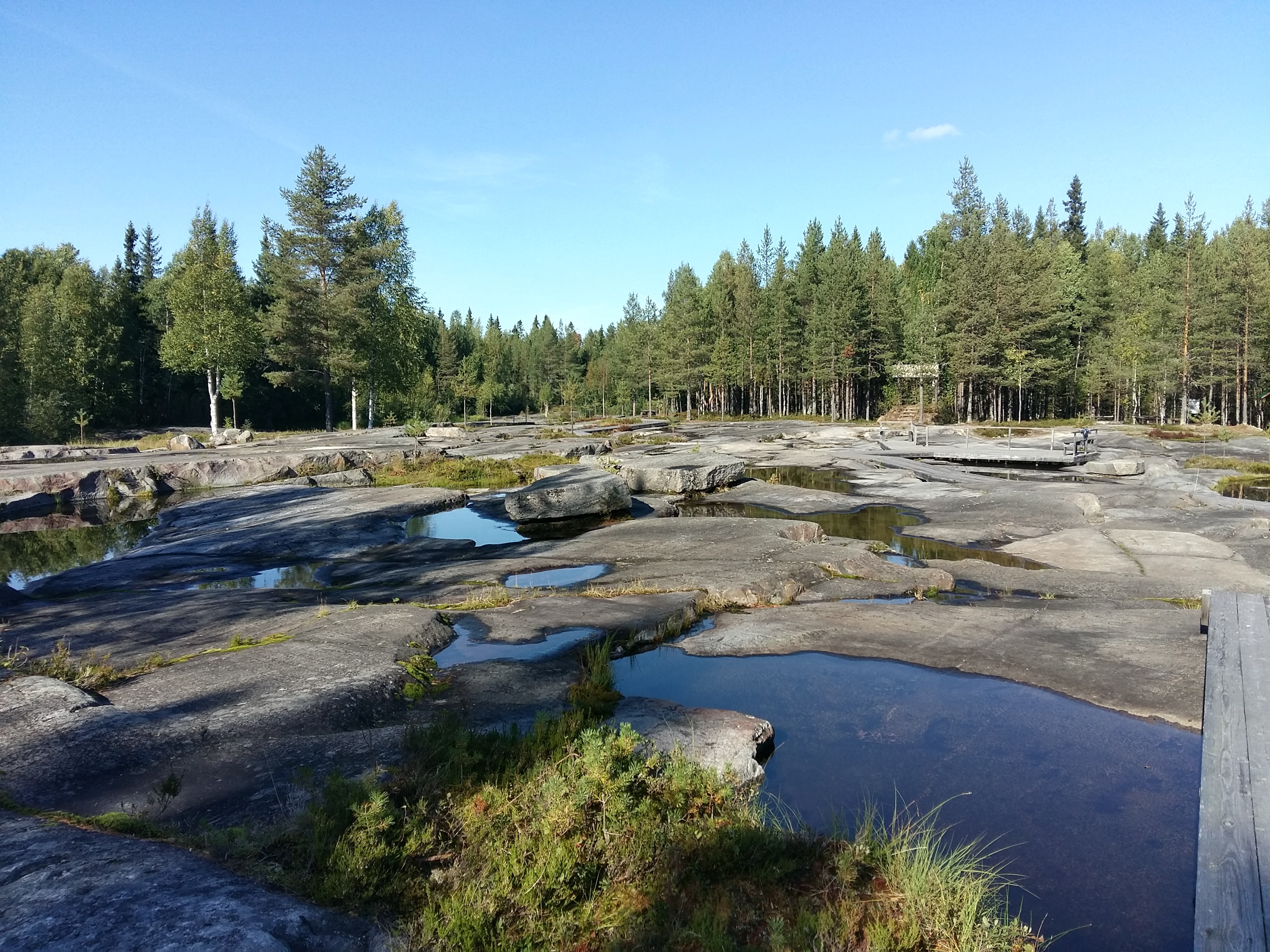
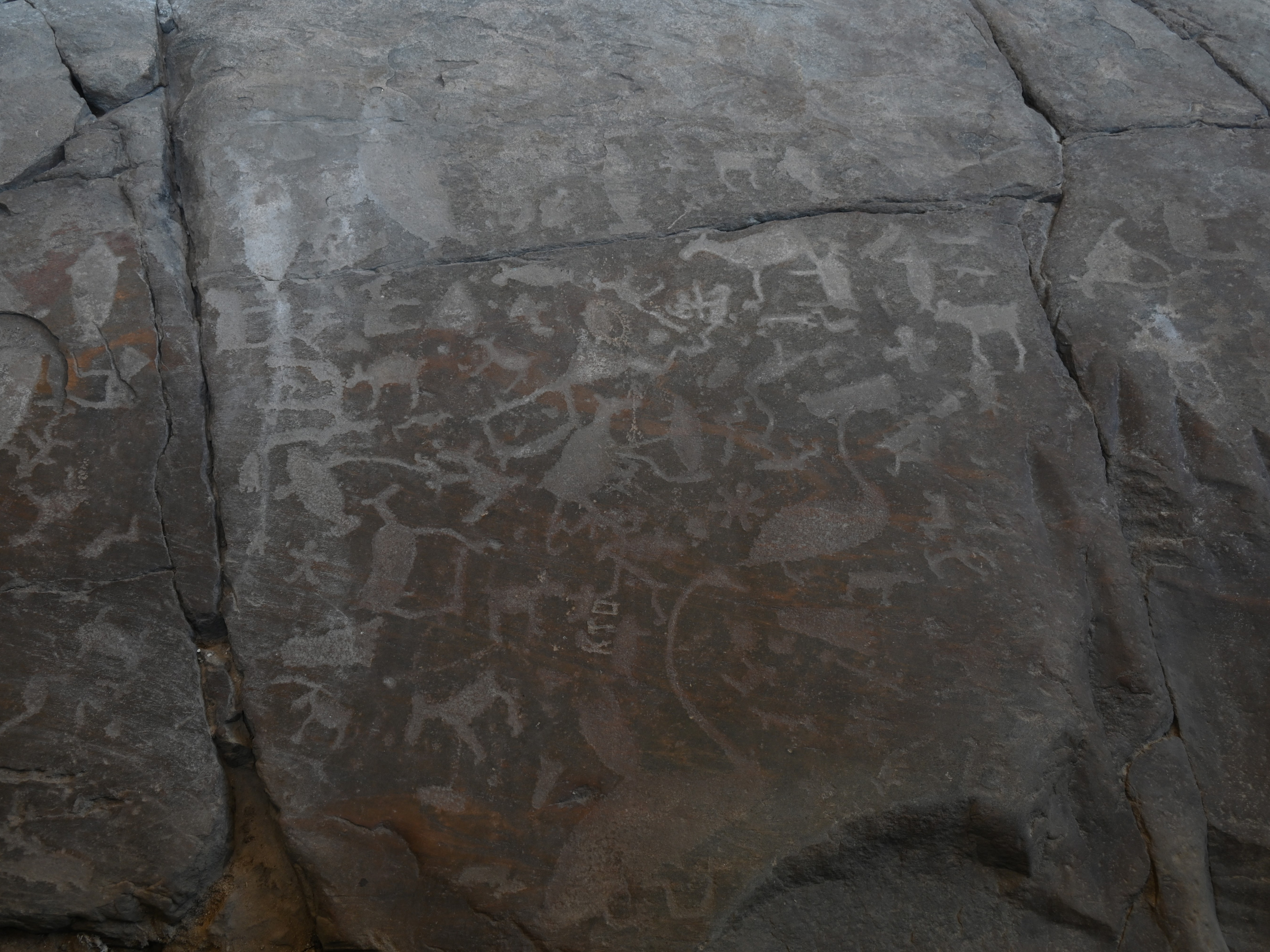
The White Sea Petroglyphs (Belomorskie petroglify) are a group of rock carvings on former islands in the lower reaches of the Vyg River, in the Belomorsky District of the Republic of Karelia, Russia. The images are pecked into gently sloping rocks 6–8 km from where the Vyg flows into the White Sea, next to the village of Vygostrov and not far from the town of Belomorsk. They are about 6,000 years old, dating to the 4th–3rd millennia BC. Since 2021 the White Sea petroglyphs have been a UNESCO World Heritage Site.
The archaeological complex brings together more than 2,000 figures in several clusters on the islands of Shoyrukshin, Erpin Pudas and smaller unnamed islets, along with more than 30 ancient settlement sites. The main groups are Besovy Sledki, Erpin Pudas, and Old and New Zalavruga. Zalavruga is called the largest gallery of rock art in European Russia; it lies about 1.5 km from Besovy Sledki.
The carvings show people, animals and birds, boats, tracks of animals and humans, and scenes of hunting, battles and ritual processions. Among them is the oldest known image of a skier in Europe. Most figures are 20–60 cm in size; the smallest are about 3 cm, the largest reach 3 m.
The Besovy Sledki ("Devil's Footprints") group is protected by a concrete pavilion. Its centrepiece is an almost metre-tall humanlike figure approached by a trail of eight bare footprints. The figure stands on one leg with the left arm raised and one eye closed. Scholars suggest it may be a shaman during a ritual or the spirit master of the place, and that the rock was used for sacrifices. A local belief says that if you touch the figure and make a wish, it will come true.
The first White Sea petroglyphs were described by the ethnographer Alexander Linevsky in 1926: on a rock at the northern tip of Shoyrukshin Island he found about 300 images. The group was named Besovy Sledki by analogy with Besov Nos on Lake Onega. In the late 1930s the carvings were studied by Vladislav Ravdonikas, and in 1936 the compact Zalavruga group was found. In 1963 archaeologists cleared New Zalavruga from under a layer of soil. Major discoveries here were made by the Karelian archaeologists Yuri Savvateev and Nadezhda Lobanova.
Excavations of the settlements yielded about 200,000 objects: stone tools, pottery fragments, iron items, and amber and bronze ornaments. In September 2019 an expedition from Petrozavodsk State University found a chain of three swan figures near Besovy Sledki. The complex was added to the UNESCO tentative list in 2018 and inscribed on the World Heritage List in July 2021.
The nearest railway station is Belomorsk, served by trains from St Petersburg and Moscow and by buses from Petrozavodsk. From the station it is about 10 km by taxi to the crossing over the Kisly Pudas channel, then about 1.2 km on foot. By car, take the Belomorsk – Vygostrov road to the "Belomorskie petroglify" sign and car park, from where a forest track leads 1.3–2 km to the carvings.
The Besovy Sledki pavilion fell into disrepair after the Soviet era and was closed for a time; it now works as a museum with an exhibition and a film. Visitors are advised to start there. Guided tours of 1.5–2 hours are run by the Belomorsk local history museum "Belomorskie petroglify" and are best booked in advance; admission is paid.
No votes yet


No reviews yet. The first one helps the next travellers.