

Ладожские шхеры
64.5 km2.2k1
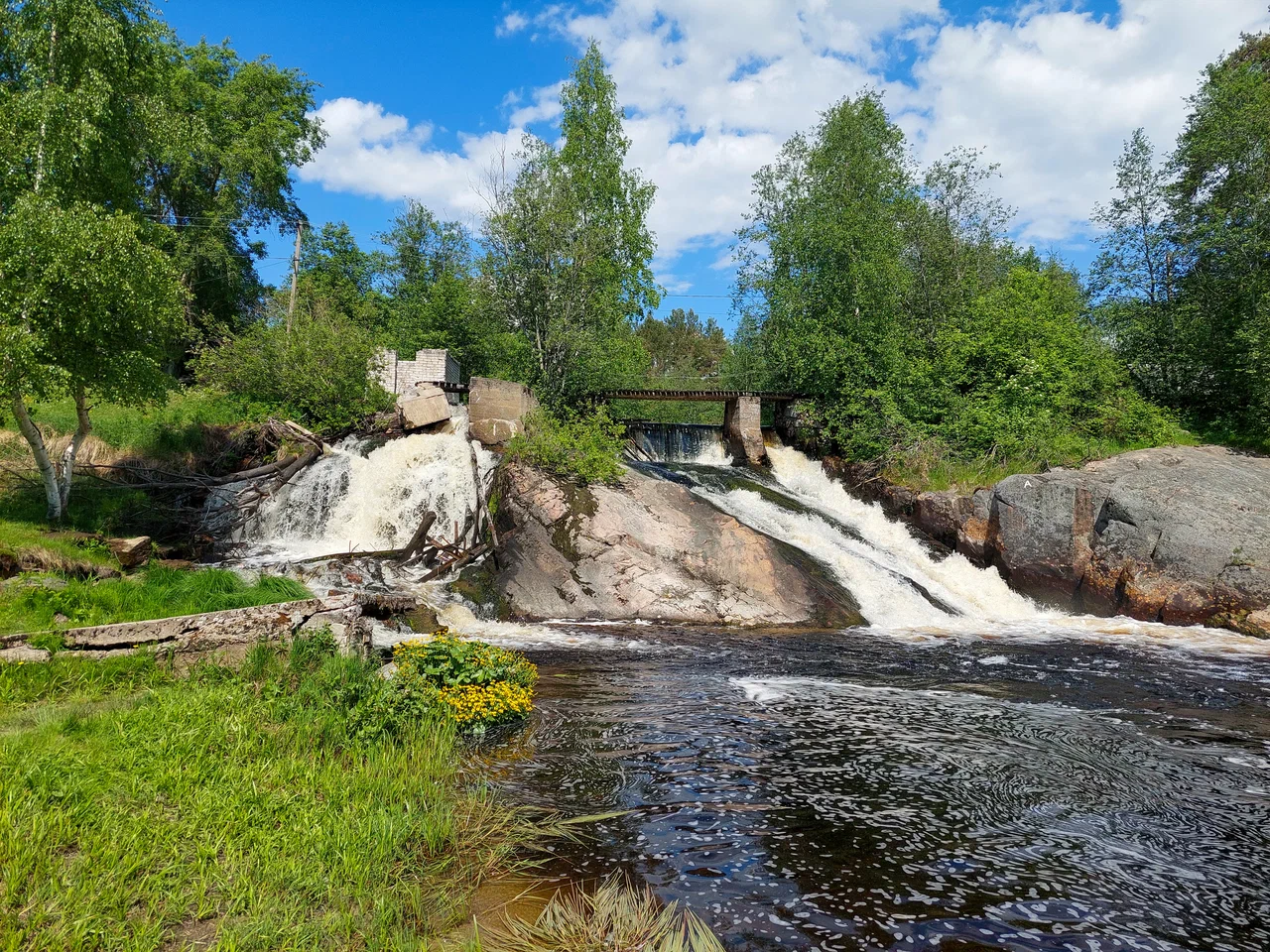
The Upper Koyrinoya Waterfall (Vodopad Verkhniy Koyrinoya) lies on the Koyrinyoki River by the village of Koyrinoya, in the Pitkyaranta municipal district of the Republic of Karelia, about 8 km from the town of Pitkyaranta on the eastern shore of Lake Ladoga. The drop is modest, around 5-6 meters, but the place differs from the usual Karelian rapids: the fall is not entirely natural, having formed on the site of an old dam. Locals also call it the Mill Waterfall or Myllykyla (Finnish for "mill village"). The river name Koyrinyoki is translated from Karelian as "Dog Ditch."
In the 19th century a mill stood on this stretch of the river, which gave the waterfall its second name, the Mill Waterfall. In the early 20th century, when the northern Ladoga region belonged to Finland, a small hydroelectric station was built here: the date it was constructed, 1920, is still carved into the rock behind the waterfall. Over time the dam collapsed, and the drop that visitors see today formed at the site of the former spillway of that power station.
A concrete skeleton of the dam from the mill and power station still stands by the riverbed. The waterfall itself is low but scenic, combining rock outcrops with the old stonework: the river's natural drop and the engineering remnants of the 20th century have merged into a single landscape here. In winter the river freezes completely, and the frozen flow turns into an ice slide that local residents use for sledding and tubing.
The waterfall can be reached by car along the A-121 highway, which runs from Sortavala to Pitkyaranta. The turn is right past the village of Koyrinoya, followed by a short walk to the riverbed. The better-known Ladoga Skerries and the Yakkima Kirkka (Lutheran church) are the nearest larger landmarks, about 60-65 km away.
The waterfall is small and sits right next to the village houses, so it suits a brief stop on a drive along the Ladoga shore rather than a trip of its own. The flow is noticeably stronger in spring and after rain than in the dry summer months, and in winter it is worth checking the ice conditions before climbing down to the riverbed.
No votes yet


No reviews yet. The first one helps the next travellers.