

Vottovaara
113.4 km34
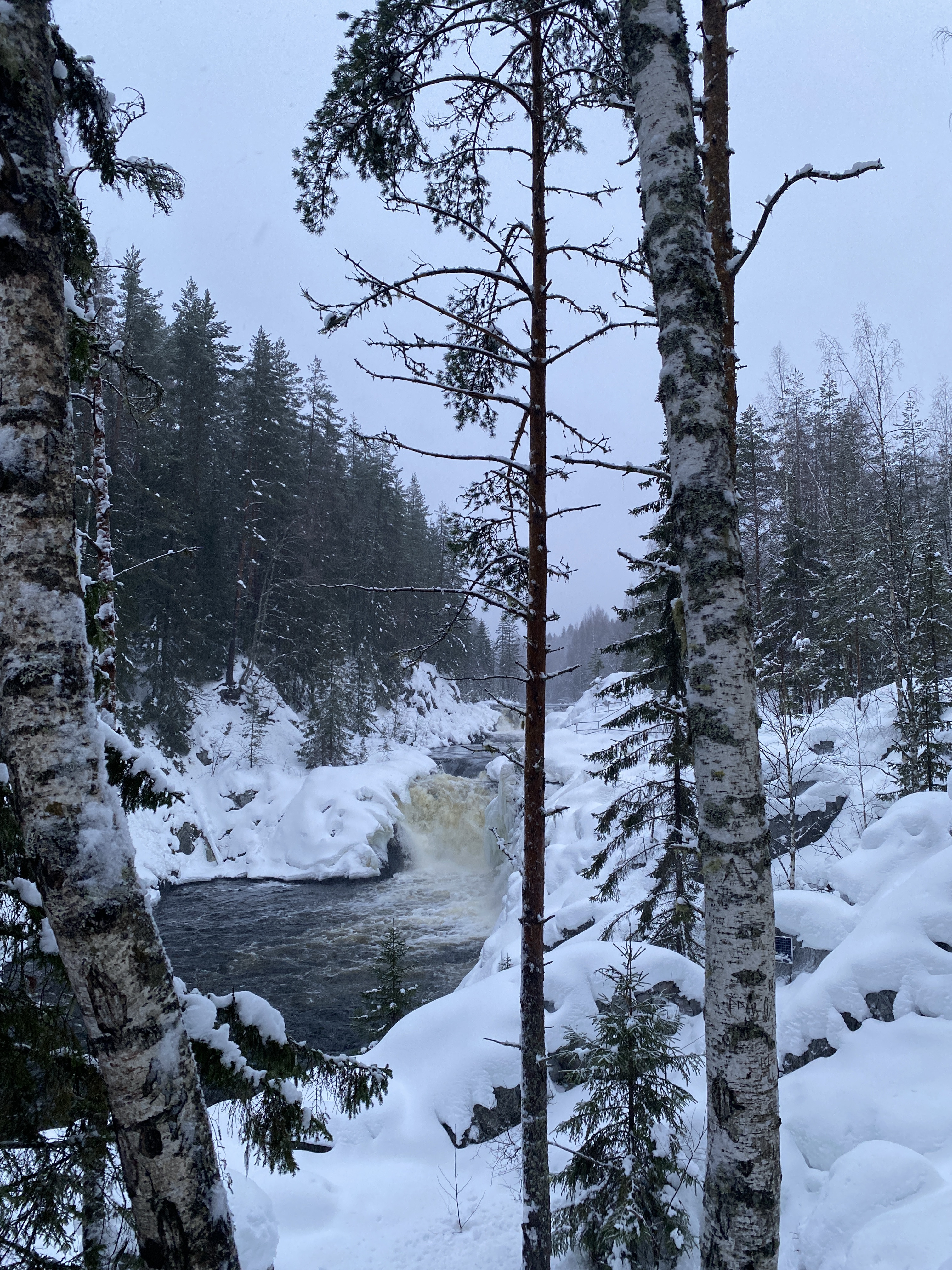
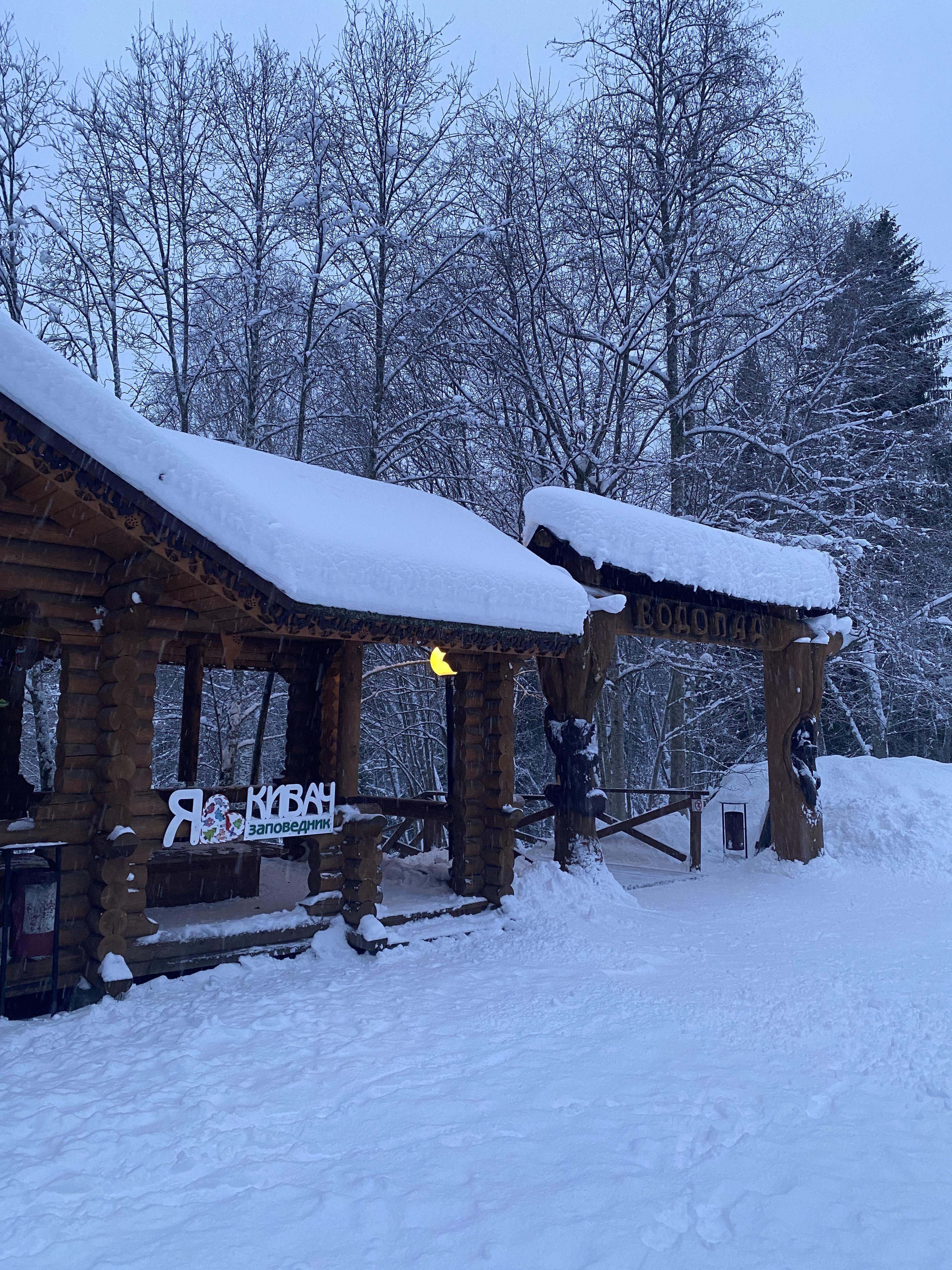
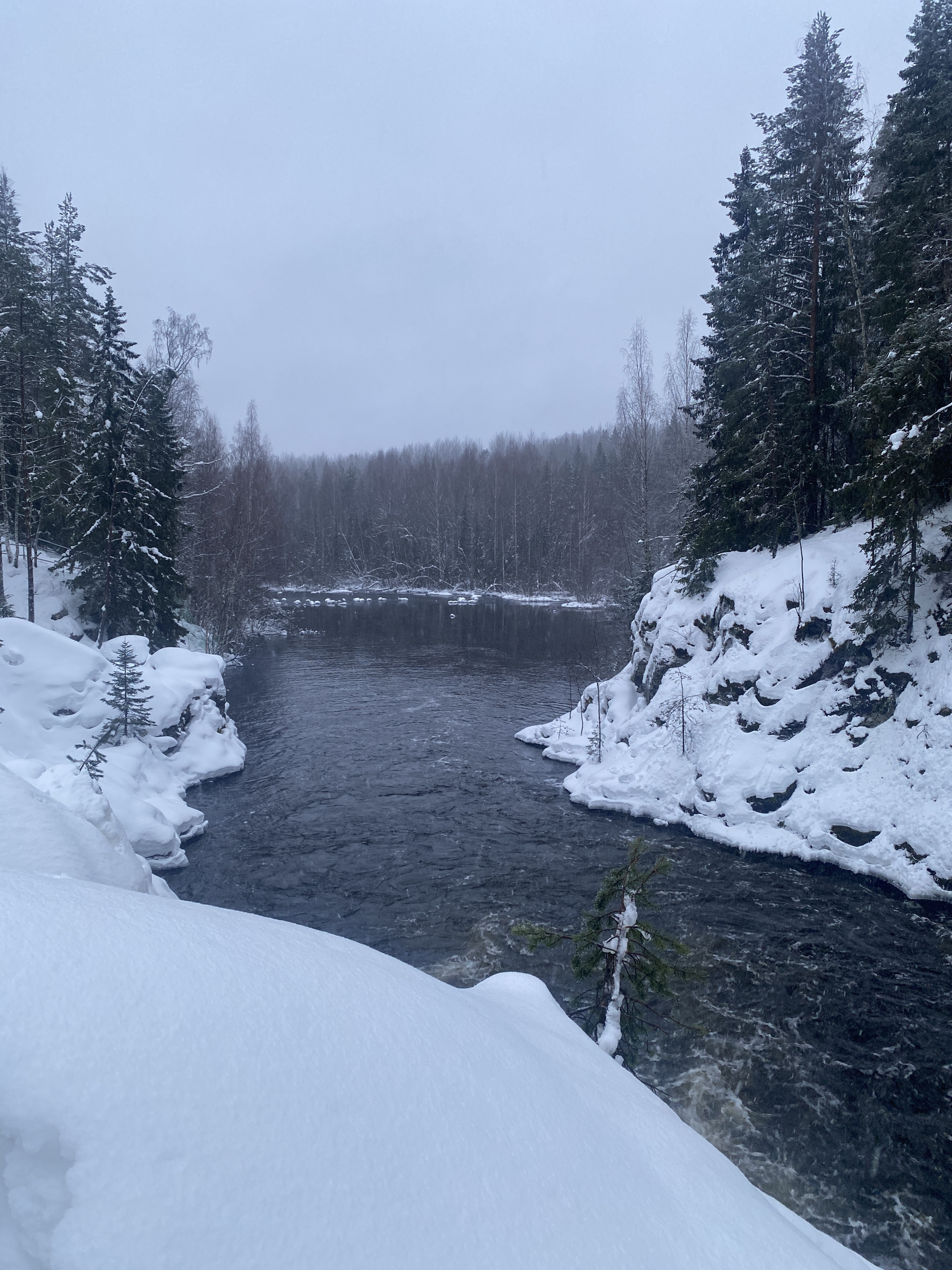
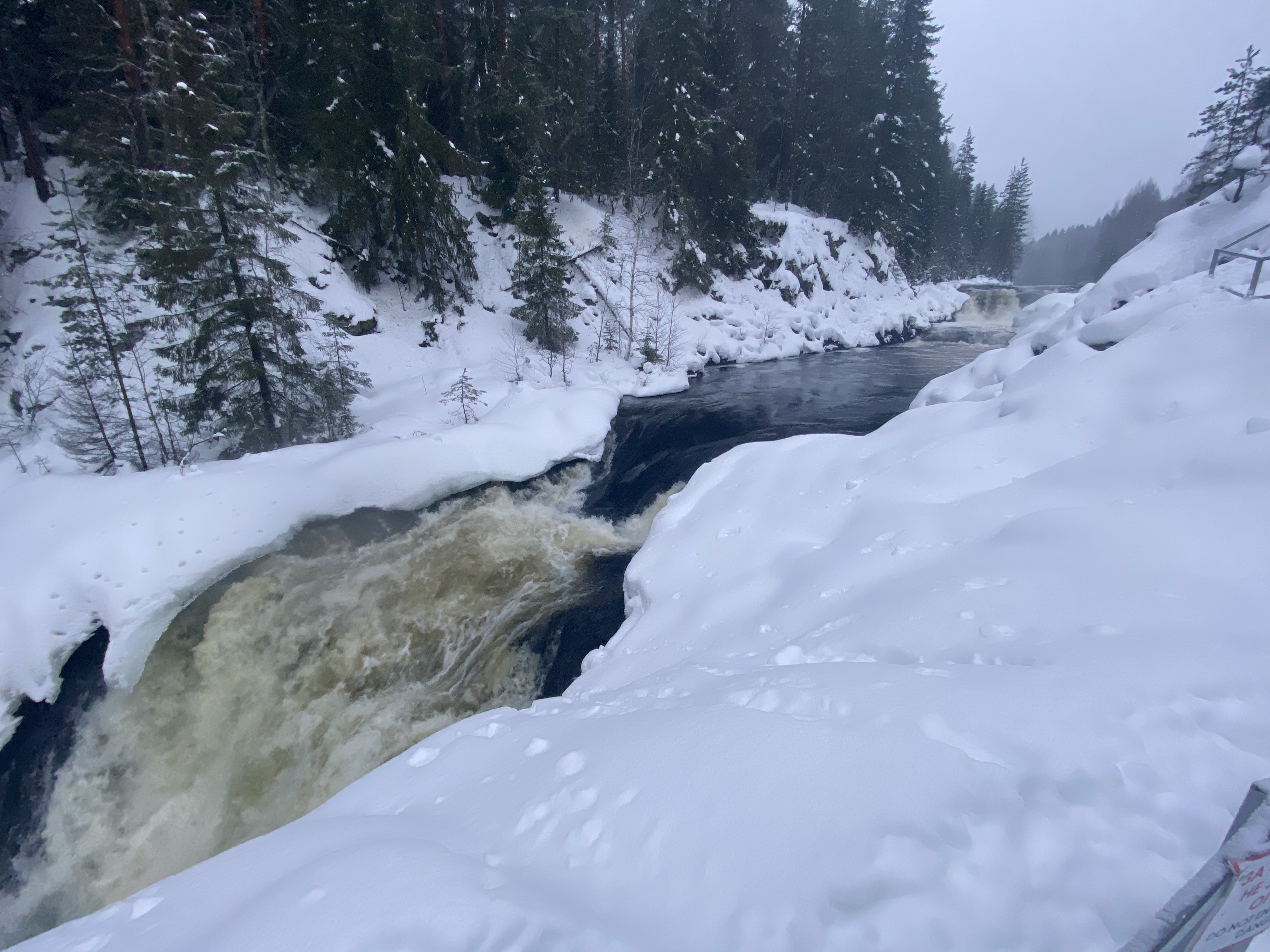
Kivach is a lowland waterfall on the Suna River in the Kondopoga District of the Republic of Karelia, near the village of Sopokha. It lies within the Kivach State Nature Reserve and is one of the best-known natural sights of Karelia, often described as the second-largest lowland waterfall in Europe.
The Suna drops in four steps over a stretch of about 170 metres, with a total fall of around 10.7 metres; the lowest step falls almost vertically for about 8 metres. The ledge is formed by outcrops of diabase, a dark volcanic rock, exposed after the ice sheet retreated more than 12,000 years ago.
Before the Suna hydroelectric cascade (the Kondopoga and Palyeozero plants) was built, the waterfall was much more powerful. Part of the river's flow was diverted to the power stations, and today Kivach is at its fullest mainly in spring.
The name has several explanations: from Karelian-Finnish kivi, "stone", or from Finnish kiivas, "fierce, swift"; linguists tend to favour the latter.
The rapids on the Suna appear in a 16th-century cadastral book of the Obonezhskaya pyatina as a fishing ground. In 1785 the waterfall was visited by Gavrila Derzhavin, then governor of Olonets, and described by the academician Nikolai Ozeretskovsky, who travelled with him. Derzhavin later wrote the ode "The Waterfall", calling Kivach a "diamond mountain", and the poem made the place famous across Russia.
For a visit of Emperor Alexander II to Karelia, a road was laid from Petrozavodsk to the waterfall, and a wooden lodge, viewing platforms, gazebos and a footbridge were built. The Kivach Nature Reserve was established on 11 November 1931 to protect the waterfall and the surrounding forests.
The best-known legend tells of two sister rivers, the Suna and the Shuya. They flowed side by side until the Suna gave her sister the easier bed and lay down to rest. When she woke, the Shuya was far ahead, so the Suna rushed after her, tearing through the rocks; where she leapt from the last ledge, Kivach was born.
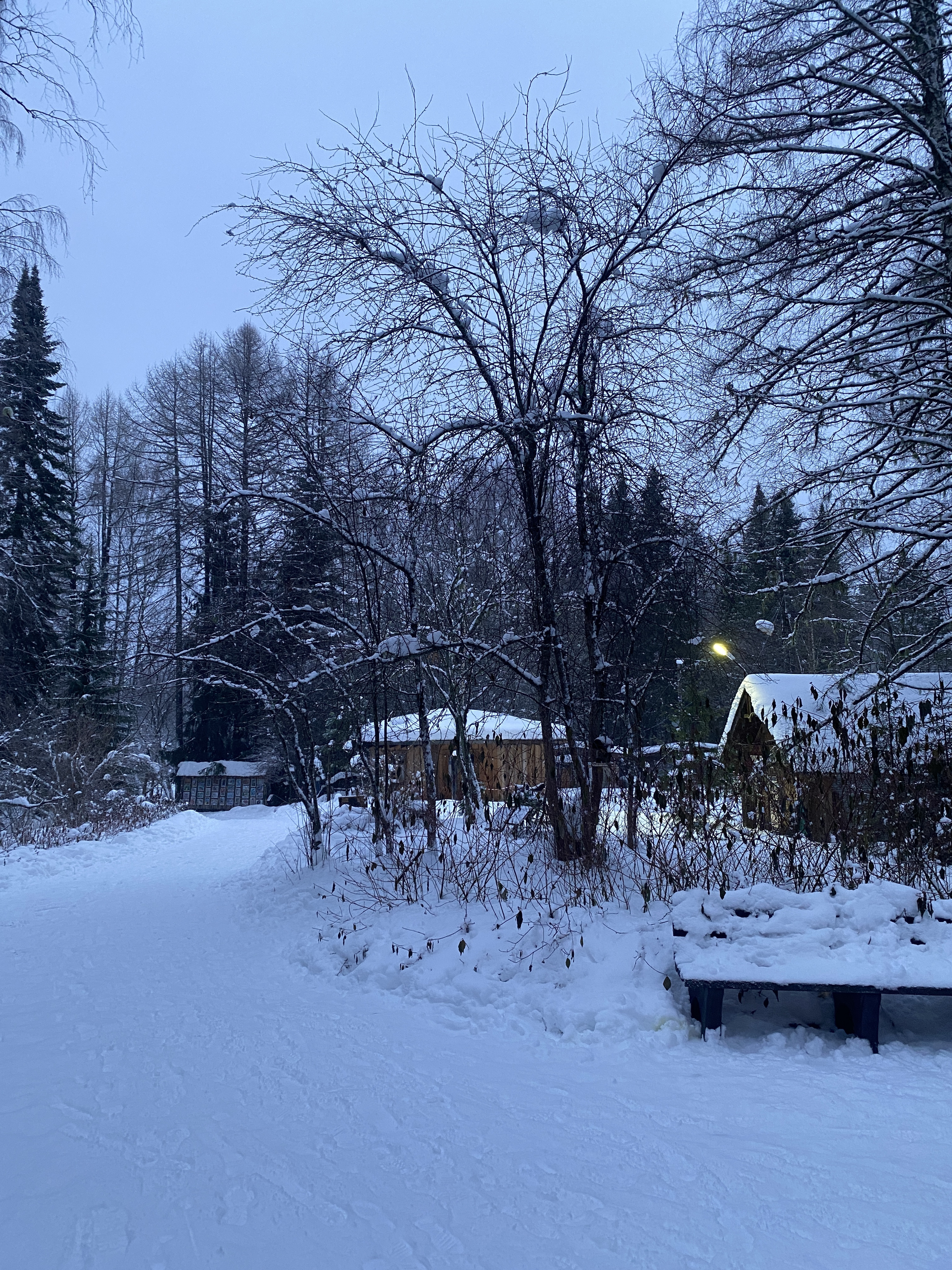
Besides the waterfall, the reserve's visitor area has a Nature Museum and an arboretum, which grows Karelian birch among other trees. The second viewing platform gives the best view of the whole cascade. The pine forests around hold trees over 300 years old, and about 200 bird species have been recorded in the reserve. A walk to the waterfall and through the arboretum takes about an hour; there is also a guided nature trail.
A paved road leads from Petrozavodsk: take the R-21 Kola highway towards Kondopoga, then follow the signs to Sopokha, about an hour and a half by car. There is a car park at the entrance. Scheduled buses are infrequent, so many visitors come on tours from Petrozavodsk.
Entry to the reserve is paid; the ticket covers the waterfall, the arboretum and the museum. The reserve is open daily all year, with longer hours in summer than in winter. Visitors must keep to the paths and viewing platforms, and swimming below the waterfall is prohibited. The water is highest in May and early June, the forest turns yellow and red in autumn, and in winter ice formations build up around the falls.


No reviews yet. The first one helps the next travellers.