

Заброшенная воинская часть
5.03.4 km7k2
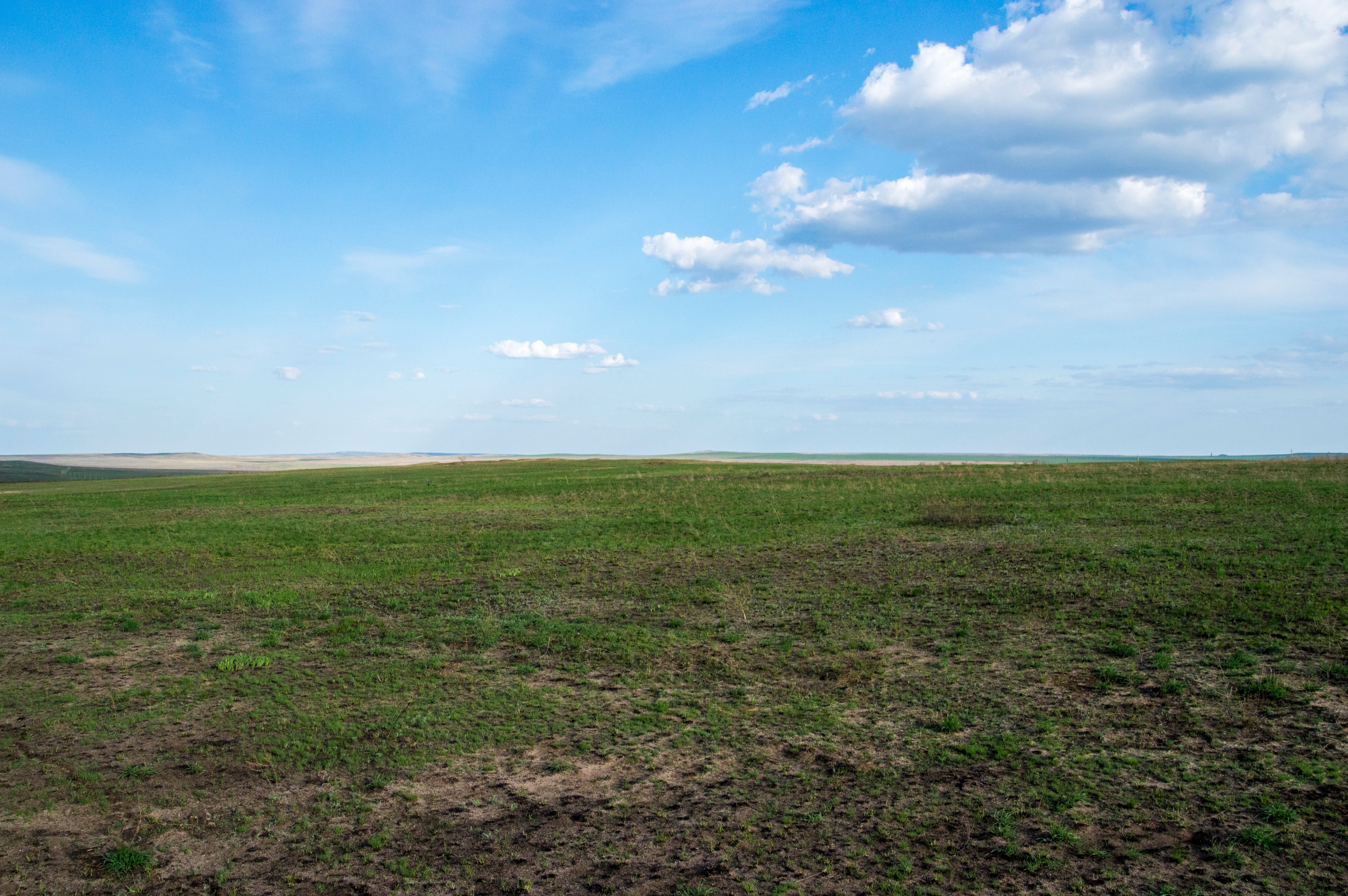
Donguzskaya Steppe (Донгузская степь) is the largest surviving tract of virgin, never-ploughed forb-fescue-feather-grass steppe in Eurasia. It lies in Orenburg Oblast, split between Orenburgsky and Sol-Iletsky districts, about 15 km south of the city of Orenburg. The tract covers the Ural-Ilek interfluve: the left bank of the upper Donguz River with its tributaries Sivushka, Gryaznushka and Sukhodol, the upper Chyornaya River together with the adjoining right-bank uplands, the upper basin of the Bolshaya Peschanka and its watershed with the Sukhaya Peschanka, and the Vetlyansky Hills, high ground at the head of the Vetlyanka River. The area stretches about 60 km from northeast to southwest and is 16 to 20 km wide.
The vegetation is dominated by forb-fescue-feather-grass steppe, with Stipa lessingiana, Stipa pulcherrima, Stipa capillata, fescue and crested hair-grass, along with abundant forbs including several species of milkvetch (Astragalus). Chalk outcrops support rare calciphile plants: Anthemis trotzkiana, Hedysarum razoumovianum and Matthiola fragrans. In spring the steppe sees a mass bloom of Schrenck's tulips.
The steppe matters for steppe birds: the little bustard nests here at a density of 4–5 pairs per 100 hectares, while grey partridge, quail and collared pratincole are common. In the 1990s the site held an estimated 40 steppe eagles and 16 pairs of demoiselle cranes. Ravines and gullies are home to badger, fox, hare and steppe pika, with elk and wild boar also occurring.
Officially the land is registered as a testing ground of the 3rd Central Research Institute of the Ministry of Defence, which is why the steppe is also known under the less common name Donguzsky Polygon. A ban on farming and cultivation, imposed because of its military status, is the reason the steppe survived in near-pristine condition while similar landscapes around it were ploughed up. In the 1950s the polygon was used for surface tests of nuclear munitions and for trials of the first Soviet ballistic missiles.
From 2006 the site was studied for designation as a protected natural area under the project "Steppe Benchmarks of the Ural-Ilek Interfluve", and in 2008 a case was prepared for creating a departmental protected territory.
Within Donguzskaya Steppe several landscape-botanical nature monuments stand out. The Dudakovo Pole tract, between the Sivushka, Gryaznushka and Chyornaya rivers, covers about 200 hectares of preserved zonal steppe. Papayskaya Steppe, between the Galechny and Kupay ravines, covers about 150 hectares. The Vetlyansky Hills and Mount Mayachnaya, among the highest points on the axis of the Ural-Ilek watershed, are also notable.
Donguzskaya Steppe lies roughly 15 km south of Orenburg, but access to most of the area is restricted because it remains an active military testing ground.
No votes yet


No reviews yet. The first one helps the next travellers.