 Anomalous place


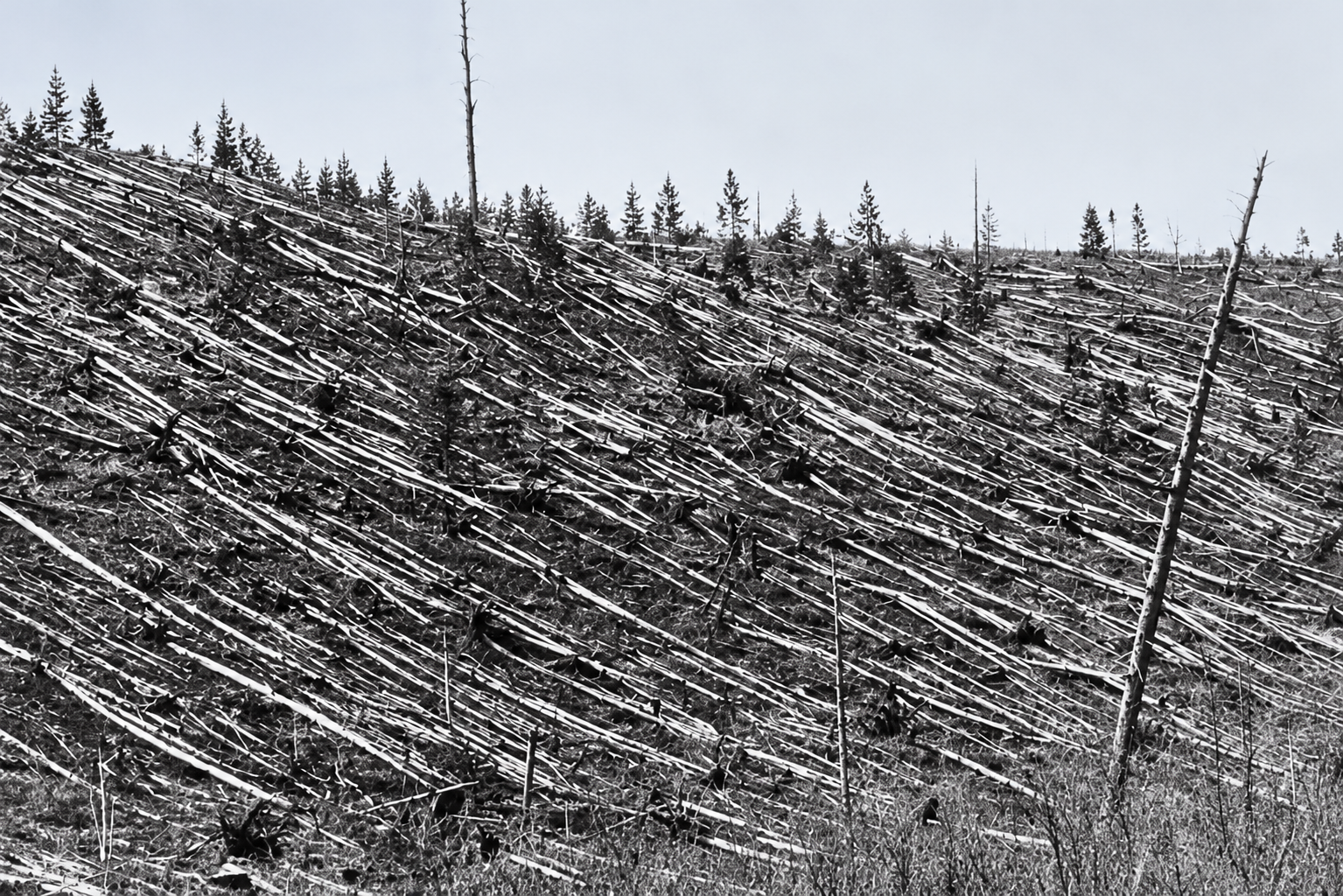
The Tunguska meteorite (Russian: Тунгусский метеорит) is the name given to the mysterious explosion over the taiga in the Podkamennaya Tunguska basin on the morning of 30 June 1908. The epicentre lies in Evenkia, in the north of Krasnoyarsk Krai, about 60 km north of the village of Vanavara. No crater and no large fragments have ever been found here, and for more than a century the place has remained one of Russia's best-known anomalous zones.
At about seven in the morning local time a fiery bolide crossed the sky, seen hundreds of kilometres away. Then came an explosion estimated at 10 to 15 megatons of TNT. The forest was flattened over about 2,150 km², fanning out from the centre. At the epicentre itself the trees stayed upright but lost their branches and bark. The sound was heard more than 1,000 km away, instruments in Europe and America recorded the shock wave, and for several nights afterwards the sky from the Atlantic to Central Siberia glowed unusually brightly.
The best-known account comes from Semyon Semyonov of Vanavara. He said the sky in the north "split in two" and a fire appeared, giving off unbearable heat. The blast threw him off his porch, then came a roar like cannon fire, and windows were knocked out of the houses.
The Evenks Chuchancha and Chekaren, whose tent stood about 30 km from the epicentre, described a whistling and a hurricane wind, the forest falling and burning, a flash like "a second sun" and two thunderclaps. The Evenks linked the disaster to the anger of Agdy, the lord of thunder and lightning, and shamans spoke of punishment for desecrating sacred places.
The first to search for the site was Leonid Kulik. In 1921 he collected eyewitness accounts, and in 1927 he reached the flattened forest but found no crater. Three more expeditions before 1939 found no meteorite either. Kulik at first took pits in the bogs for craters, but when one of them was drained an old tree stump was found at the bottom. The huts of his base, Kulik's Zaimka, survive and are a protected heritage site.
From 1958 the Comprehensive Amateur Expedition (KSE) worked here: it made 52 expeditions and collected accounts from more than 2,000 eyewitnesses. Expeditions of the 1950s and 1960s found microscopic spherules with elevated nickel and iridium in the soil.
The epicentre is part of the Tunguska Nature Reserve, established in 1995. Its headquarters are in Vanavara, which is reached by plane from Krasnoyarsk; there are no roads to the village. From Vanavara a trail follows the route of the 1920s expeditions to Kulik's Zaimka through boggy taiga with no facilities. It may only be walked with a permit from the reserve.


