 Natural wonder


Lake Labynkyr
496 km71
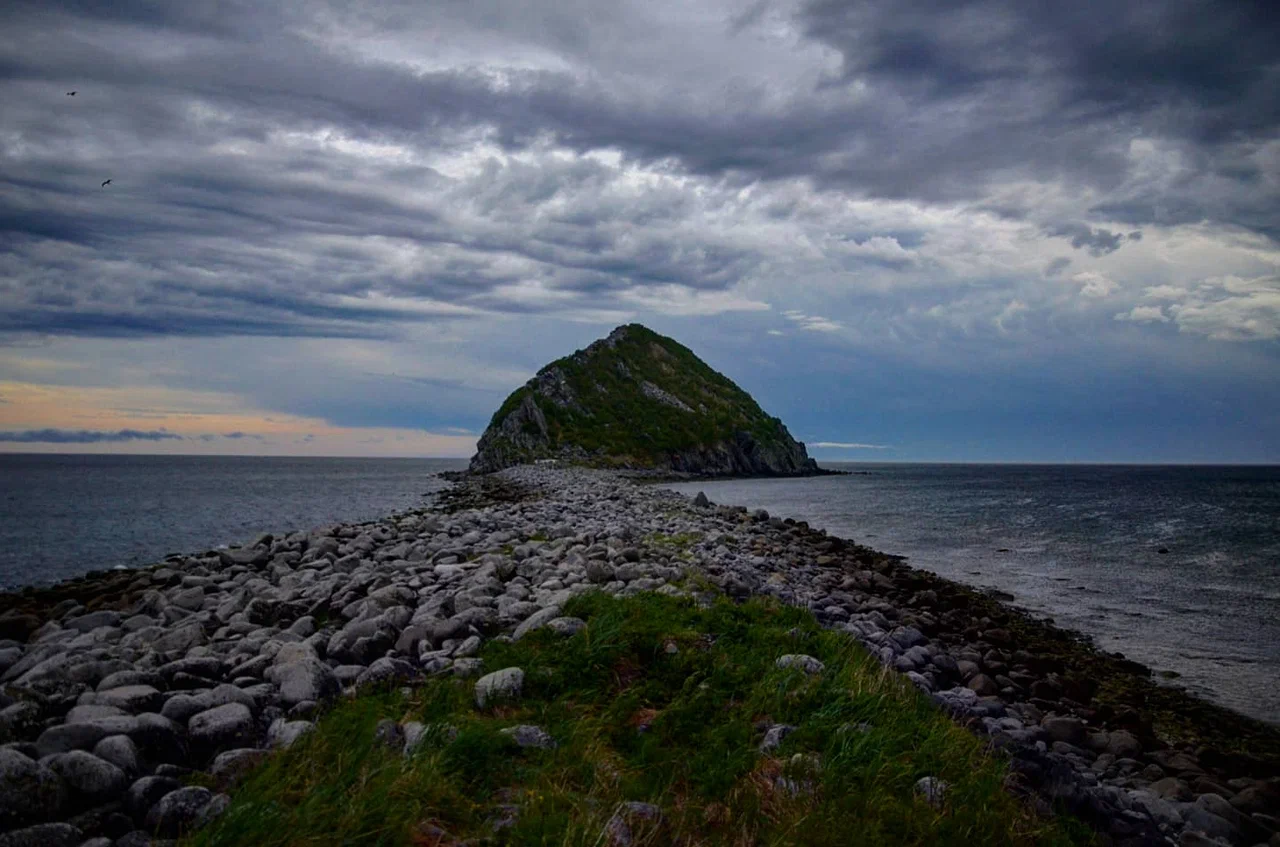
Mys Ostrovnoy (Cape Ostrovnoy) lies on the northwestern shore of Nagaeva Bay, a bay of the Sea of Okhotsk near Magadan, in the Olsky municipal district of Magadan Oblast. The cape is also known as Ptichy Mys (Bird Cape). It sits between capes Seryi and Otlogy and is joined to the shore by a narrow rocky isthmus about 200 metres long. The cape used to be an island: in 1940 it was connected to the mainland by an embankment built to house an observation post. Geologically the cape is made up of granodiorites of the Early Cretaceous Okhotsk intrusive complex.
In 1940 the island became a cape after an isthmus was built up to carry an observation post. From 1940 to 1960 a coastal artillery battery, No. 960 (possibly later renumbered 383), operated one and a half kilometres to the east. It consisted of two caponiers, each holding two gun emplacements, with communication passages between them running 3 to 7 metres underground. The battery was armed with four 130-millimetre B-13 guns, built at the Bolshevik factory in 1937–1938. The caponiers held powder magazines, rest rooms, showers and heating; the mechanisms ran on pneumatics, and power came from a diesel power station on a nearby stream. A partly sunken fire-control command post was protected by an armoured cupola, and the whole site was ringed with barbed wire, trenches and foxholes. According to some accounts, the battery was built by prisoners.
The slopes of the cape hold a bird colony where tufted puffins, cormorants, guillemots and gulls nest. Whales and orcas can be seen in the waters offshore, along with crabs, halibut, smelt and herring. In late spring herring come to the cape to spawn, turning the bay's water bright turquoise. In late July the coastal slopes bloom with edelweiss, a rare mountain flower listed in the Red Data Book.
A hiking trail about 37 kilometres round trip leads to the cape and takes 10 to 12 hours; it is considered a moderate hike. The way to the cape runs mostly downhill along dirt roads and paths, while the return is a long climb. The nearest public transport stop is Zelyonaya Roshcha, one and a half kilometres from the trailhead; it can be reached by bus No. 20, by taxi or by car, and in good weather part of the route can be covered by SUV or mountain bike. Benches overlooking the bay and information boards stand on the cape's steep slope. Brown bears can be met along the trail, and there is no fresh water source away from the path, so water should be carried.
No votes yet


No reviews yet. The first one helps the next travellers.