 Spring (Source)


Valley of Death
5 km61
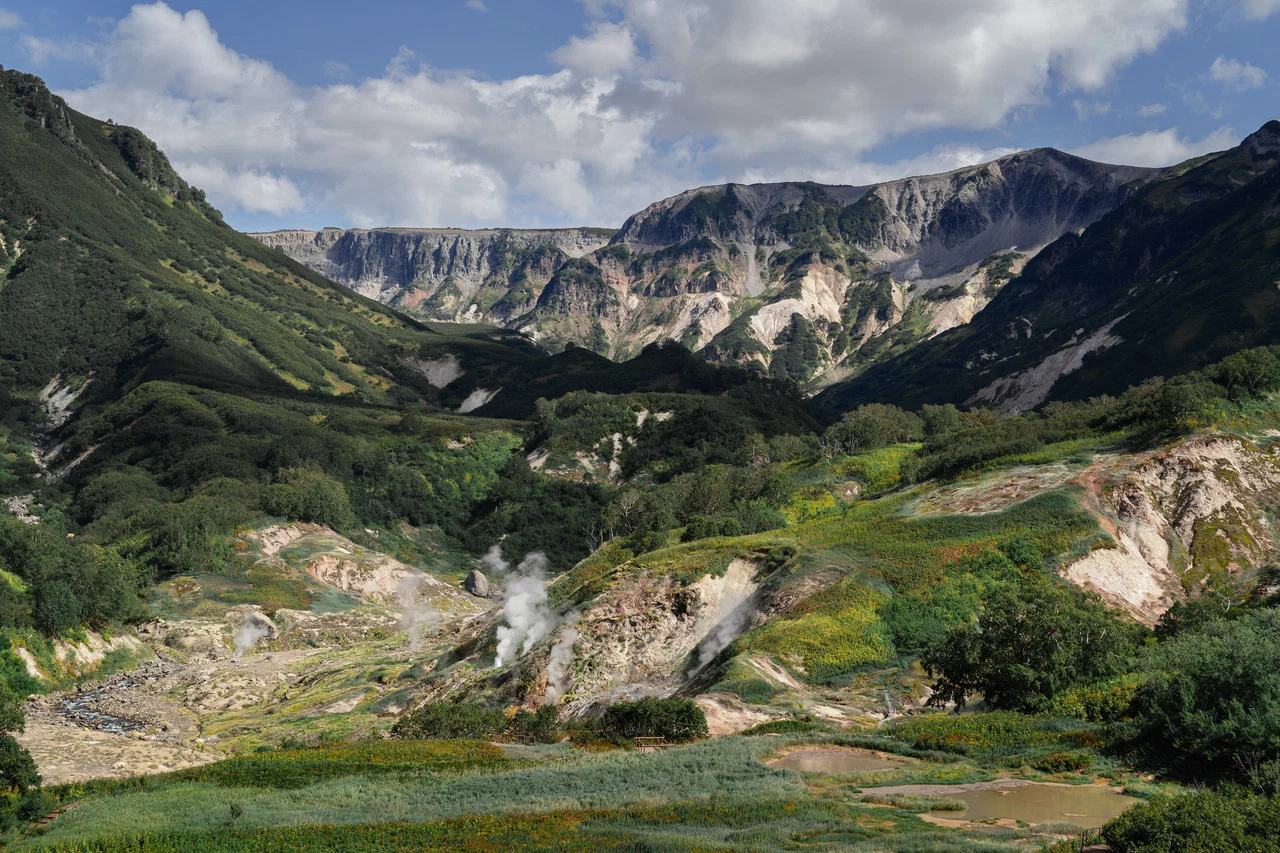
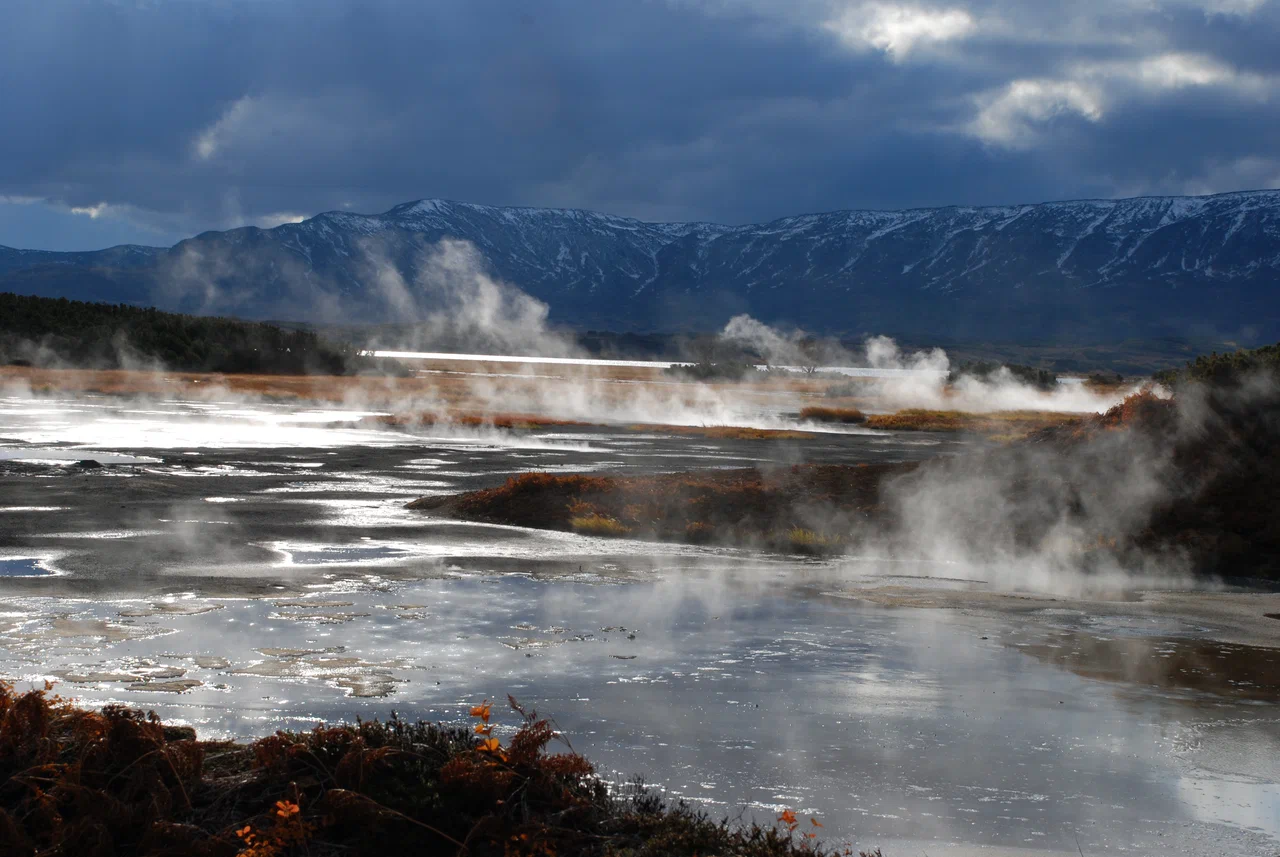
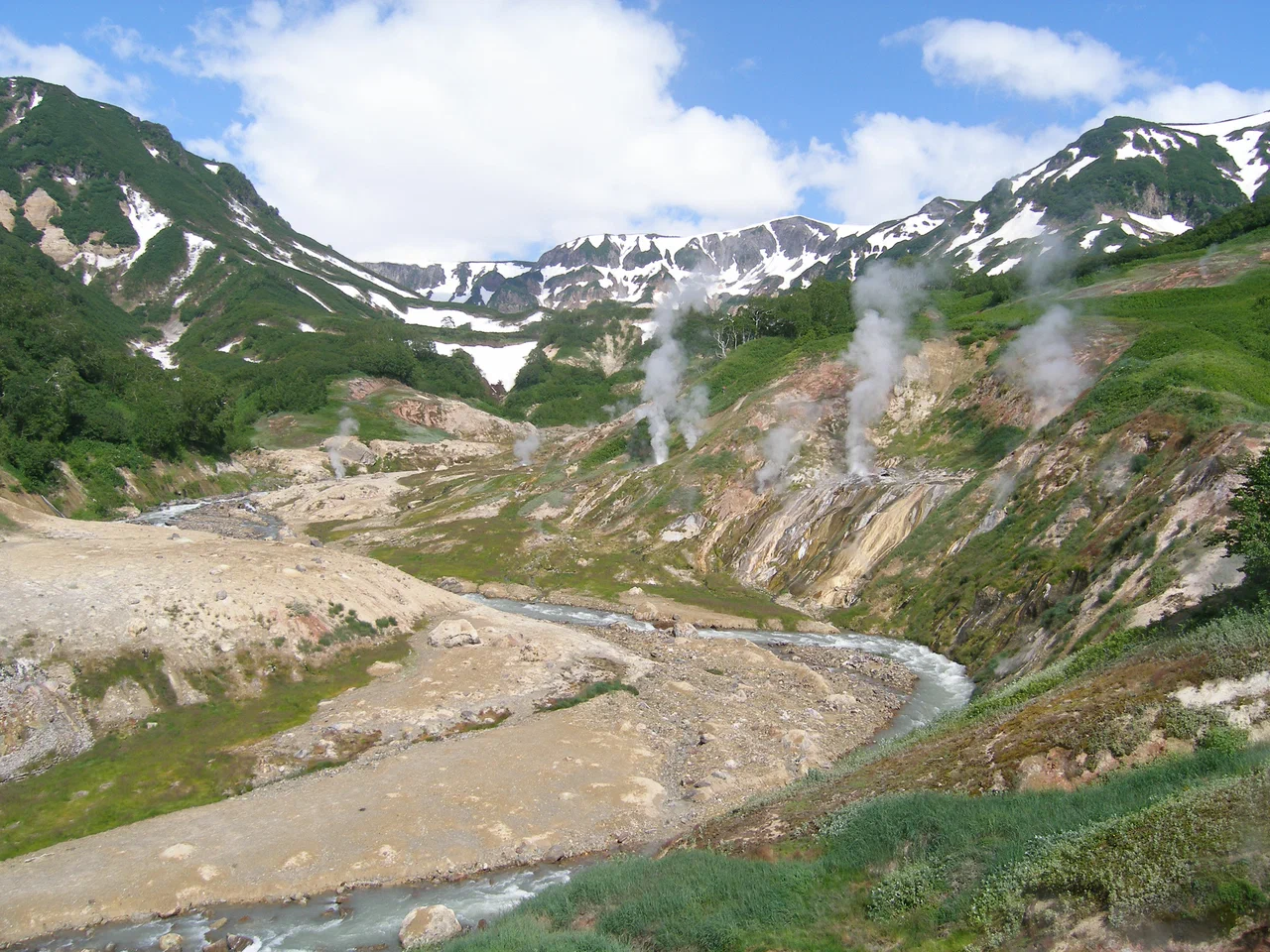
The Valley of Geysers is one of the largest geyser fields in the world and the only one in Eurasia. It lies in eastern Kamchatka, in the Yelizovsky District, within the Kronotsky State Biosphere Reserve, along the Geyzernaya River, a right tributary of the Shumnaya River. The valley is part of the UNESCO World Heritage Site "Volcanoes of Kamchatka" and is considered one of the peninsula's symbols: in 2008 it was named one of the Seven Wonders of Russia in a nationwide vote.
The valley was discovered in April 1941 by Tatyana Ustinova, a geologist at the Kronotsky Reserve, together with her Itelmen guide Anisim Krupenin. While surveying a remote part of the reserve along the Shumnaya River and its tributaries, they spotted a fountain of hot water on April 14 — the first geyser found there, later named "Pervenets" (Firstborn). In July of the same year Ustinova and Krupenin returned to the valley by a different route, passing the Kikhpinych volcano and following the Goryachaya River. A systematic survey of the valley was only carried out in the mid-1970s, and an automatic monitoring system began operating there in 1990.
The valley's basin stretches about 6 km along the Geyzernaya River and holds roughly ninety geysers and thermal springs. The heat source is the young Kikhpinych stratovolcano: groundwater is heated through a network of faults and fractures by magma chambers lying about 500 meters below the surface, where the temperature reaches 250 °C. More than forty geysers have individual names. The largest, Velikan (Giant), shoots a jet of boiling water to a height of about 30–35 meters. Others include Fontan, with a small jacuzzi-like pool; Gosha, named after a 1991 expedition of the American Geyser Observation and Study Association (GOSA); and Martyshka (Monkey), set on a slope shaped like an animal's muzzle. The valley also has a bright blue hot lake, mud pots, and a thermal feature nicknamed "Unitaz" (Toilet) that sucks water back with a gurgling sound after erupting.
On June 3, 2007, a massive mudflow of about 20 million cubic meters covered roughly two-thirds of the valley, forming a dammed lake and flooding part of the geysers. Even so, by September 2007 about twenty of the forty-two large and medium geysers were active again: Velikan, for instance, was untouched and kept erupting, while the Bolshoy geyser was submerged. By 2012 the dammed lake's level had begun to drop, and Bolshoy resumed its regular eruptions. In September 2013, heavy rains triggered a new mudflow that breached the natural dam, releasing some of the springs and increasing the number of active geysers. In 2014 another landslide came down further up the valley, after which Velikan temporarily stopped erupting. Today about two-thirds of the valley remains covered by the 2007 landslide.
The Valley of Geysers has no road access and is extremely remote — the only way in is by helicopter, as part of an organized tour arranged through the Kronotsky Reserve administration. Such tours have run since 1992, after the valley was completely closed to visitors from 1977 to 1993, and unorganized tourism had already been banned there since 1967. Visitors may move only along boardwalk trails and viewing platforms, to protect both the geysers and the people walking among them. Before the 2007 landslide, the valley received about 3,000 tourists a year.
No votes yet


No reviews yet. The first one helps the next travellers.