 Architecture


Golden Gate Bridge
3.2 km1.6k7
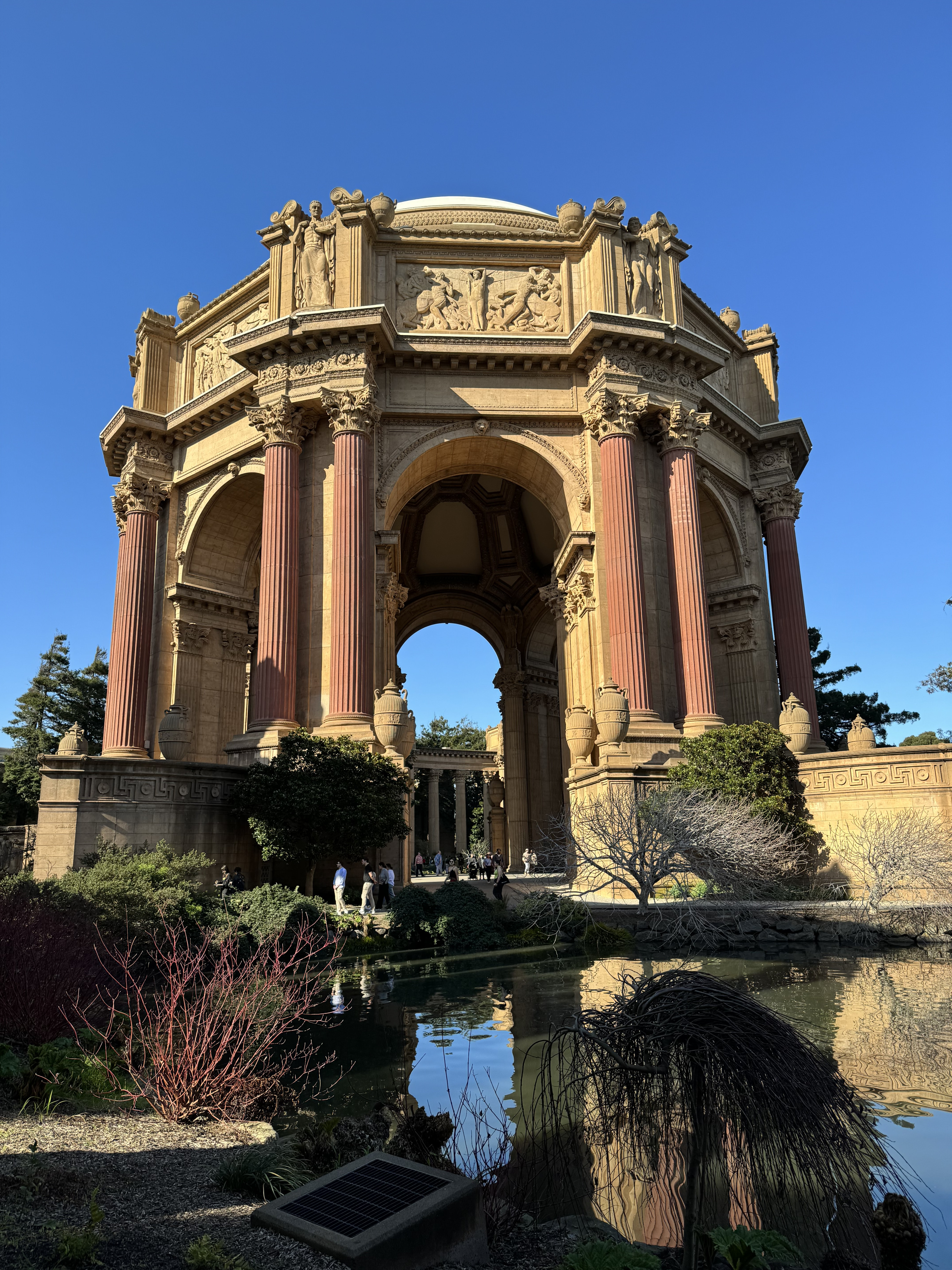
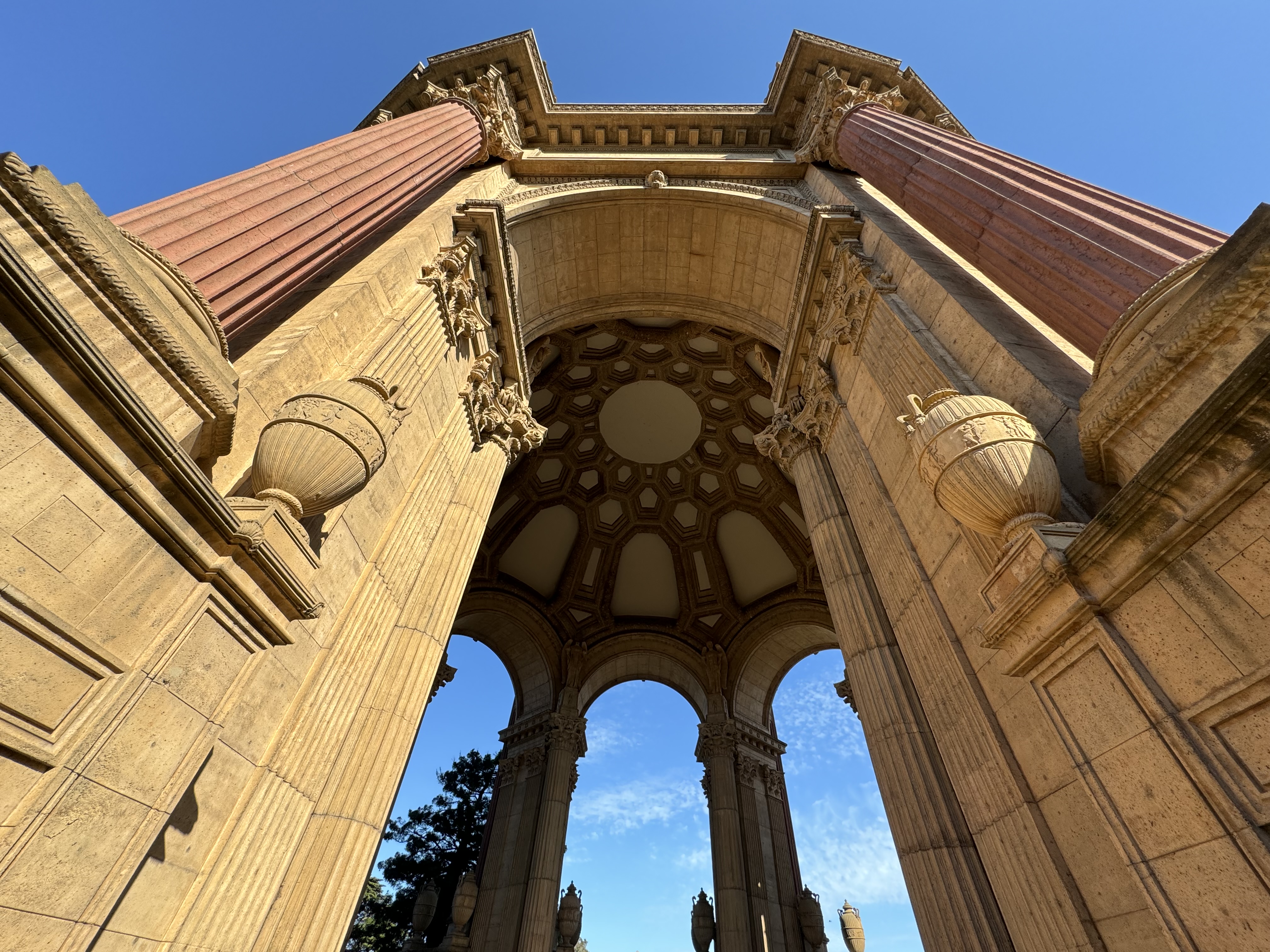
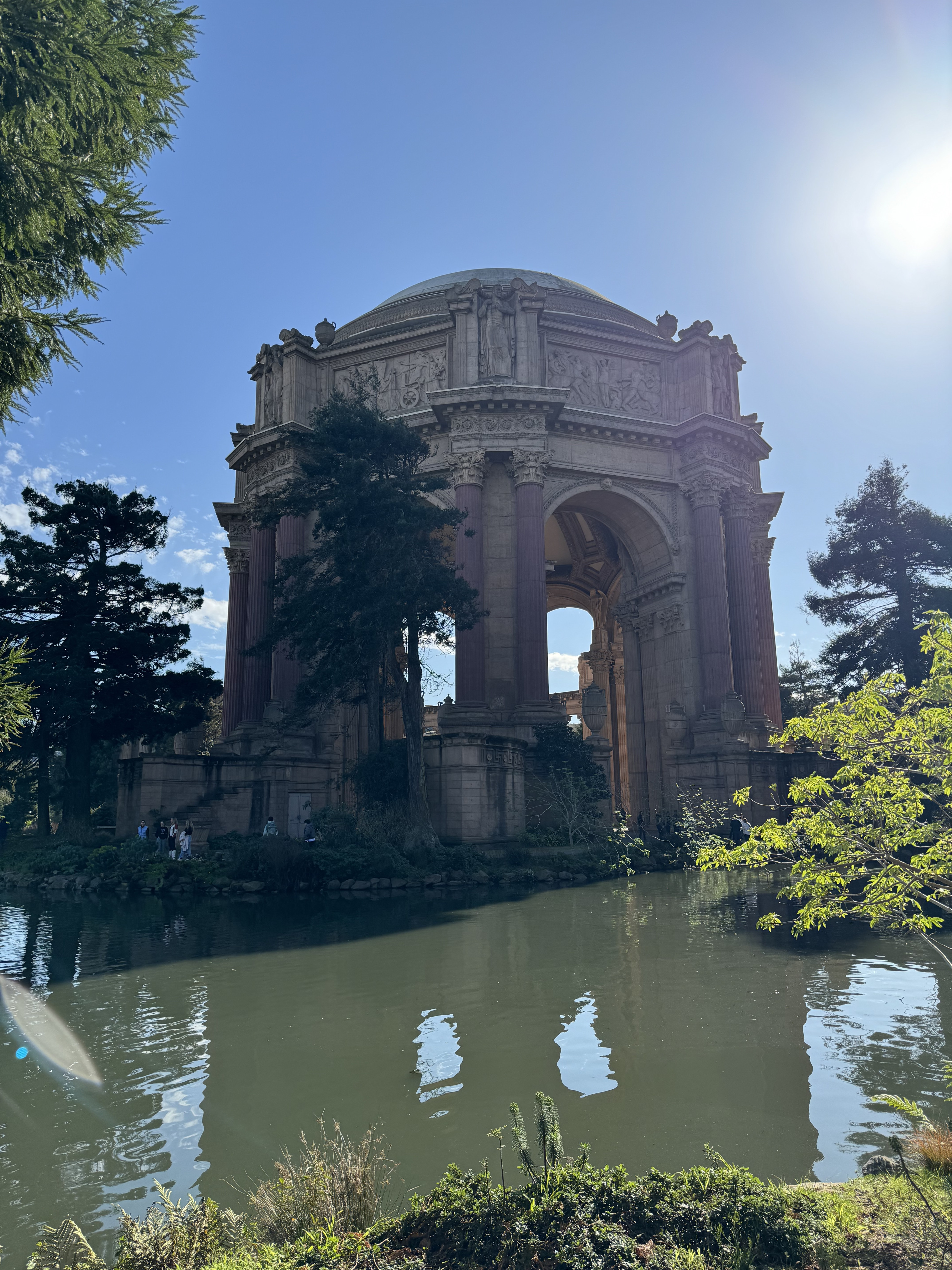
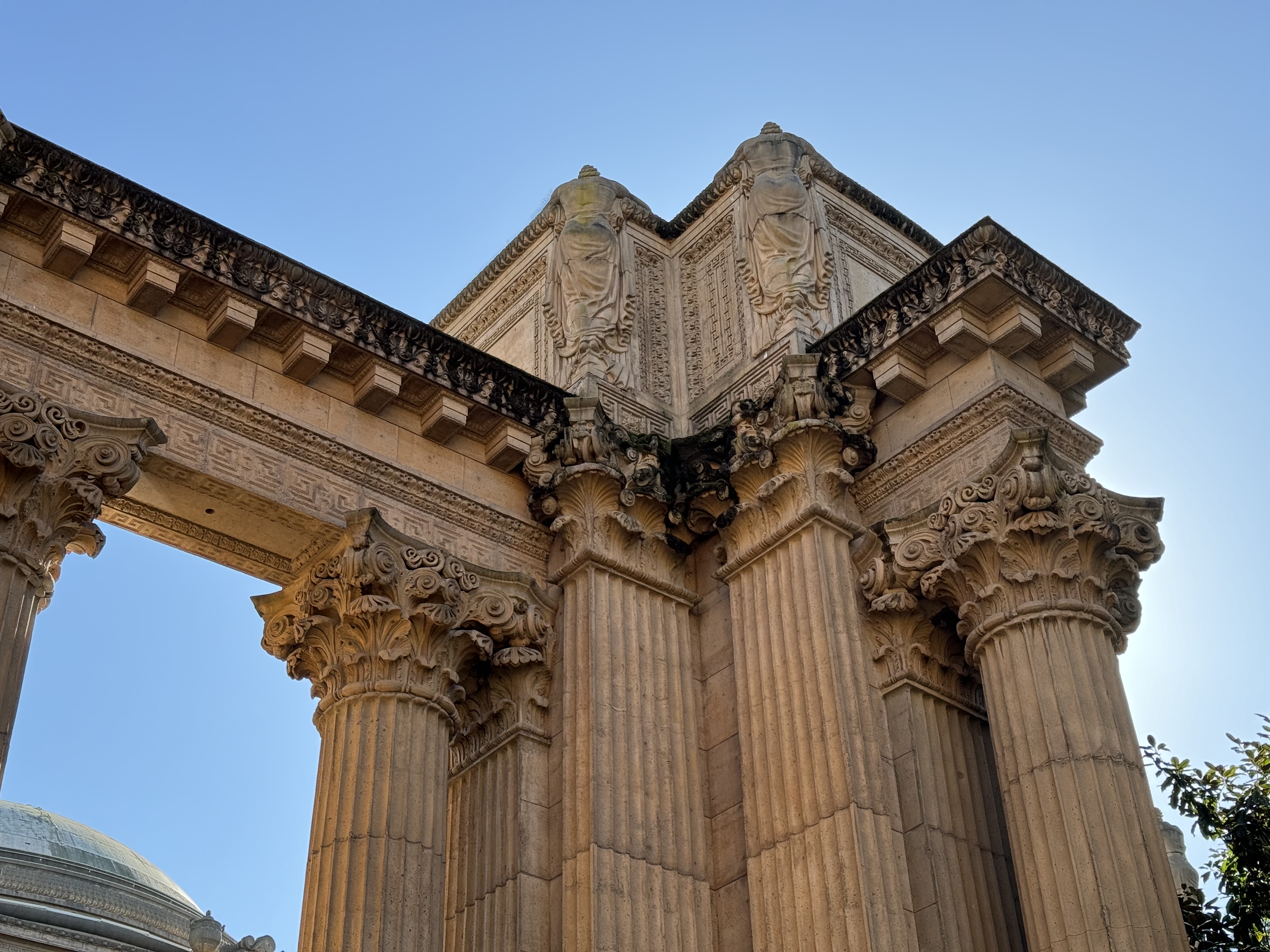
The Palace of Fine Arts is a monumental structure in the Marina District of San Francisco, California, United States. It was built for the 1915 Panama–Pacific International Exposition to house a display of paintings and sculpture; its architect was Bernard Maybeck.
Most of the exposition's buildings were meant to be temporary: the colonnade and rotunda were framed in wood and covered with "staff", a mixture of plaster and burlap fiber. The exception was the adjoining exhibition hall, whose walls were built of concrete to protect the artworks stored inside from fire — which is why that building survived after the exposition closed, while the rotunda and colonnade had crumbled into ruin by the 1950s.
In 1964 the decayed part was demolished and, under architect B.F. Modglin, rebuilt by 1974 in permanent, poured-in-place concrete and steel beams, with columned pylons added in 1973–1974. The centerpiece of the complex is the open-air rotunda, 162 feet (49 meters) high, standing by a lagoon and connected to the curved exhibition hall.
The Palace was designed by architect Bernard Maybeck, who wanted to create a quiet space for exposition visitors amid the busy fairgrounds. He drew on Roman and ancient Greek architecture — in particular Giovanni Piranesi's etching of the ruins of the so-called Temple of Minerva Medica in Rome, and Arnold Böcklin's painting Isle of the Dead, with its contemplative mood.
The Palace is built around a small artificial lagoon: a wide pergola surrounds the central rotunda by the water, and the lagoon's mirror-like surface reflects the buildings. The rotunda's entablature is decorated with panels by sculptor Bruno Zimm symbolizing Greek culture, the colonnade is topped by Ulric Ellerhusen's "weeping women" and allegorical figures representing Contemplation, Wonderment and Meditation.
The underside of the rotunda's dome holds eight large insets; they originally contained murals by Robert Reid depicting the birth and development of art, its bond with the earth, its progress and acceptance by human intellect, and the four "golds" of California — poppies, citrus, metallic gold and wheat.
After the exposition, the building housed a continuous art exhibit. During the Great Depression, W.P.A. artists replaced the decaying Robert Reid murals on the rotunda's ceiling, and during World War II the Army used the building for storage. After the war it served various purposes: a warehouse for the city's parks department, a telephone directory distribution center, and a temporary fire department headquarters.
In 1969 the former exhibition hall became home to the Exploratorium interactive museum (which moved to the Embarcadero in 2013), and in 1970 the 966-seat Palace of Fine Arts Theater opened there and still operates today. A public-private partnership to restore the Palace was formed in 2003, and by 2010 the restoration and seismic retrofit of the dome, rotunda, colonnades and lagoon was complete.
In April 2020, during the COVID-19 pandemic, San Francisco officials planned to convert the Palace into a temporary shelter for 162 homeless people, but dropped the idea after protests from local residents and concerns about living conditions. Today the former exhibition hall is used as an event venue for weddings and exhibitions, while the theater continues to host audiences.
No votes yet


No reviews yet. The first one helps the next travellers.