

Palace of Fine Arts
3.2 km1.7k4
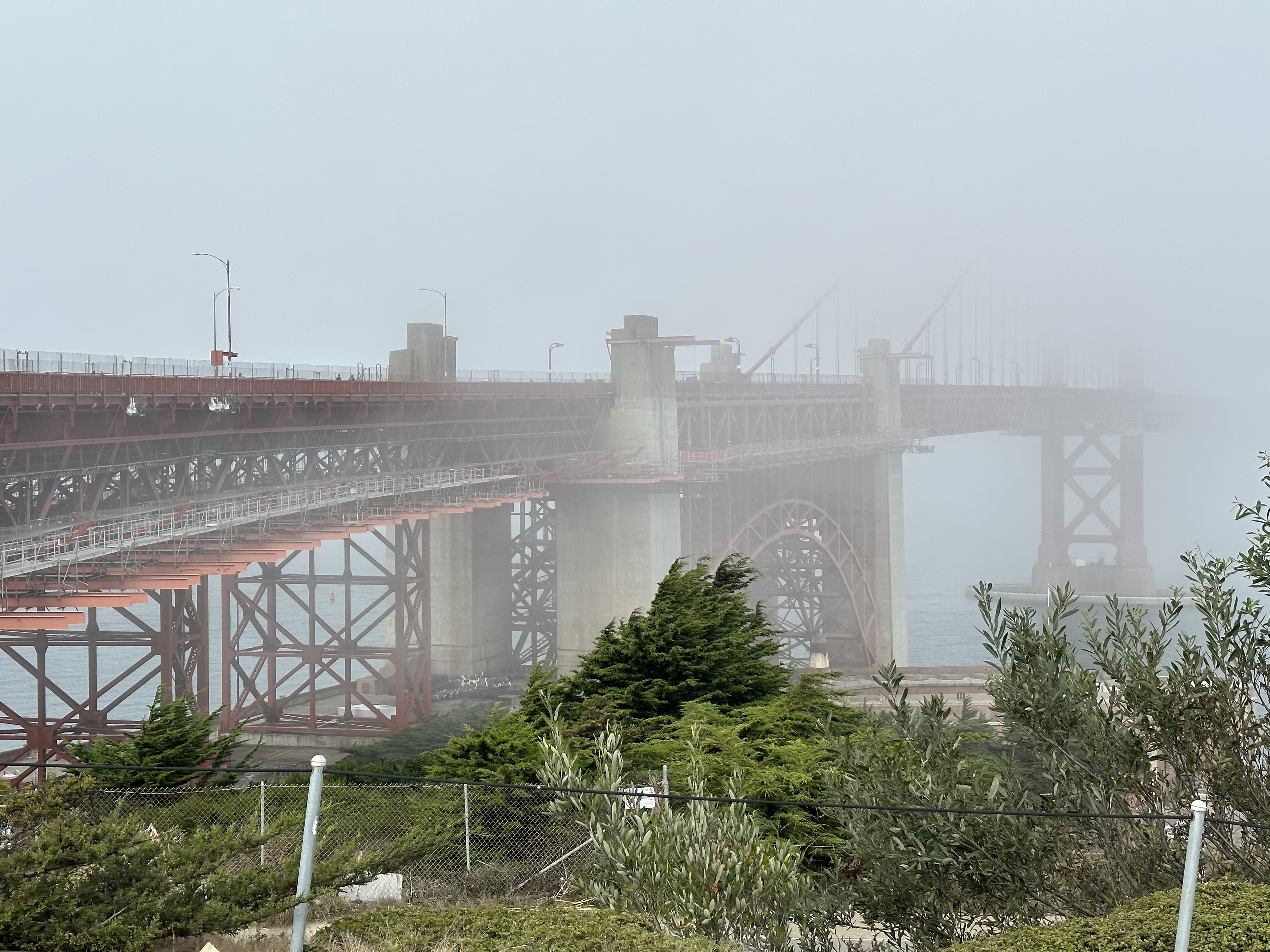
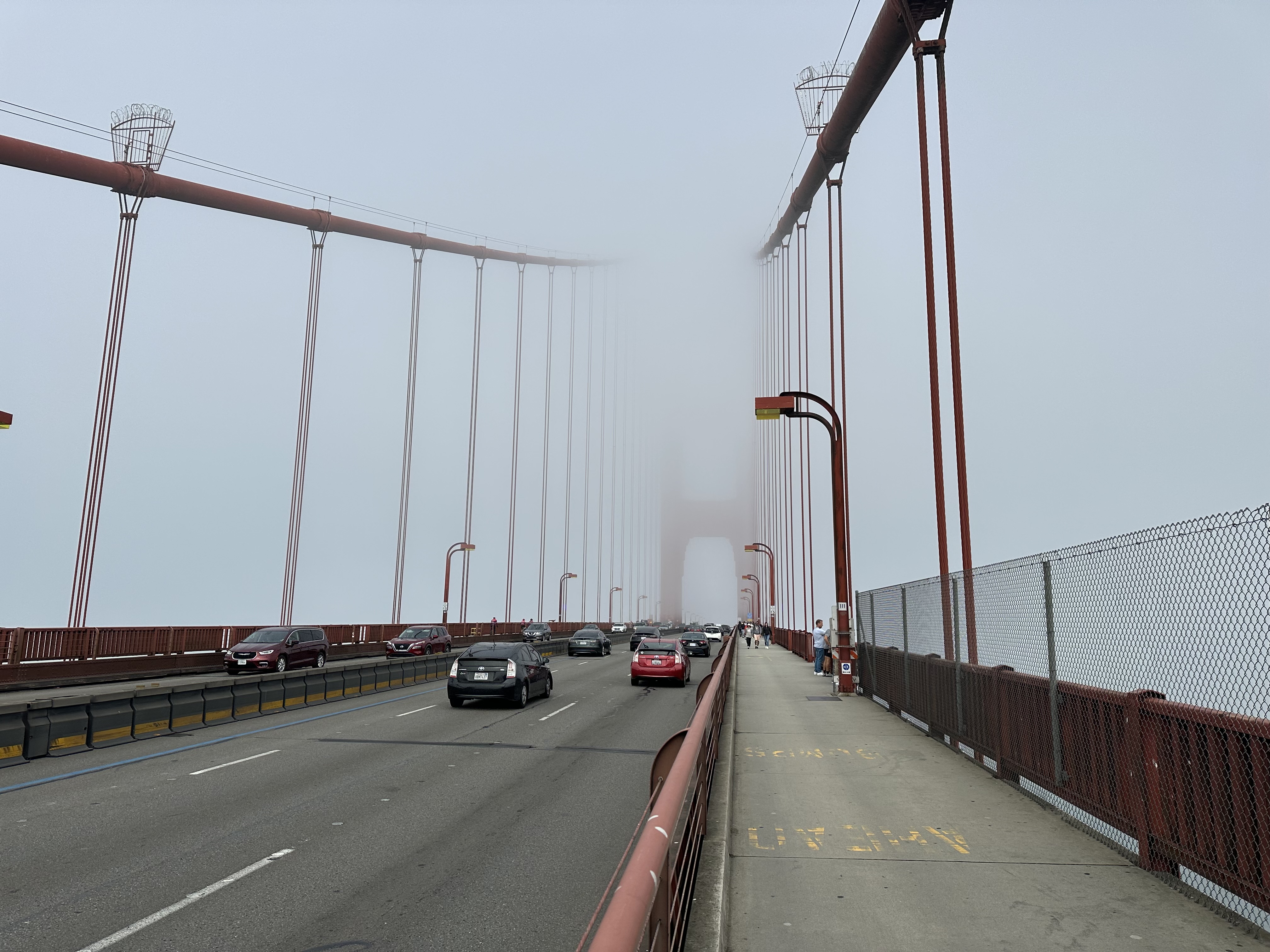
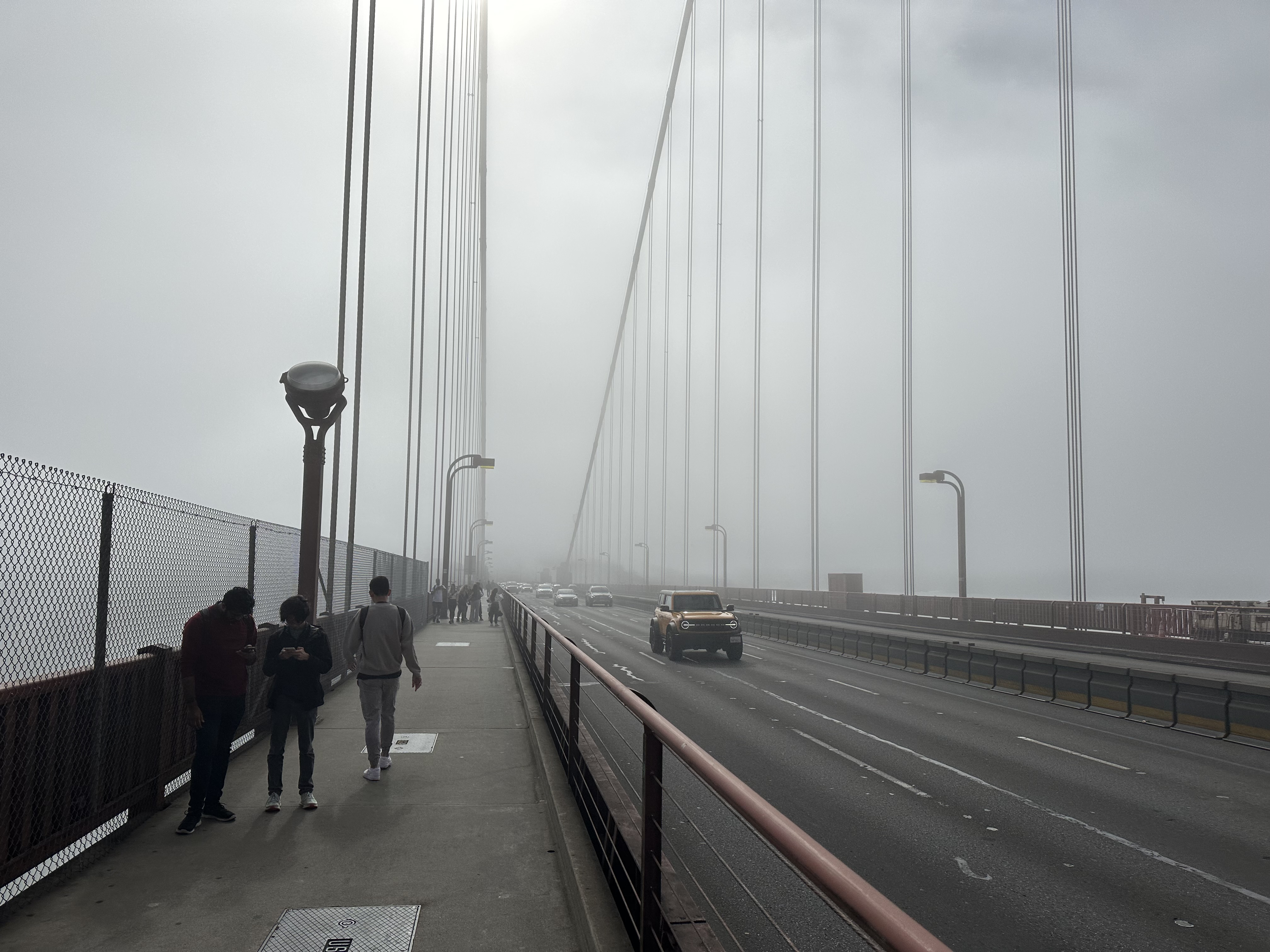
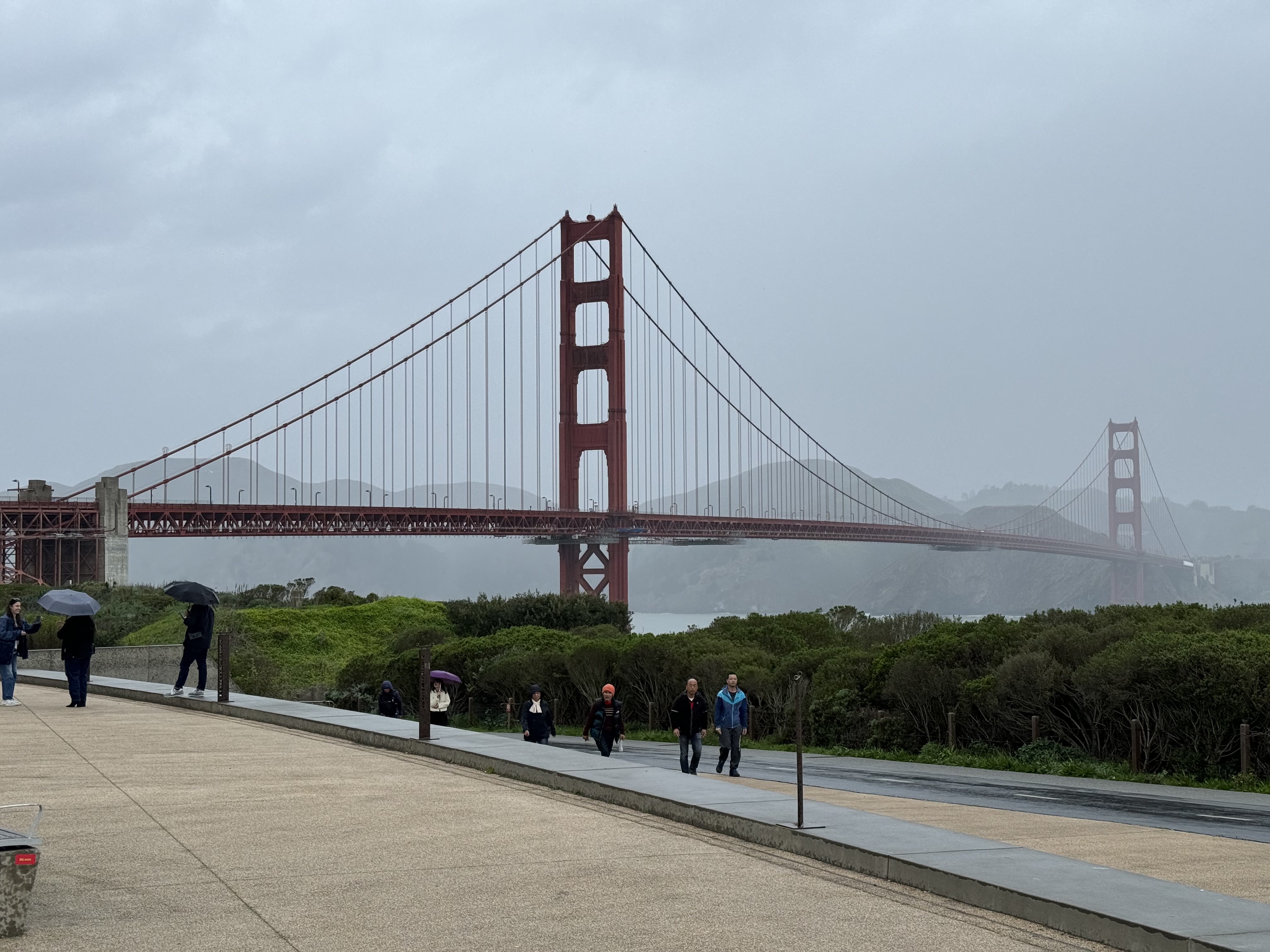
The Golden Gate Bridge is a suspension bridge across the Golden Gate, the strait about 1.6 km (one mile) wide between San Francisco Bay and the Pacific Ocean, in California, USA. It links the northern tip of the San Francisco Peninsula, near the Marina District, with Marin County. The bridge carries U.S. Route 101 and California State Route 1 and has walkways for pedestrians and cyclists. The American Society of Civil Engineers lists it among the Wonders of the Modern World, and it is the best-known symbol of San Francisco.
The main span of the Golden Gate Bridge is 1,280 m (4,200 ft) long, and the towers rise 227 m (746 ft) above the water. Clearance under the span is about 67 m (220 ft) at mean tide, enough for large naval and cargo ships. When it opened in 1937 it was the longest and the tallest suspension bridge in the world; it lost the first title in 1964 and the second in 1998.
The bridge is designed for winds of up to 109 km/h (68 mph) and has been closed for weather only three times. When a safety barrier was installed, the railing on the west side of the walkway was replaced with thin, flexible slats so the structure could withstand winds of up to 161 km/h (100 mph). Since the summer of 2020, these slats produce a loud hum in strong west winds, as wind tunnel tests had predicted.
Before the bridge, the only way from San Francisco to Marin was by water. Ferries ran from 1820, the Sausalito Land and Ferry Company started in 1867, and by 1929 the ferry crossing over the strait was the largest in the world.
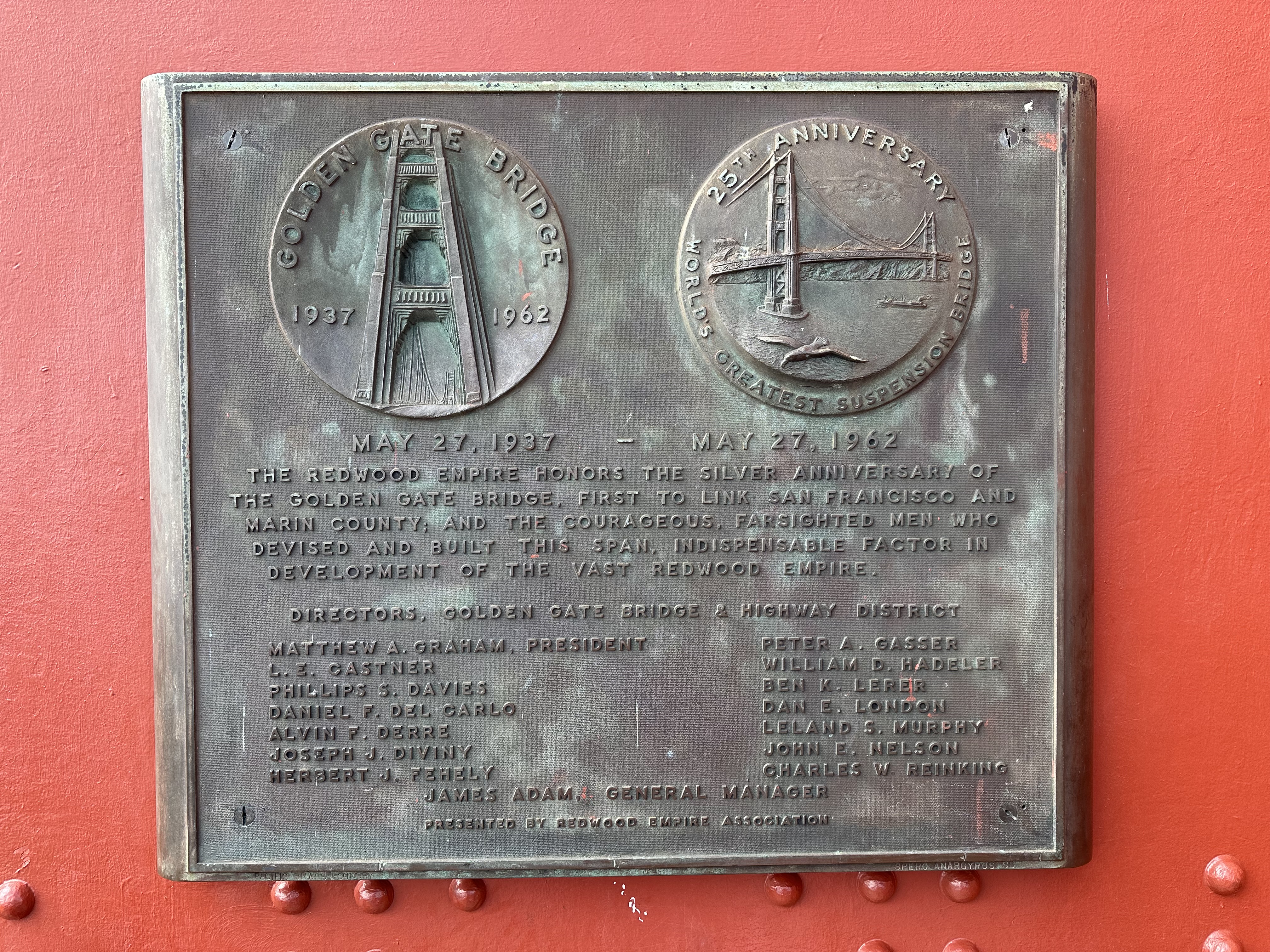
A fixed link had been discussed since the late 19th century, but many engineers thought it impossible: strong currents, water up to 113 m deep mid-channel, frequent wind and fog. Construction began on January 5, 1933. Joseph Strauss was chief engineer, with Leon Moisseiff, Irving Morrow and Charles Ellis on the project. The bridge was built by McClintic-Marshall, a subsidiary of Bethlehem Steel. It cost over $35 million and was finished ahead of schedule and under budget. The bridge opened on May 27, 1937.
Strauss insisted on a movable safety net under the workers. The nineteen men it saved called themselves the Half Way to Hell Club. Eleven men died during construction, ten of them on February 17, 1937, when a scaffold fell onto the net and tore through it.
The bridge's colour is called International Orange. Architect Irving Morrow chose it because it blends with the surrounding hills, stands out against the sky and ocean, and is easier to see in the fog that often covers the strait. He also designed the Art Deco details.
The best views of the bridge are from:
At the south end stands the Round House Café, an Art Deco building by Alfred Finnila from 1938, where most walks across the bridge begin.
By car, take US 101 or CA 1. The toll is charged only southbound, into San Francisco, and only electronically. City buses run to the south end. Pedestrians and cyclists cross on the side walkways.
No votes yet


No reviews yet. The first one helps the next travellers.