

Tract German airfield
1.6 km1.5k1
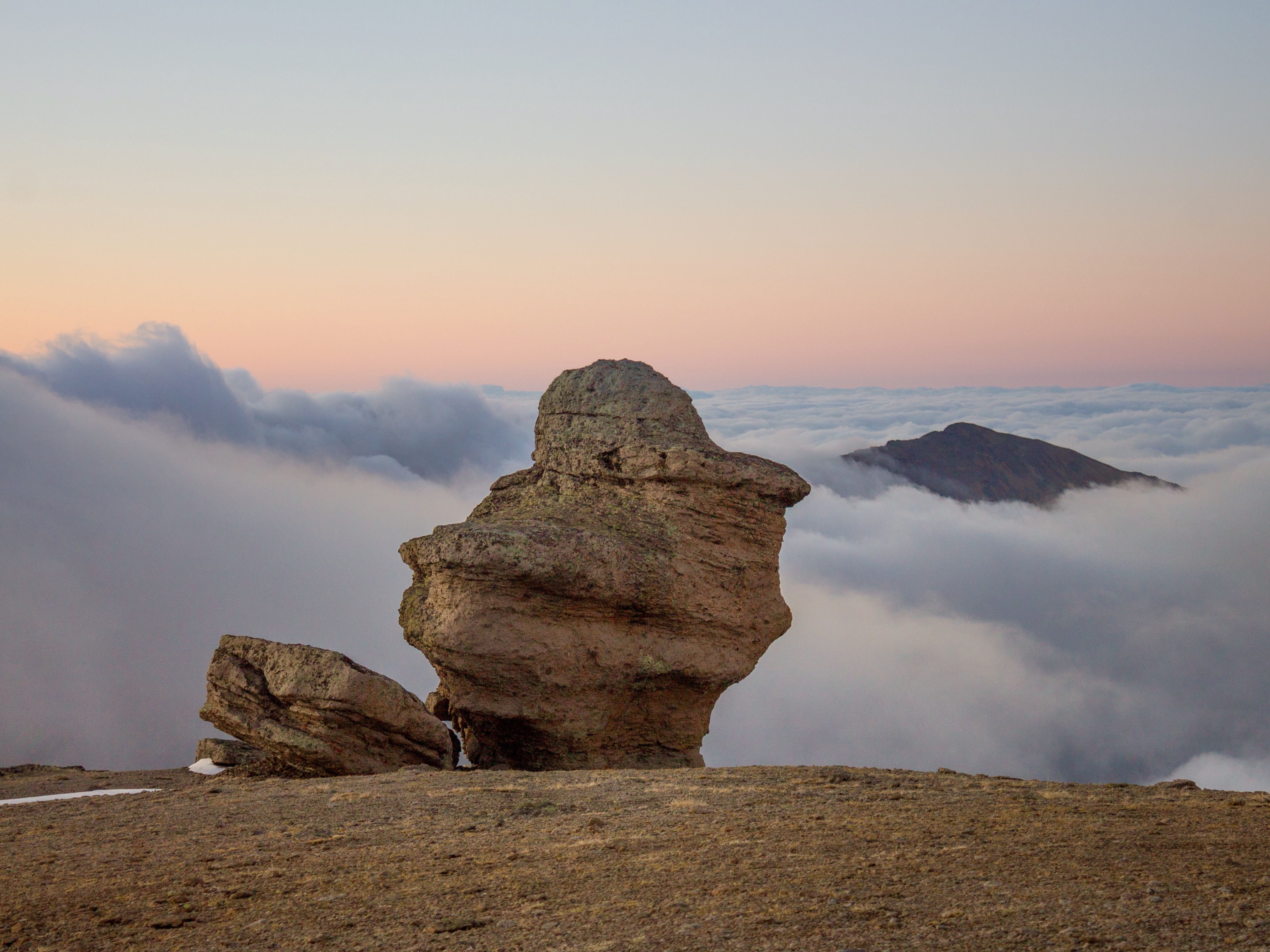
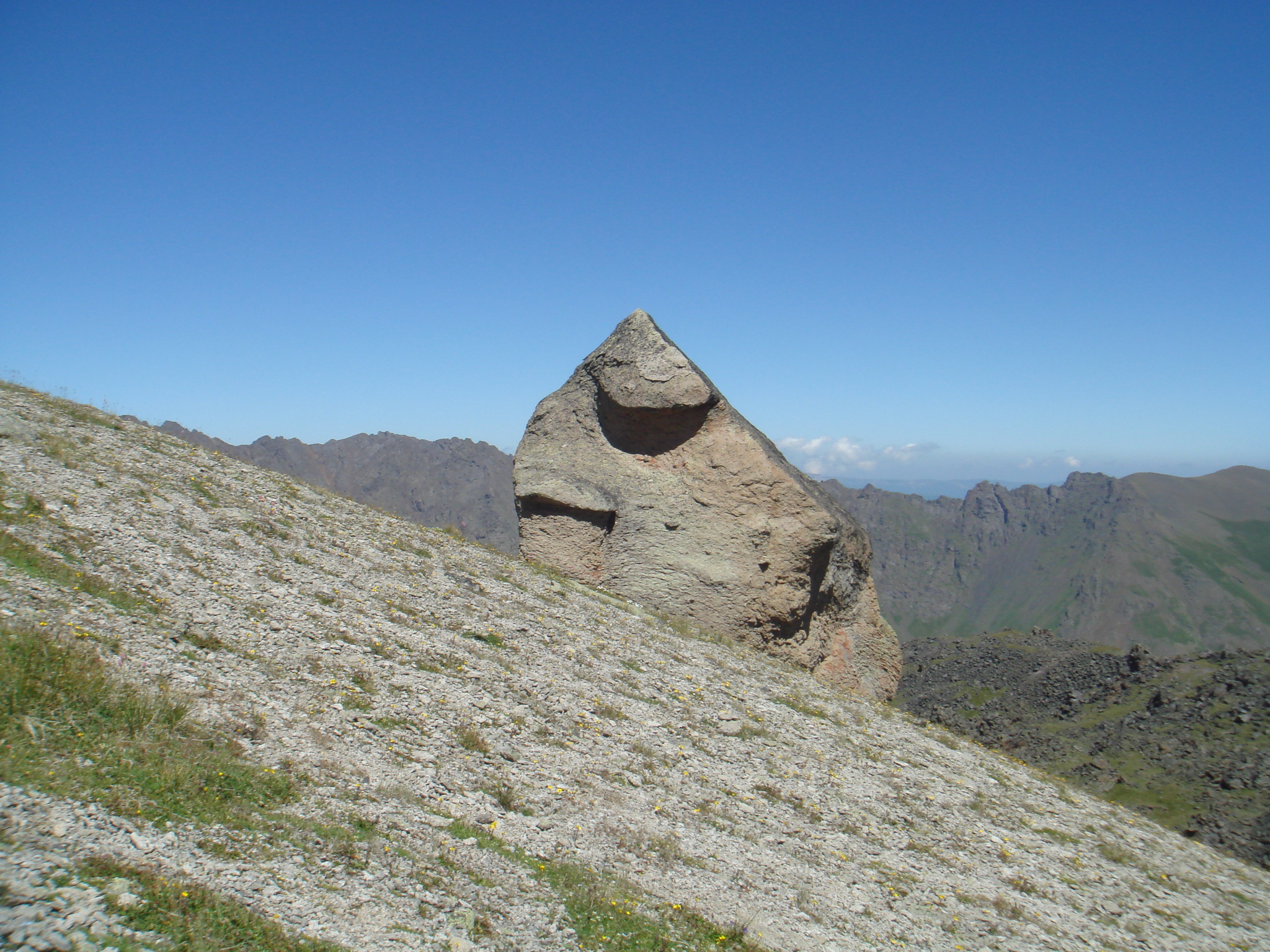
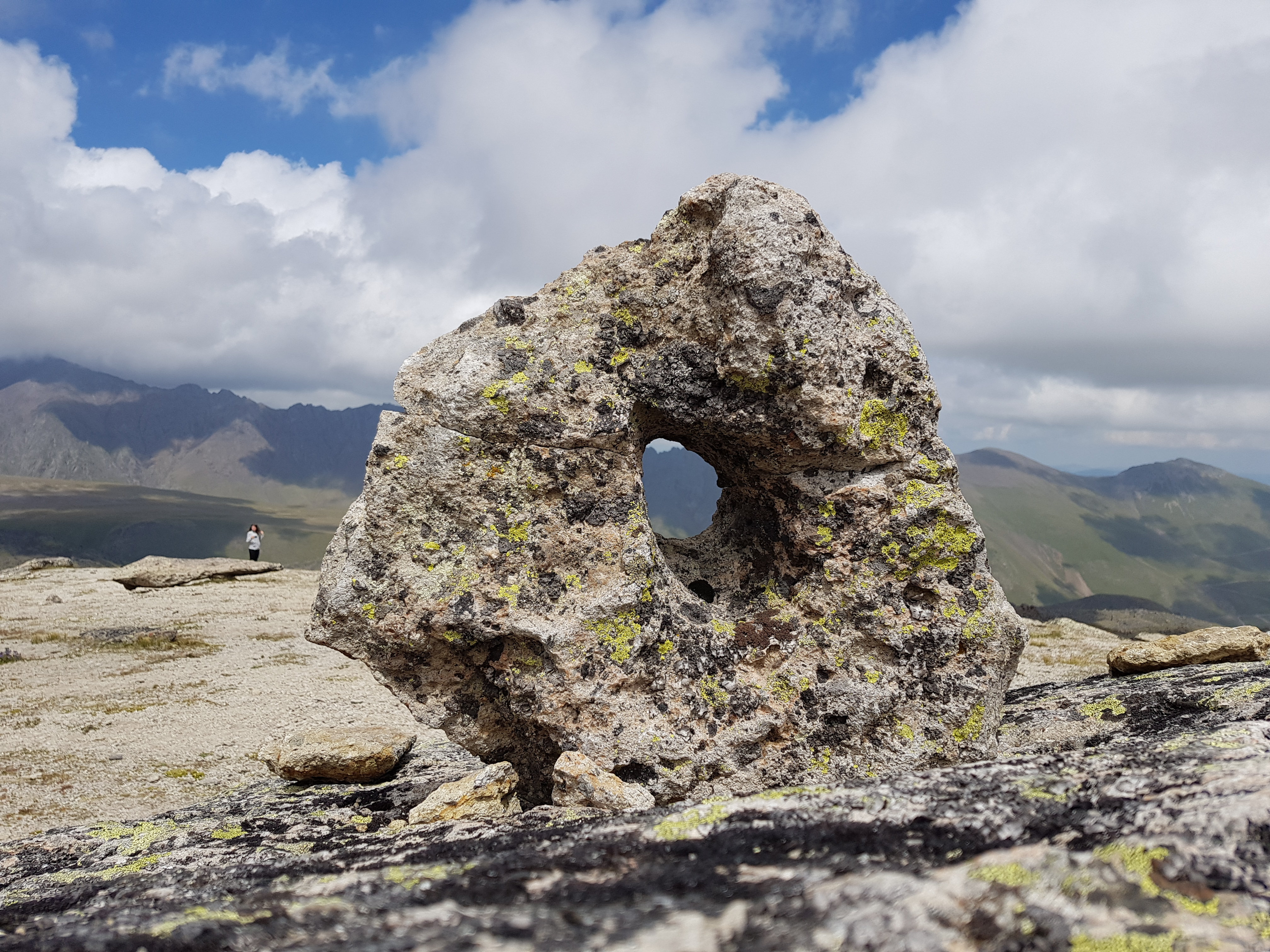
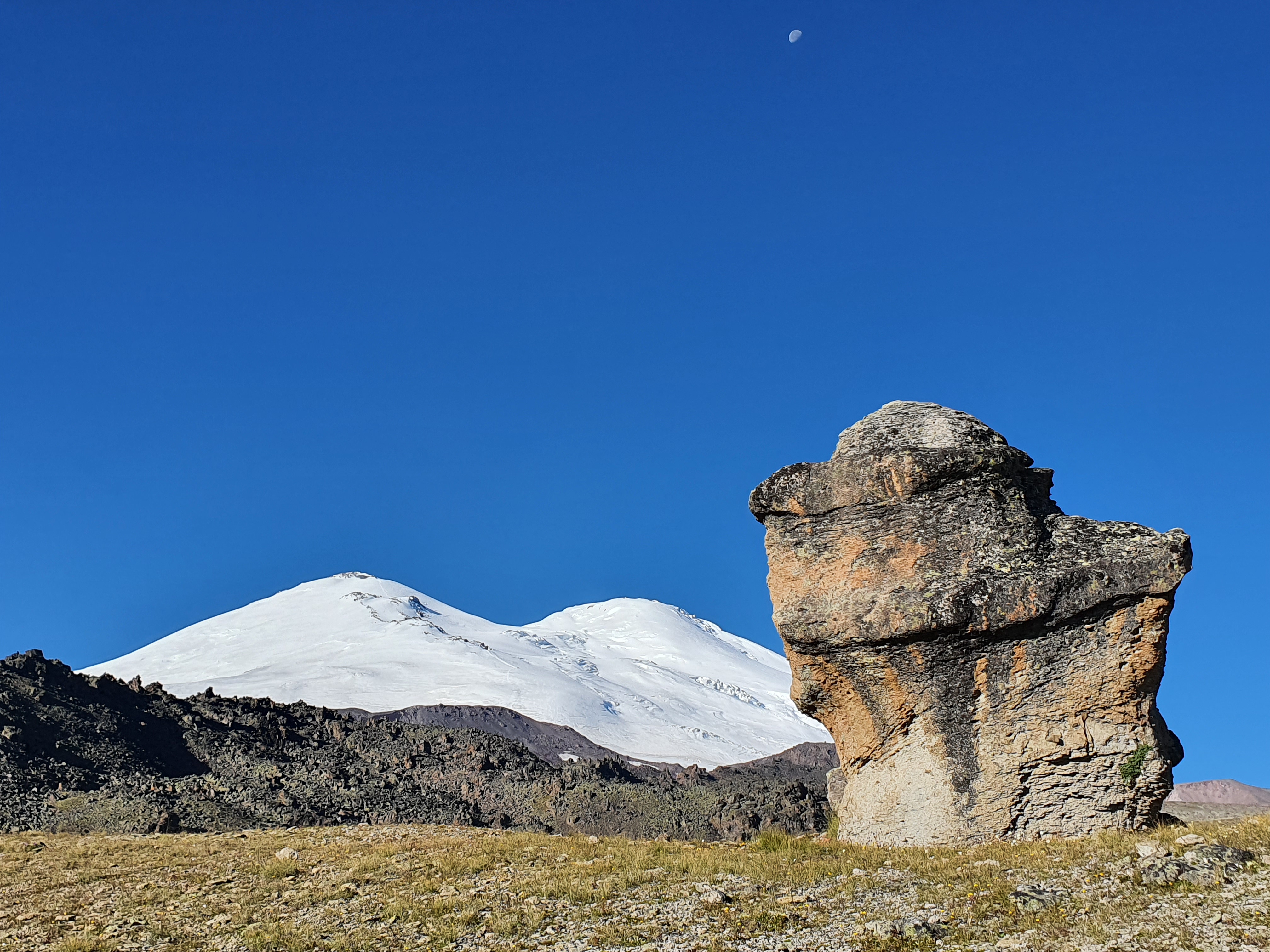
The Stone Mushrooms of Elbrus are a group of about twenty bizarrely shaped rock formations (hoodoos) on the northern slope of Mount Elbrus (5,642 m, the highest peak in Russia and Europe), in Kabardino-Balkaria, at an altitude of about 3,200 meters above sea level. It is one of the best-known natural landmarks of the Elbrus area.
The formations resemble forest mushrooms — such as boletus, russula and porcini — but unlike them they never hide in grass or leaves: for centuries they have stood in plain view, impressing visitors with their size and graceful shapes. The hill where the figures stand is quite small, about 100 by 250 meters, and visitors describe the valley itself as having a particular sense of peace and calm.
Guides and travelers call this one of the most "energetically powerful" places in the Elbrus area: according to those who have been there, equipment often malfunctions and watches stop, and the weather can change abruptly — rain and wind around the hill while the sun shines over the mushrooms themselves.
The mushrooms vary in size: the tallest reach five meters, while others are noticeably smaller and more modest. In their outlines, visitors' imagination sees not only mushrooms but also flying saucers, fairy-tale castles, trolls, gnomes and other mythical creatures.
Some of the stones have hollows that researchers consider man-made; according to one version, they were once used for offerings to the gods, which some link to the place's unusual atmosphere. There is also a belief about one of the stones, shaped like a cross: it is said to have healing power, and that lying on it with arms outstretched can cure illness.
The stone mushrooms are the result of centuries of weathering and erosion of the mountain slope: meltwater and rain gradually wore away the rock, and because its layers eroded at different rates, the characteristic shapes formed, with a loose "stem" and a harder "cap".
A few kilometers away, also on the northern slope of Elbrus, in the Zolsky District of Kabardino-Balkaria, lies the Dzhily-Su tract — its name translates from Karachay-Balkar as "warm water" (source: Wikipedia). The tract lies at an altitude of about 2,300–2,400 meters and is known for 14 mineral narzan springs with a water temperature of +20…+24 °C, as well as waterfalls (sources: t-j.ru, putevka.com). The local narzan water is similar in composition to that of Pyatigorsk but noticeably warmer, and has long attracted not only those seeking health benefits but also fans of unusual places and legends about ancient civilizations.
The Stone Mushrooms can be reached by off-road vehicle along mountain dirt roads over several passes — usually with an overnight stay at Emmanuel Glade and a morning hike up to the formations; reaching them on foot without a guide is technically difficult, so most visitors come with a guide or as part of organized tours from the towns of the Caucasian Mineral Waters region (source: tripster.ru).
The Stone Mushrooms and the nearby Dzhily-Su are worth seeing for anyone interested in unusual mountain landscapes and the legends of the Elbrus area.
No votes yet


No reviews yet. The first one helps the next travellers.