

Kyzyl Su Waterfall (Dzhily-Su)
0.5 km1.4k2
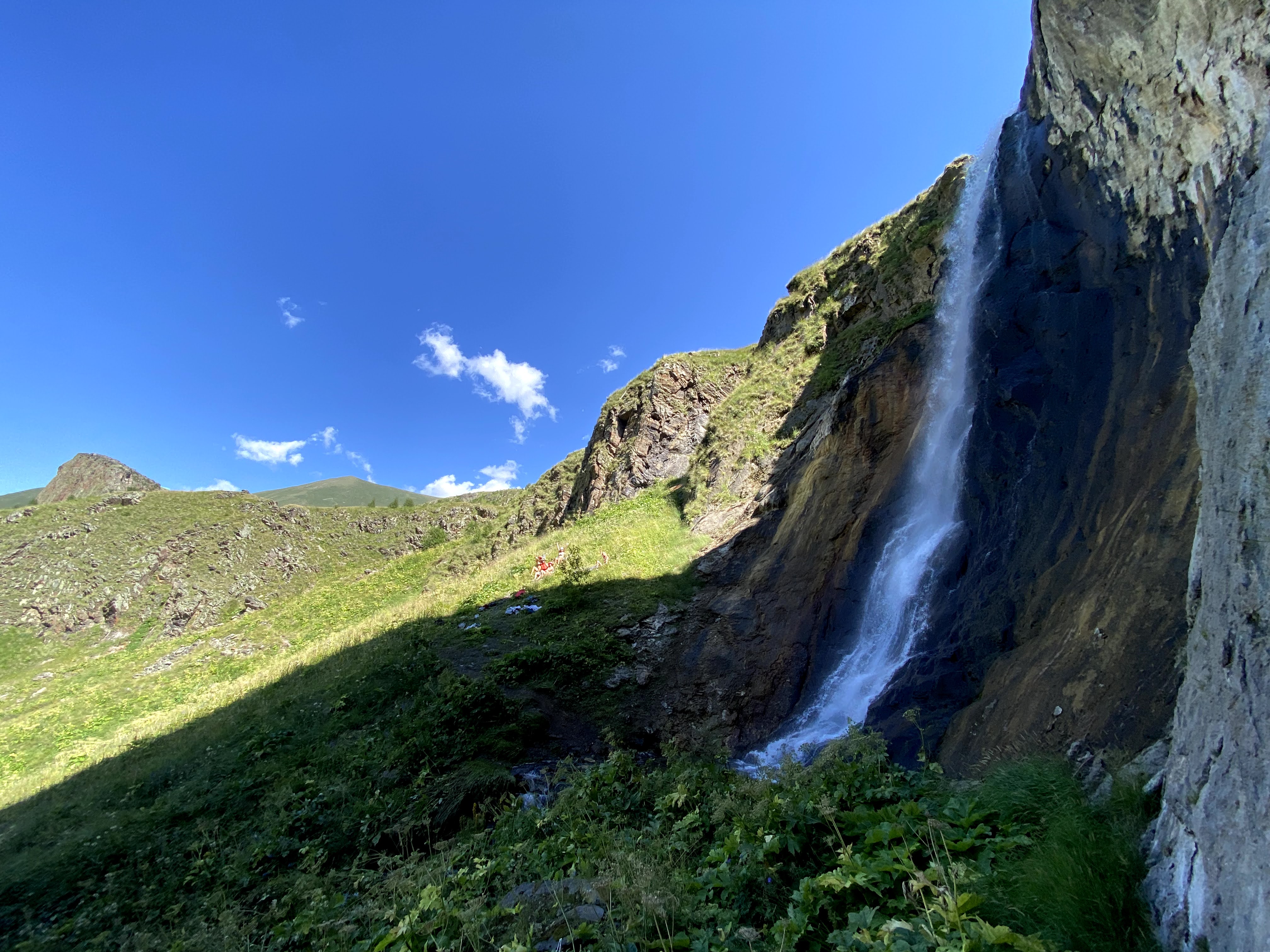
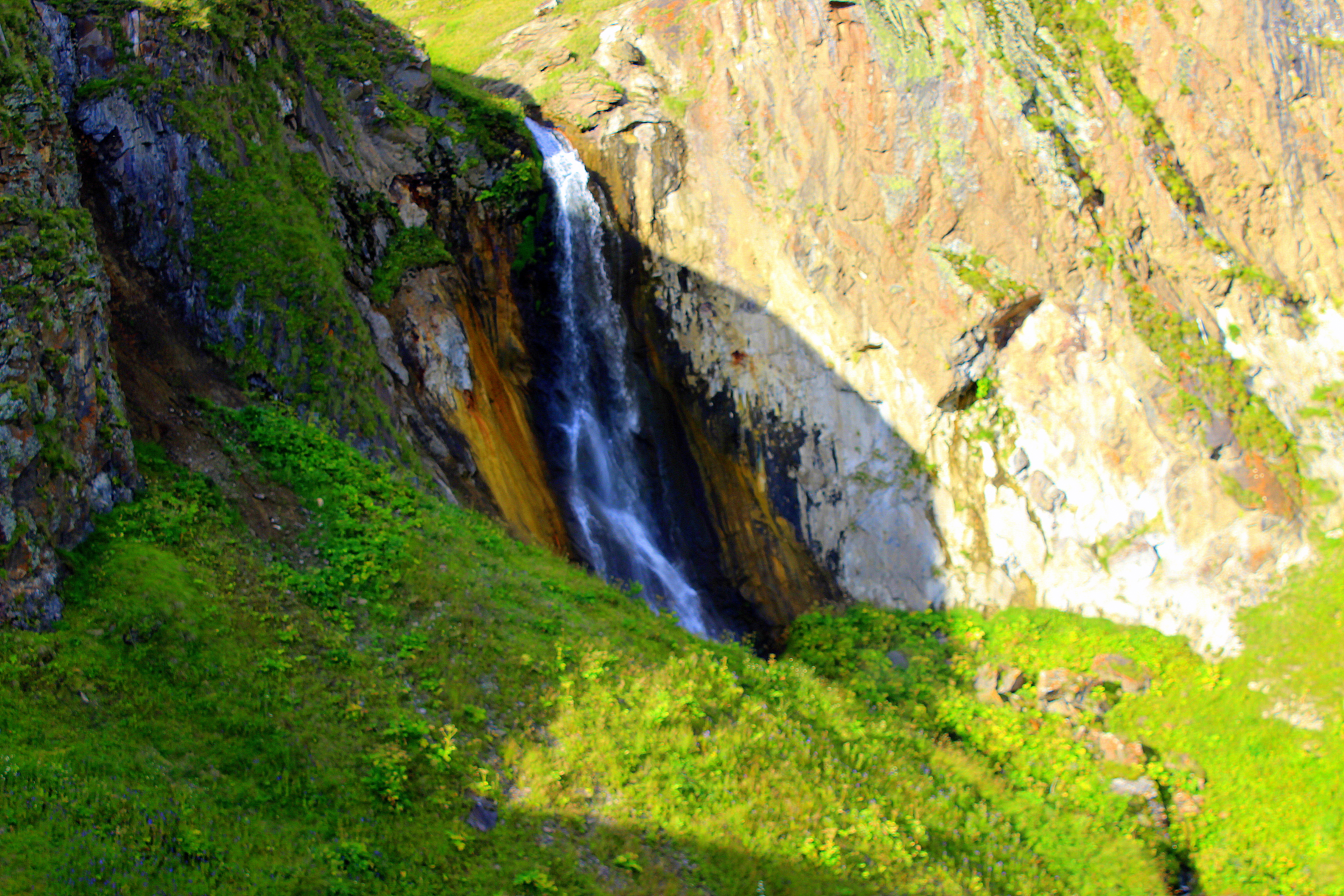
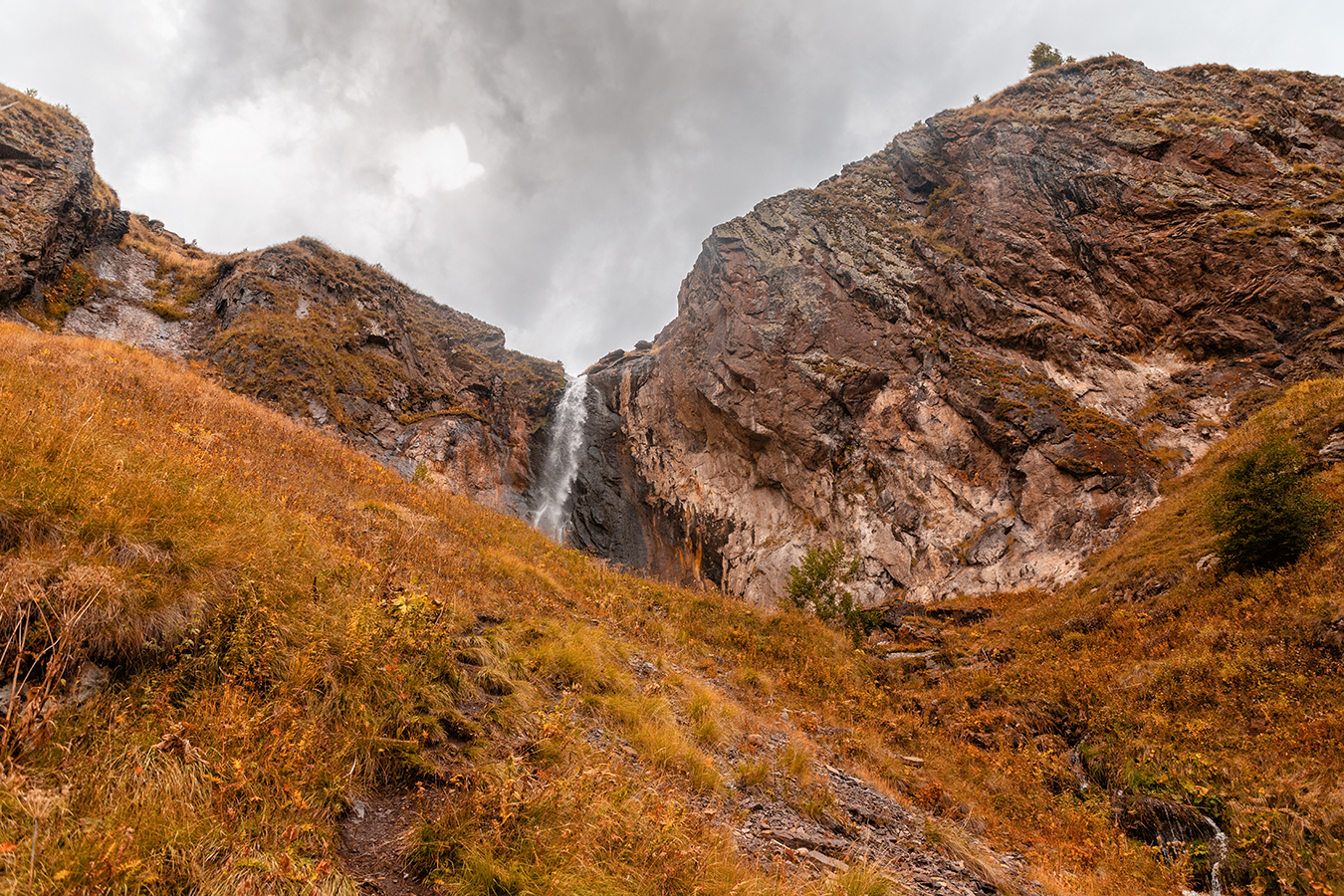
Emir Waterfall is the lowest and smallest of the waterfalls in the Dzhily-Su tract on the northern slope of Mount Elbrus, in the Zolsky District of Kabardino-Balkaria, Russia. It is formed by the Karakaya-Su River, and a short trail through the Narzan Valley leads to it from the tent camp in the Dzhily-Su meadow.
The water drops about 7.5 to 8 metres, so Emir is noticeably more modest than its neighbours in the tract: the Kyzyl-Su, Sultan and Karakaya-Su waterfalls. Together with them it makes up the group of four large Dzhily-Su waterfalls that draw most visitors here.
What sets Emir apart is the colour of its water. In summer the other streams of the tract carry brown or ash-grey glacial silt, while Emir stays clear and transparent. The rocks it runs down are stained in bright colours by minerals, and against these mottled walls the stream photographs especially well.
You can walk almost right up to the waterfall. On sunny days a rainbow often hangs in the spray at its foot.
Emir goes by other names too. Most often it is called the Liver Waterfall, after the mineral spring (narzan) that rises at its base. Local lore says the water is good for the liver; there is no scientific proof of this, so drink it with care.
The Dzhily-Su tract has many mineral springs, around fifteen by local counts. Near the meadow there are makeshift mineral-water baths at more than 2,300 metres, which visitors often stop at on the way to the waterfalls.
Dzhily-Su lies in the mountains of the Elbrus region, and the usual approach is from Kislovodsk along a long mountain road with many switchbacks. There is no public transport: you need your own car, preferably with high ground clearance, or a transfer. A barrier at the entrance to the tract collects an environmental fee, and there may be a second paid checkpoint further in.
Cars are left at the car and tent camp in the Dzhily-Su meadow. From there it is about a 20-minute walk to Emir Waterfall along a trail through the Narzan Valley, where mineral springs come out of the ground.
The best time to visit is from mid-June to September, when the road is passable and the alpine meadows are warm. Mountain weather changes quickly, so bring warm and waterproof clothing. The stones by the water are slippery; wear sturdy shoes near the stream.
No votes yet


No reviews yet. The first one helps the next travellers.