

Kalitsky Peak
6.7 km1.5k4
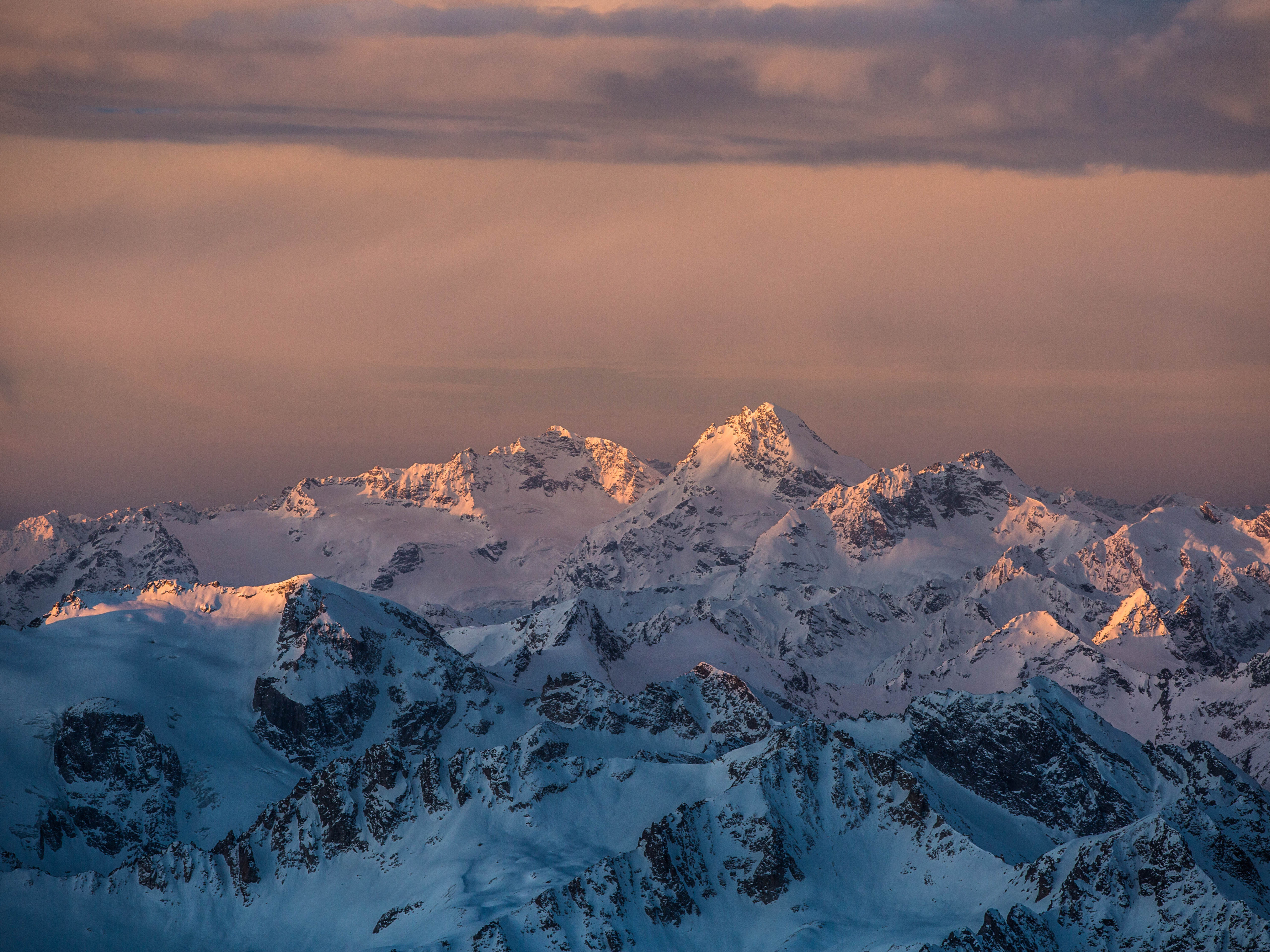
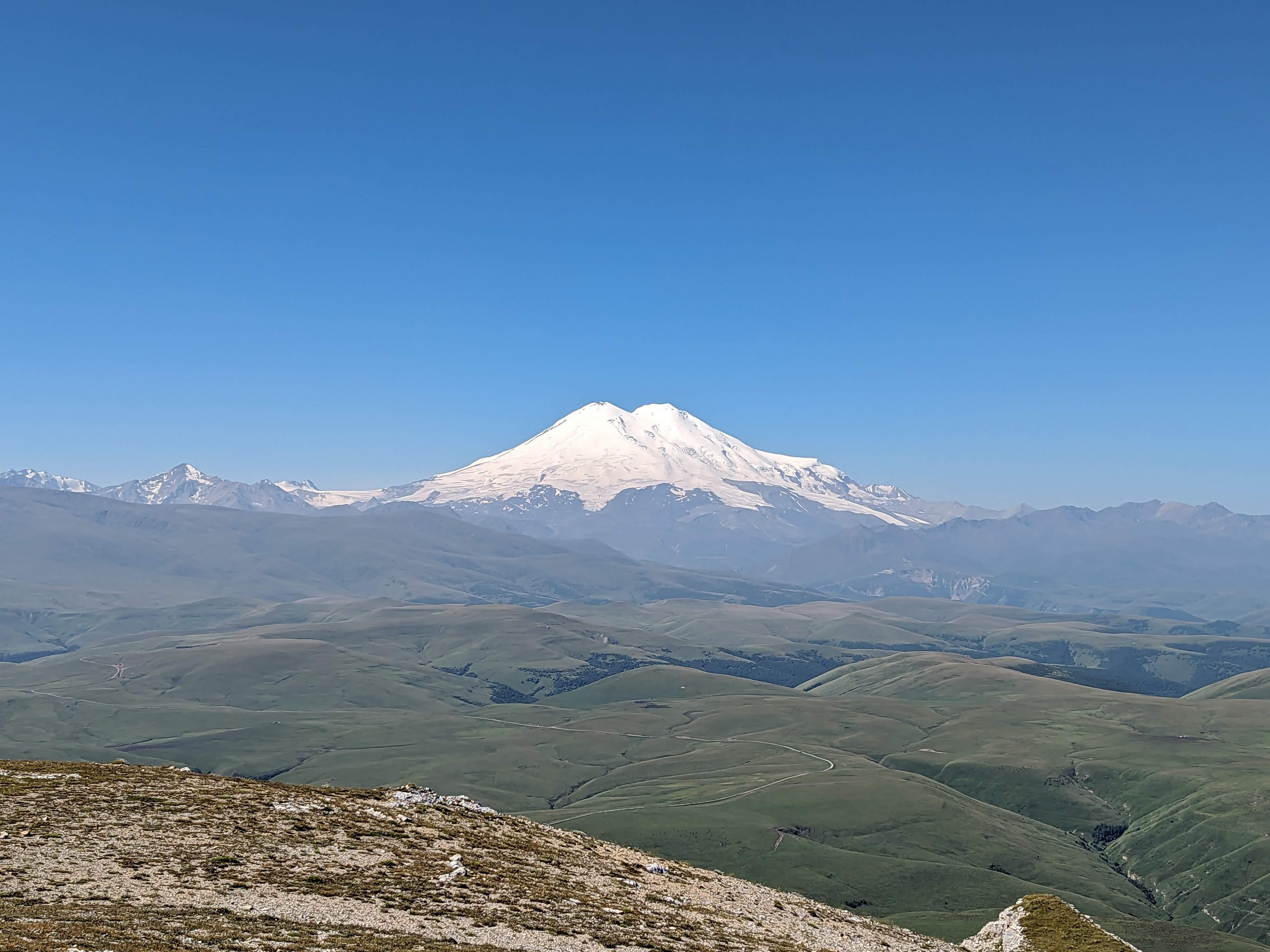
Elbrus is a majestic stratovolcano in the Caucasus. It is the highest mountain in Russia and in Europe, if the border between Europe and Asia is drawn along the Main Caucasus Range or farther south. Included in the Seven Summits list of the highest peaks on each continent, Elbrus rises in the Lateral Range of the Greater Caucasus, just 10 km north of the Main Caucasus Range, on the border between the republics of Kabardino-Balkaria and Karachay-Cherkessia. The summit's coordinates are about 43°21′ N, 42°27′ E.
Elbrus is a mountain massif of volcanic origin with a base diameter of 15 km. It has two clearly defined peaks: the West Summit (5,642 m) and the East Summit (5,621 m), separated by a long, gently sloping saddle (the Elbrus Saddle, 5,416 m). The distance between the two peaks is about 1,500 m. The base elevations range from 3,200 to 3,800 m, and the average slope steepness is 35°.
Formed about a million years ago, Elbrus consists of alternating layers of lava, ash and tuff. The mountain's slopes are mostly gentle, but above 4,000 metres their average angle reaches 35 degrees. The peaks are capped with dense perennial snow and permanent ice, feeding 23 glaciers with a total area of 134 sq. km.
The first documented ascent of Elbrus took place on 22 July 1829: the East Summit was reached by Kilar Khashirov, a Kabardian participant in a scientific expedition of the Russian Academy of Sciences led by General Georgy Emmanuel.
The first detailed map of Elbrus was drawn up in 1890 by the Russian military surveyor Andrei Pastukhov, who climbed both summits without guides; cliffs at an altitude of 4,800 metres now bear his name. The first person believed to have reached both summits was the Balkar hunter and shepherd Akhiya Sottayev, who climbed Elbrus nine times, the last in 1909 at the age of 121.
In Soviet times mountaineering became a mass movement. According to the Society of Proletarian Tourism, 59 ascents of Elbrus were made between 1829 and 1914, 47 of them by foreigners. In 1935 alone, Soviet climbers reached the summit 2,016 times.
During the Great Patriotic War, Elbrus became the scene of fierce fighting. In August 1942 German mountain troops from the Edelweiss Division planted German flags on Elbrus's western summit. By the middle of the winter of 1942–1943, however, German forces had been driven from its slopes, and on 13 and 17 February 1943 Soviet climbers raised Soviet flags on both summits.
Today Elbrus is one of Russia's most popular ski resorts, drawing snowboarders, freeriders and climbers from around the world. The region also attracts nature lovers for its rich wildlife, including Caucasian tur, chamois and roe deer.
Although the Elbrus volcano has shown no activity for almost two thousand years, scientists consider it dormant. Hot masses still lie deep within it, warming the local mineral springs known as "hot narzans." Rich in mineral salts and carbon dioxide, these springs reach temperatures of +52 to +60°C and became the basis for the famous health resorts of Kislovodsk, Pyatigorsk and the whole Caucasian Mineral Waters region.
With its impressive heights, history and natural features, Elbrus remains an important part of the cultural and natural heritage of the Caucasus and Russia.
No votes yet


No reviews yet. The first one helps the next travellers.