 Religious building


Wild Tulips
1.1 km1.1k3


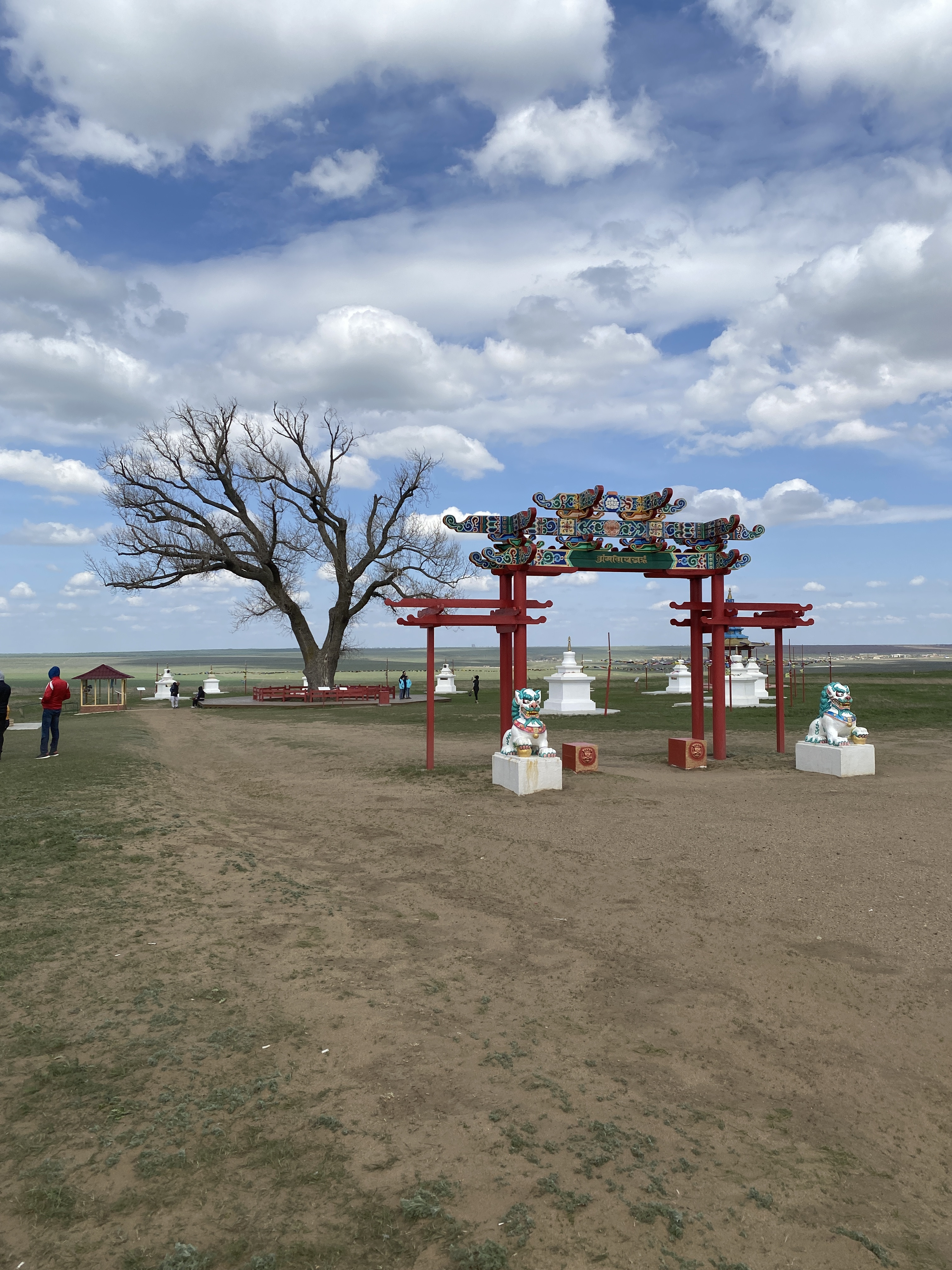
The Lonely Poplar is a tree sacred to the Buddhists of Kalmykia and a protected natural monument near the village of Khar-Buluk in the Tselinny District, about 28 km from Elista. It stands on a rise in the open steppe of the Yergeni Hills, and a whole shrine with stupas and healing springs has grown up around it.
According to tradition, the poplar was planted by the Buddhist monk Purdash-bagshi Dzhungruev, abbot of the Bogdo Dalai Lama Ik Khurul. Returning from a pilgrimage to Tibet, he brought poplar seeds hidden in a notch of his walking staff. He buried the staff on the highest point of the local hill near Khar-Buluk, and soon a poplar sprout came up there. The planting is usually dated to the early 20th century, although some sources give an earlier date in the mid-19th century.
In 1981 the tree was declared a natural monument of republican importance. It is listed in the National Register of Old-Growth Trees of Russia and holds the status of a living natural monument. In 2019 the Lonely Poplar won the all-Russian Tree of the Year contest, and in 2020 it represented Russia in the European Tree of the Year. Today it stands about 15 metres tall, with a trunk about one and a half metres across.
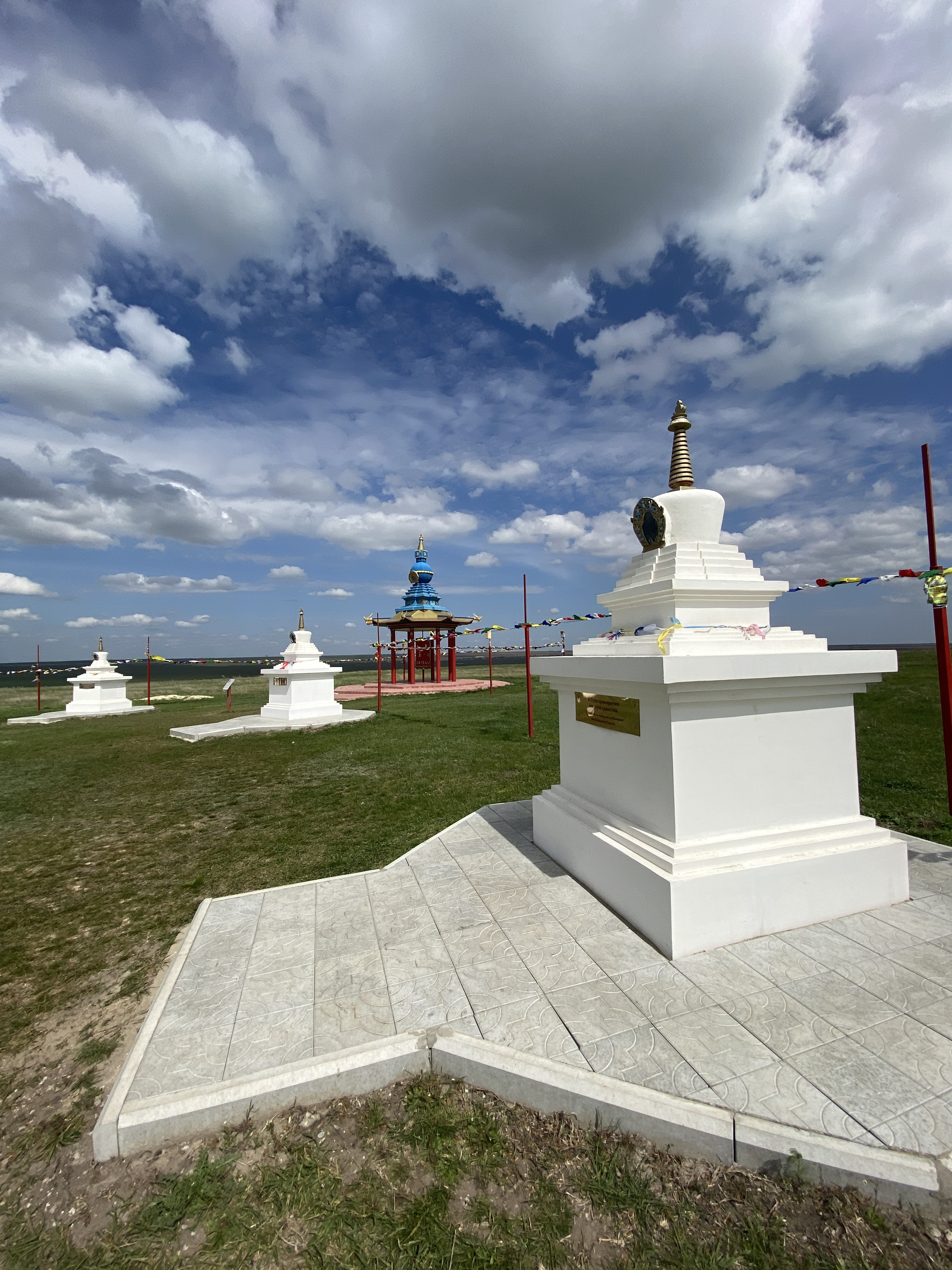
The tree is surrounded by a fenced sacred area. Eight white Buddhist stupas stand next to it, the first place in Kalmykia where eight were built together; walking around them is believed to bring harmony and free one from evil. Colourful wind horse prayer flags flutter over the hill, and there is a small prayer house where visitors leave offerings, along with two signs about the site and its stupas.
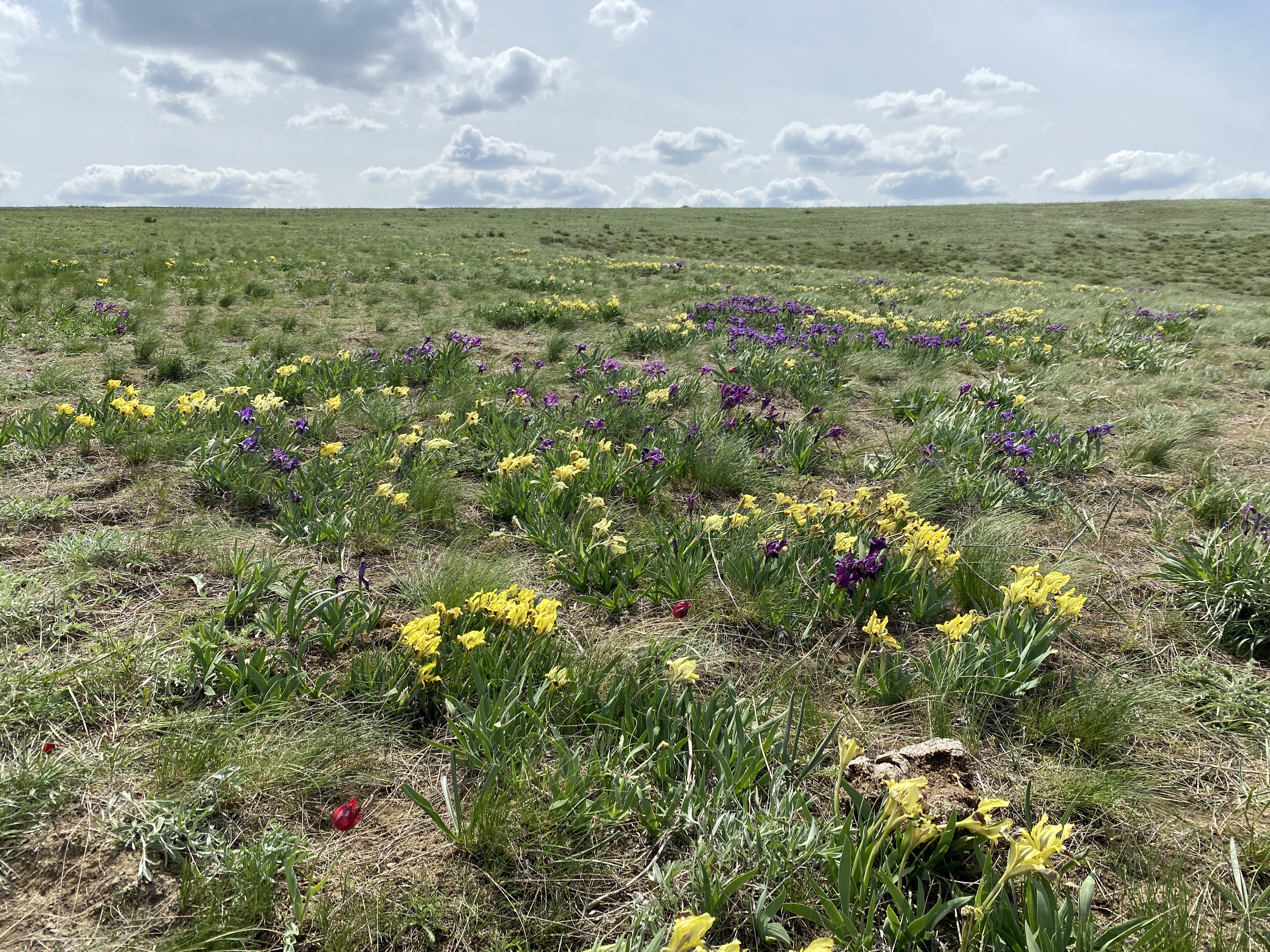
Just below the tree, in a hollow, there are springs. The name Khar-Buluk is translated from Kalmyk as "clear spring", and people come here specially for the water, which is considered healing, even though it can look cloudy and yellowish. In spring the slopes around are covered with flowering wild irises.
The easiest way is by car from Elista towards Khar-Buluk. The road turns off the highway and passes a wind farm mast, after which the lone tree appears on the hill, visible from far away.
This is an active place of worship, so behave respectfully. Pilgrims often scatter rice and pour milk on the ground, which harms both the tree and the spring, so it is better not to leave offerings at the roots and to take your litter with you.
No votes yet


No reviews yet. The first one helps the next travellers.