

Dyatlov Pass
55.9 km2.3k6
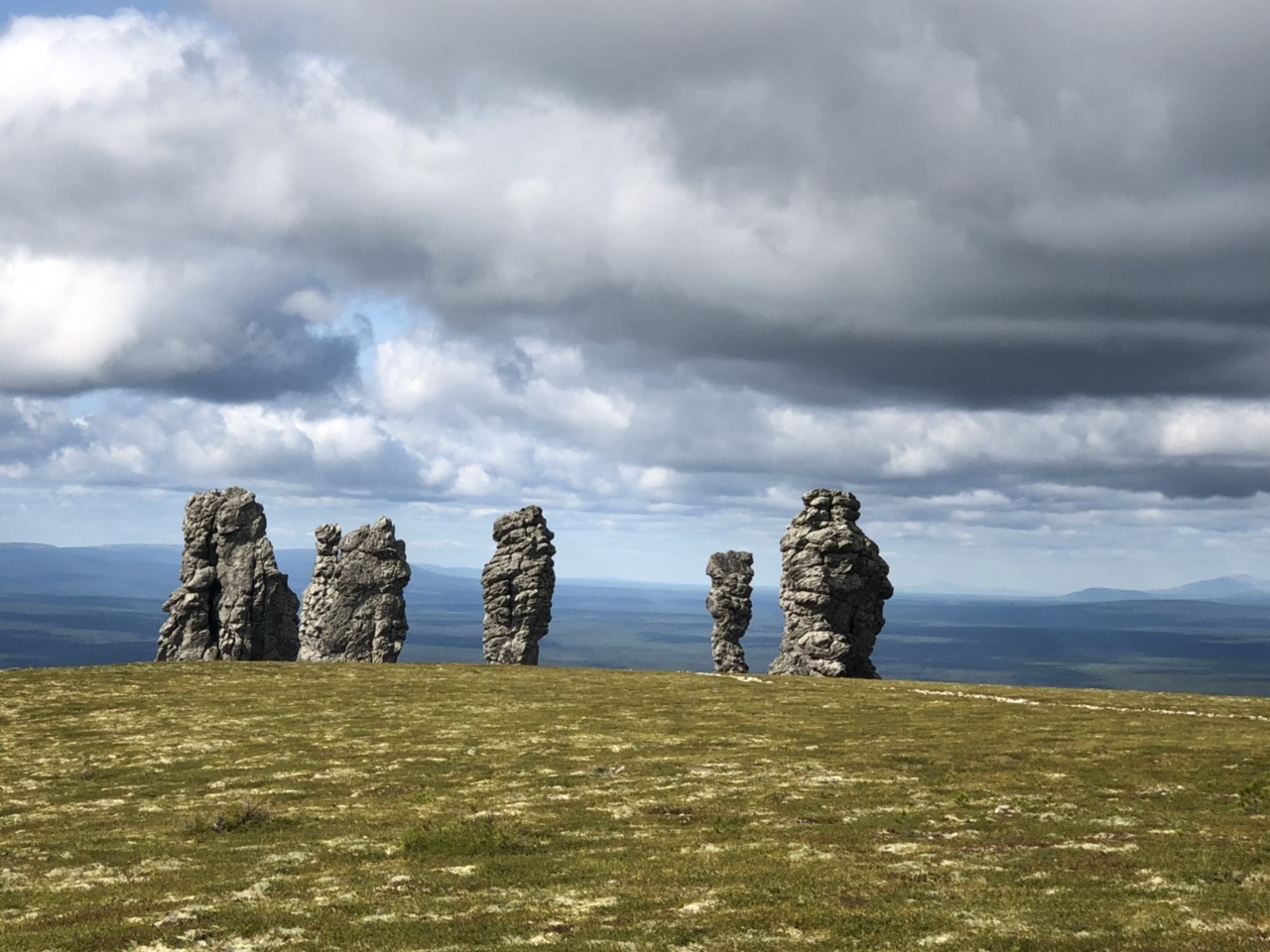
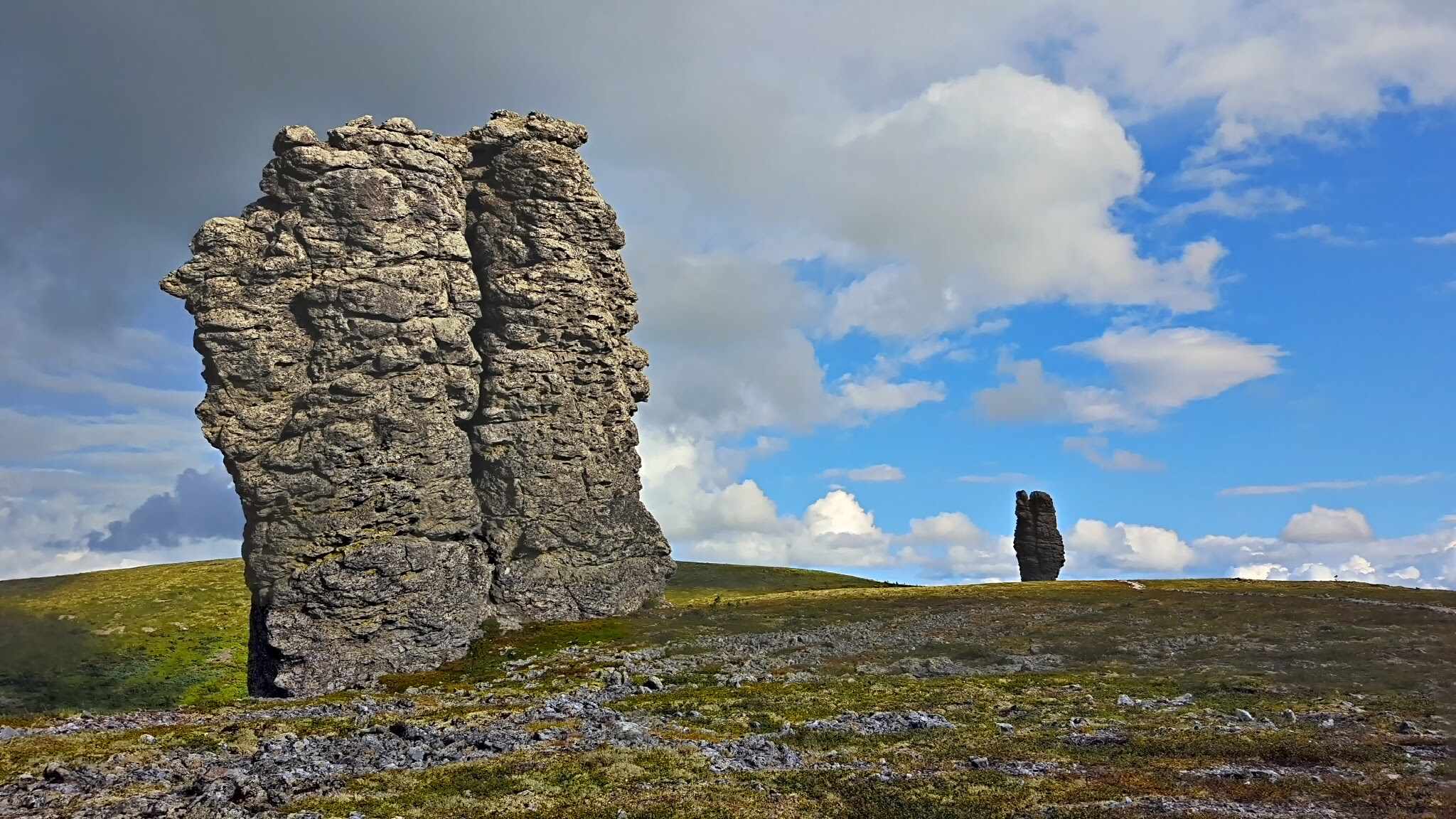
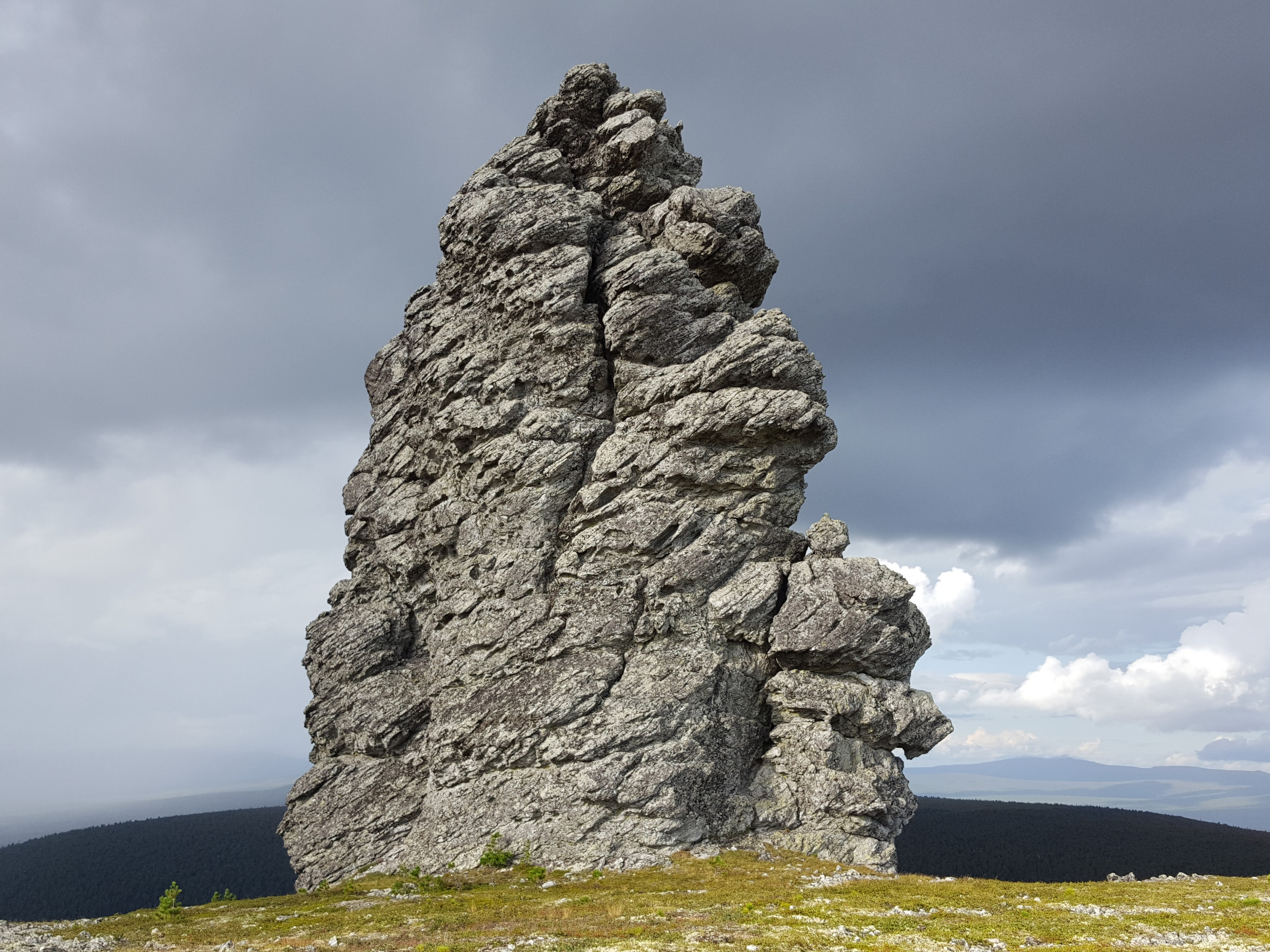
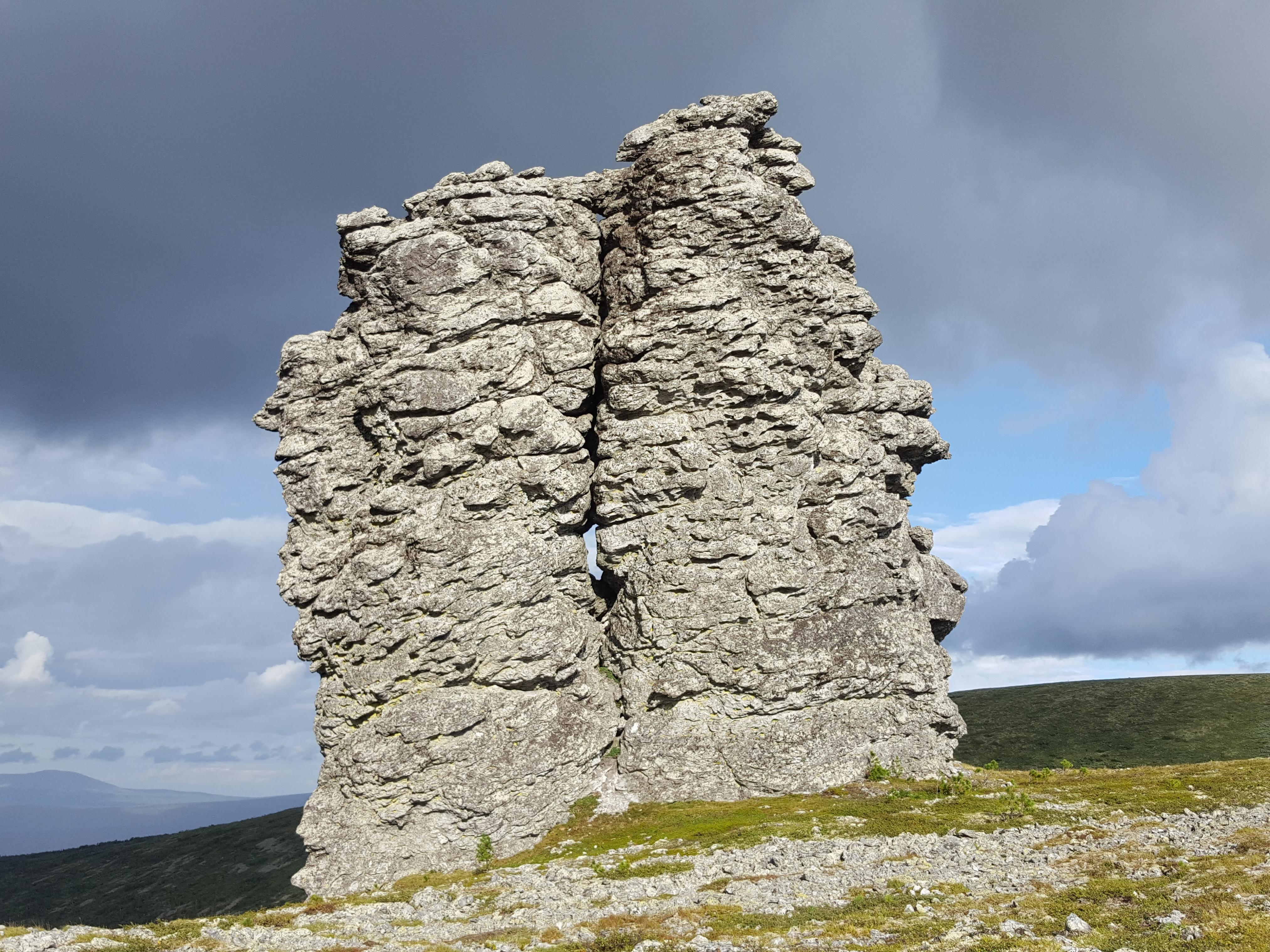
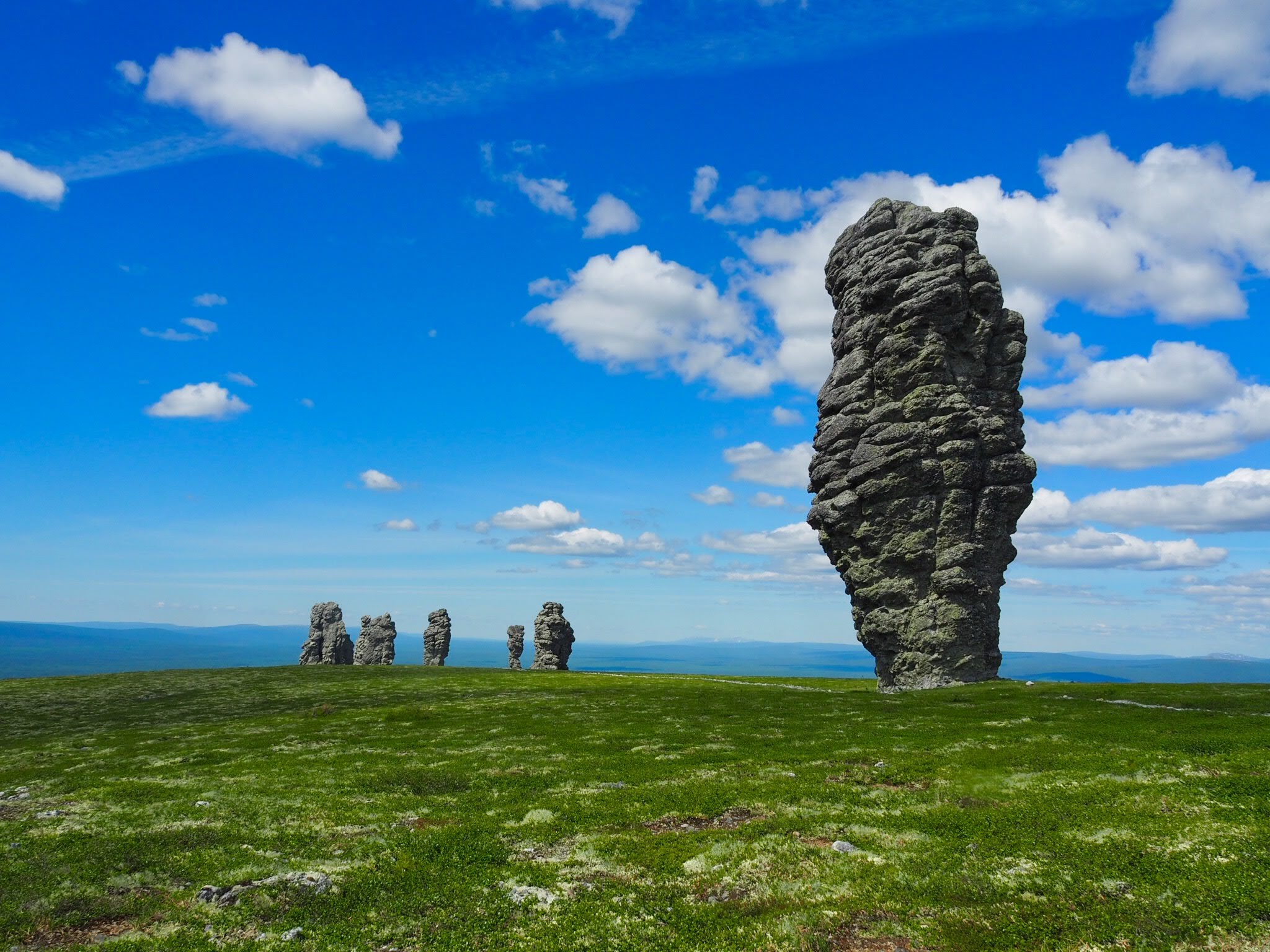
Manpupuner (also known as the Rock Pillars of Weathering) is a group of seven giant stone pillars, 30 to 42 meters tall, standing on a flat mountaintop on the Manpupuner ridge, in the northern part of the Ural Mountains, in the Troitsko-Pechorsky District of the Komi Republic, within the Pechora-Ilych Nature Reserve. It is one of the Seven Wonders of Russia (chosen in a nationwide vote in 2008) and a UNESCO World Heritage Site as part of the "Virgin Komi Forests". The nearest dwelling is the reserve's outpost, 10 km away; the nearest town, Troitsko-Pechorsk, is more than 200 km of roadless wilderness away.
The name comes from the Mansi language and means "Little Mountain of Idols." The seven stone pillars, made of sericite-quartzite schist, are all that remains of once-tall mountains. One of the pillars stands apart from the rest and looks noticeably more massive than the other six. Over millions of years rain, wind, frost and heat wore away the softer rock, while the hard schist survived, taking on strange shapes. Depending on the viewing angle, the pillars resemble a person, a horse, a ram or an upturned bottle. The tallest pillar is 42 meters - about as tall as a 14-storey building.
To the Mansi people Manpupuner was a sacred place. The pillars were worshipped, and climbing the plateau was considered a great sin. According to one legend, seven giants were marching through the mountains to destroy the Mansi people, but on seeing the sacred Yalpingner mountain they turned to stone in terror.
Manpupuner is one of the hardest-to-reach wonders of Russia. The nearest settlements are hundreds of kilometers away. There are three main routes.
On foot from the Komi Republic: from the village of Yaksha (the reserve's administration), by motorboat up the Ilych River, then on foot through the taiga - about 10 days round trip. The cheapest but longest option.
On foot from Sverdlovsk Oblast: from Mount Otorten via Dyatlov Pass - a route for experienced hikers, about 5-7 days.
By helicopter: from Ukhta, Troitsko-Pechorsk or Syktyvkar. The fastest option (1.5-2 hours) but the most expensive - a helicopter tour starts at around 30,000-40,000 rubles per person.
A visit requires a permit from the Pechora-Ilych Nature Reserve administration. Applications should be submitted in advance, as visitor numbers are limited.
The summer season runs from June to September. In winter the pillars are covered in snow and frost, creating fantastic scenery, but getting there is much harder. The best light for photography is early morning and sunset, when the pillars cast long shadows across the plateau.
No votes yet


No reviews yet. The first one helps the next travellers.