

Monument to Prince Vladimir and Saint Feodor
0.2 km1.5k1
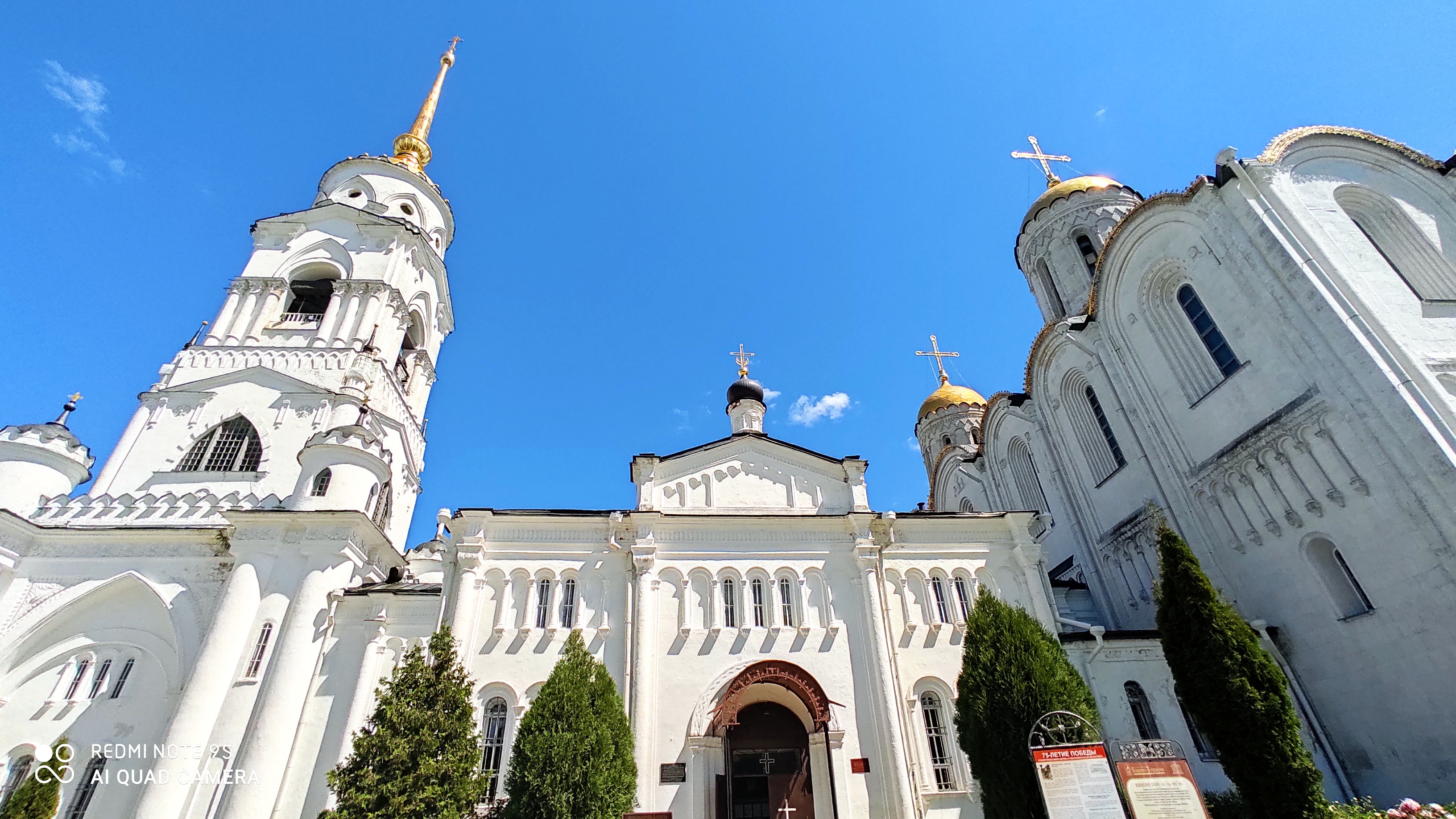
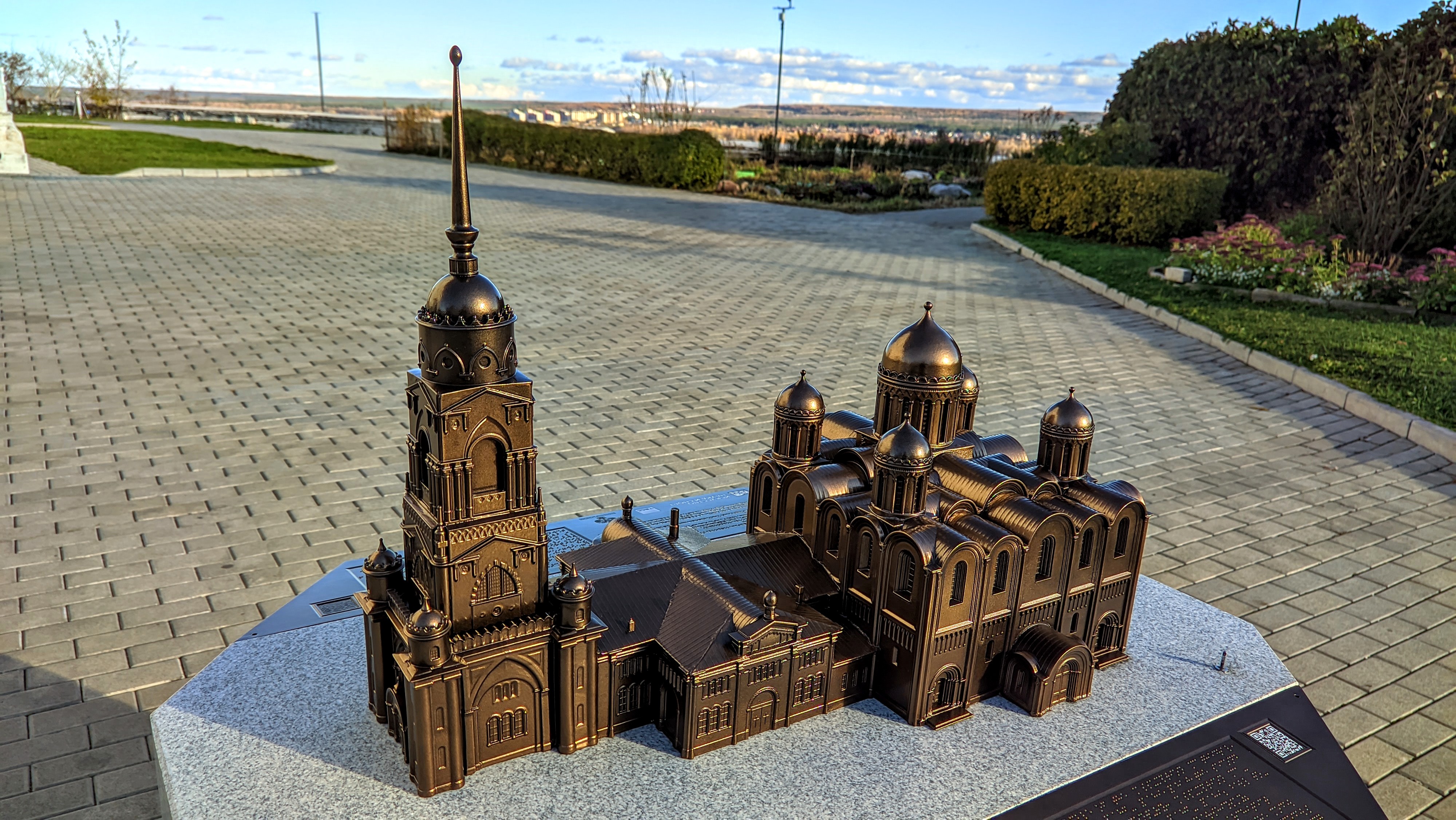
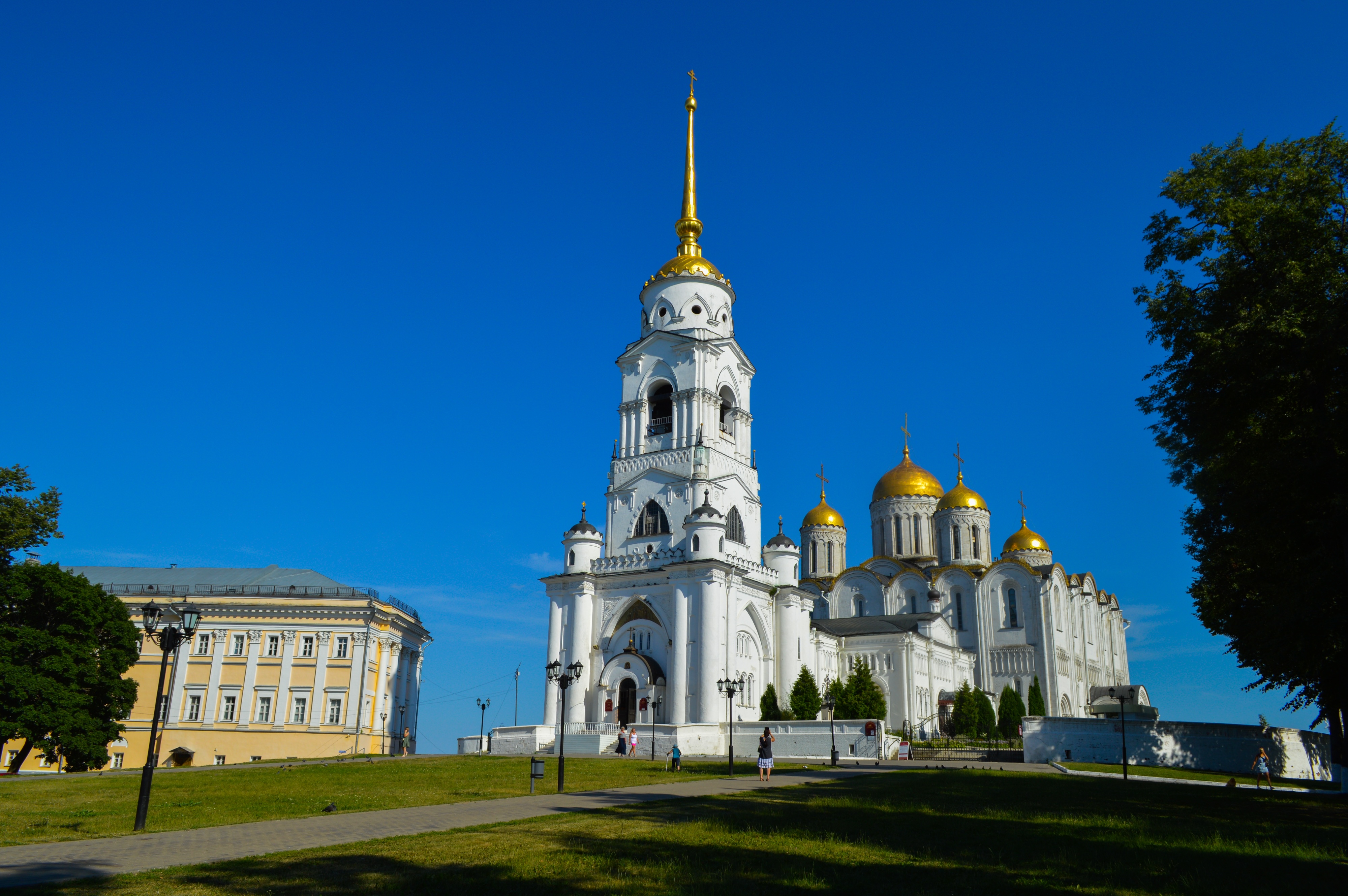
The Holy Assumption Cathedral is the main church of Vladimir and of the Vladimir diocese, a 12th-century white-stone monument on the high bank of the Klyazma River, on Bolshaya Moskovskaya Street in the historic centre. The cathedral is part of the UNESCO World Heritage Site "White Monuments of Vladimir and Suzdal" (1992) and keeps frescoes by Andrei Rublev and Daniil Chorny.
Grand Prince Andrei Bogolyubsky founded the cathedral in 1158, and it was finished by 1160. Tradition says it was built for the icon of Our Lady of Vladimir, which miraculously stopped near the town; the icon stayed here for more than two centuries before it was taken to Moscow. The first church had a single dome and was very tall for its time.
A fire badly damaged the cathedral in 1185. Under Vsevolod the Big Nest, in 1186–1189, it was surrounded on three sides by galleries holding princely tombs, and four more domes were raised over the additions. The church thus became five-domed with five aisles, the old walls ending up inside the new building. The chronicle notes that this time no foreign masters were sought.
Before the rise of Moscow the Assumption Cathedral was the chief church of north-eastern Rus: the princes of Vladimir, and later of Moscow, were crowned grand princes here. In February 1238, when Batu's army took Vladimir, Grand Princess Agafia with her children and grandchildren and Bishop Mitrofan took refuge in the cathedral; it was set on fire and everyone inside died. They are venerated as the martyrs of Vladimir.
In 1408 Andrei Rublev and Daniil Chorny with their team painted the cathedral anew. In the 18th century Catherine II paid for a carved, gilded Baroque iconostasis, a tall bell tower was built next to the cathedral in 1810, and the heated church of St George was added in 1862. The ensemble survived the Soviet years; today the cathedral is shared by the Church and the Vladimir-Suzdal Museum Reserve.
The cathedral belongs to the white-stone architecture of Vladimir-Suzdal, with clear Romanesque features: walls of dressed white limestone, a band of blind arcading on colonnettes, pilasters, carved masks and reliefs on the facades. The domes are helmet-shaped and gilded.
Inside are fragments of 12th-century painting and about three hundred square metres of the 1408 frescoes. The best known is the Last Judgement in the western part of the church, uncovered by restorers in the 20th century. Venerated here are copies of the Vladimir, Bogolyubovo and Maximovskaya icons of the Mother of God and a relic of Alexander Nevsky. Andrei Bogolyubsky, Vsevolod the Big Nest, Prince Georgy Vsevolodovich and Bishop Mitrofan are buried in the cathedral.
A legend speaks of a hiding place where the church's main treasures were kept. It is linked to the priest Patrikiy: in the early 15th century, during a raid on Vladimir, he hid the cathedral's vessels and did not give them away under torture.
From the railway and bus stations the cathedral is a 15–20 minute walk up Kommunalny Spusk to Bolshaya Moskovskaya Street, and from the Golden Gate about 10–15 minutes along the same street. The nearest stop is Sobornaya Ploshchad. By the entrance there is a viewpoint over the Klyazma floodplain.
It is a working church: entry is free during services, at other times it is open as a museum with a ticket. The frescoes suffer from swings in temperature and humidity, so the building needs better ventilation and heating.
No votes yet


No reviews yet. The first one helps the next travellers.