 Museum


House of Agapov merchants (Suzdal)
0.2 km1.6k4
The Museum of Wooden Architecture and Peasant Life is an open-air museum in Suzdal, Vladimir Oblast, on Pushkarskaya Street. It stands on the right bank of the Kamenka River, the so-called Kremlin bank, facing the Suzdal Kremlin, and is part of the Vladimir-Suzdal Museum-Reserve. Its 3.5 hectares hold about twenty wooden buildings of the 18th and 19th centuries brought from villages across the Vladimir region.
The museum was set up following a 1968 decision of the Vladimir regional executive committee. The project came from Valery Mikhailovich Anisimov, a restoration architect at the Vladimir restoration workshop and a specialist in the region's wooden architecture. Surveyors examined houses and churches in more than sixty villages; a few dozen were judged suitable, and some of them were dismantled, carried to Suzdal and reassembled.
The site chosen lies on the edge of town, on the Dmitrievskaya side, where the Dmitrievsky Monastery, known since before the Mongol invasion, once stood. The buildings are arranged to form a stylised village street with churches, cottages and a farmyard.
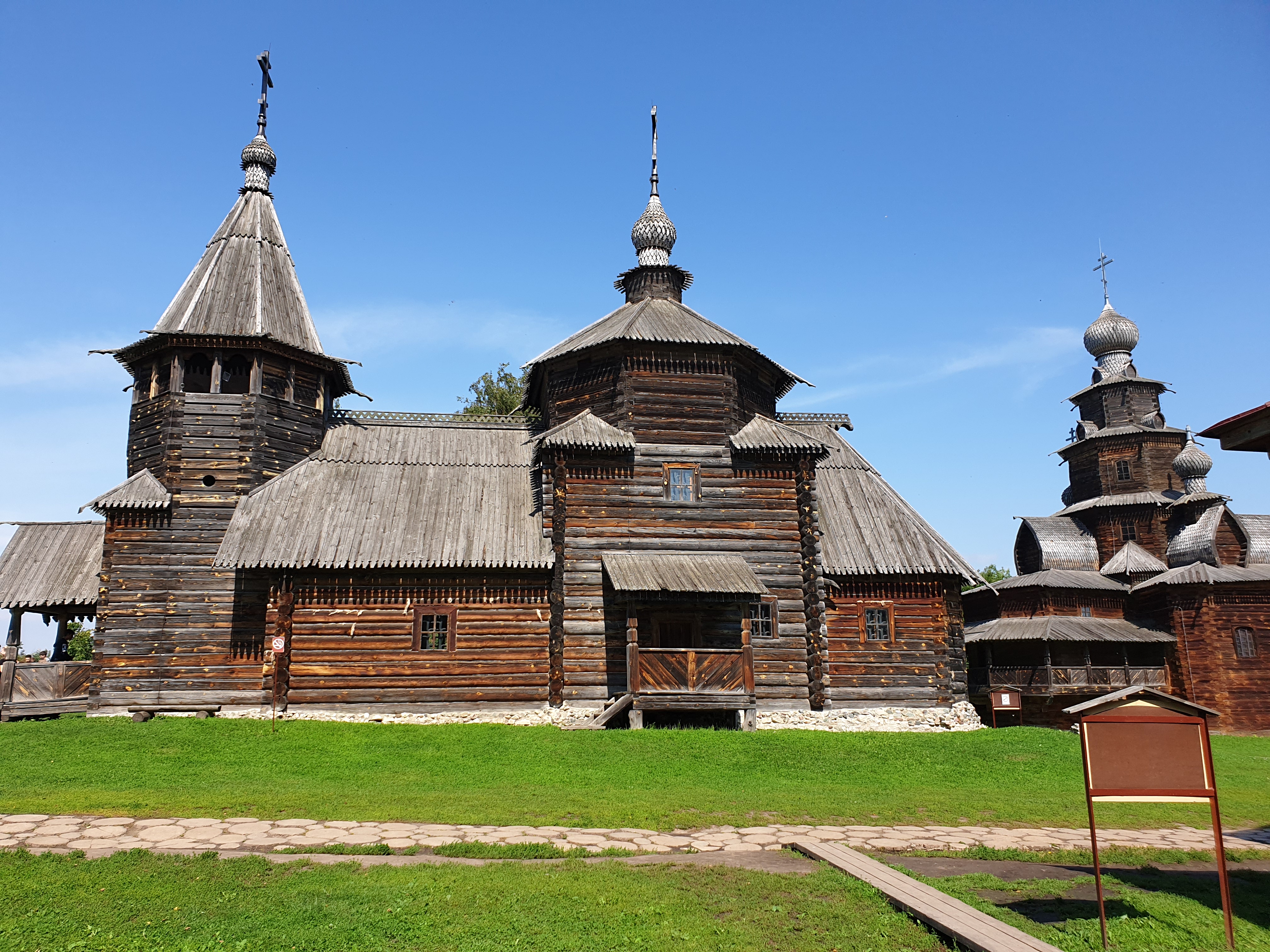
The museum is dominated by two wooden churches and a chapel. The Church of the Transfiguration (1756) came from the village of Kozlyatyevo, now Polyany, in the Kolchugino district; it is a tiered church about 21 metres high and keeps a three-tier iconostasis inside. The Church of the Resurrection (1776), from Patakino in the Kameshkovo district, is a box-type church built in the elongated "ship" layout. Nearby stands a small tent-roofed chapel of 1880 with an octagonal top. The St Nicholas Church of 1766 from Glotovo, sometimes counted as part of the museum, actually stands opposite, inside the Kremlin.
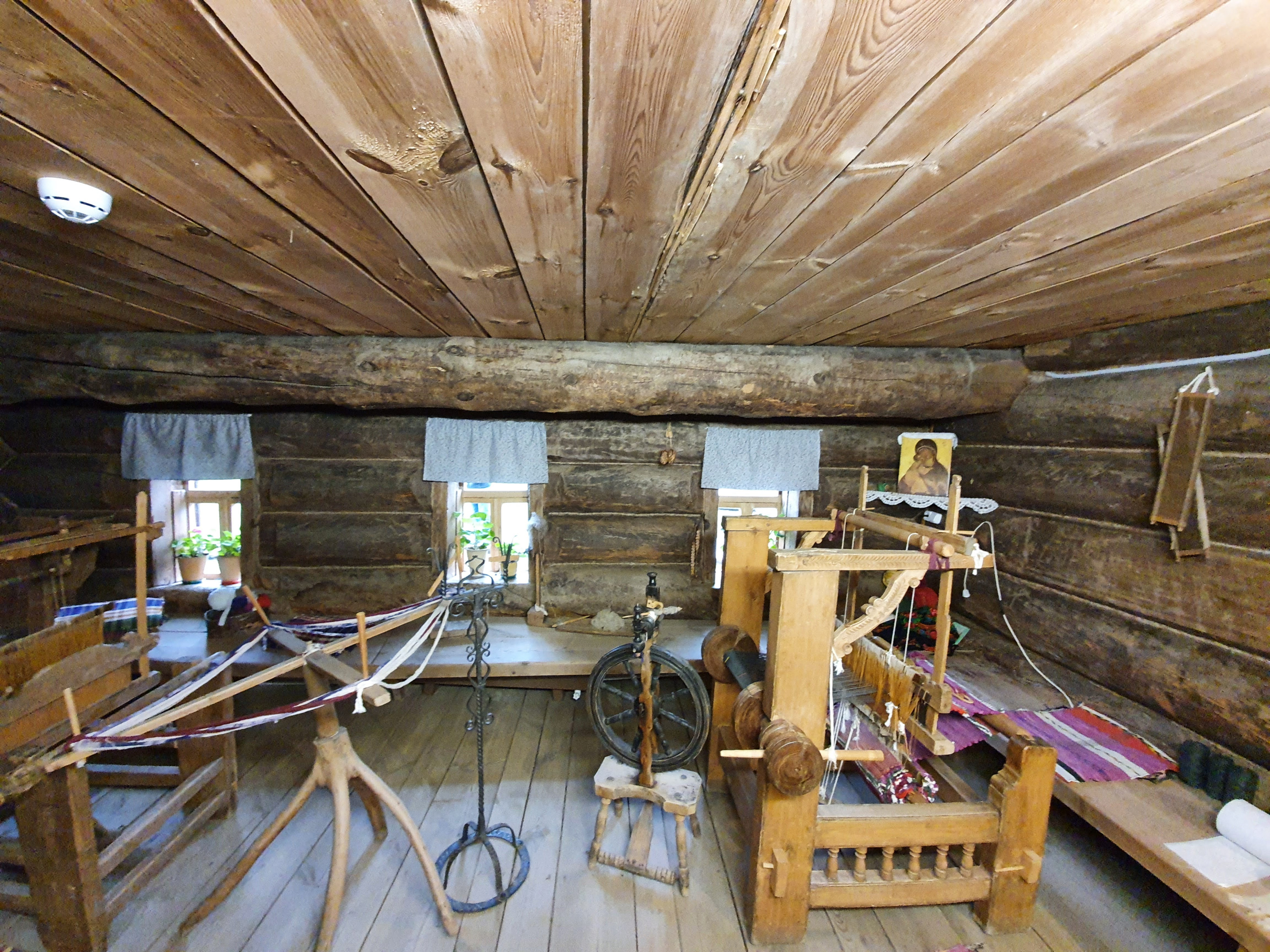
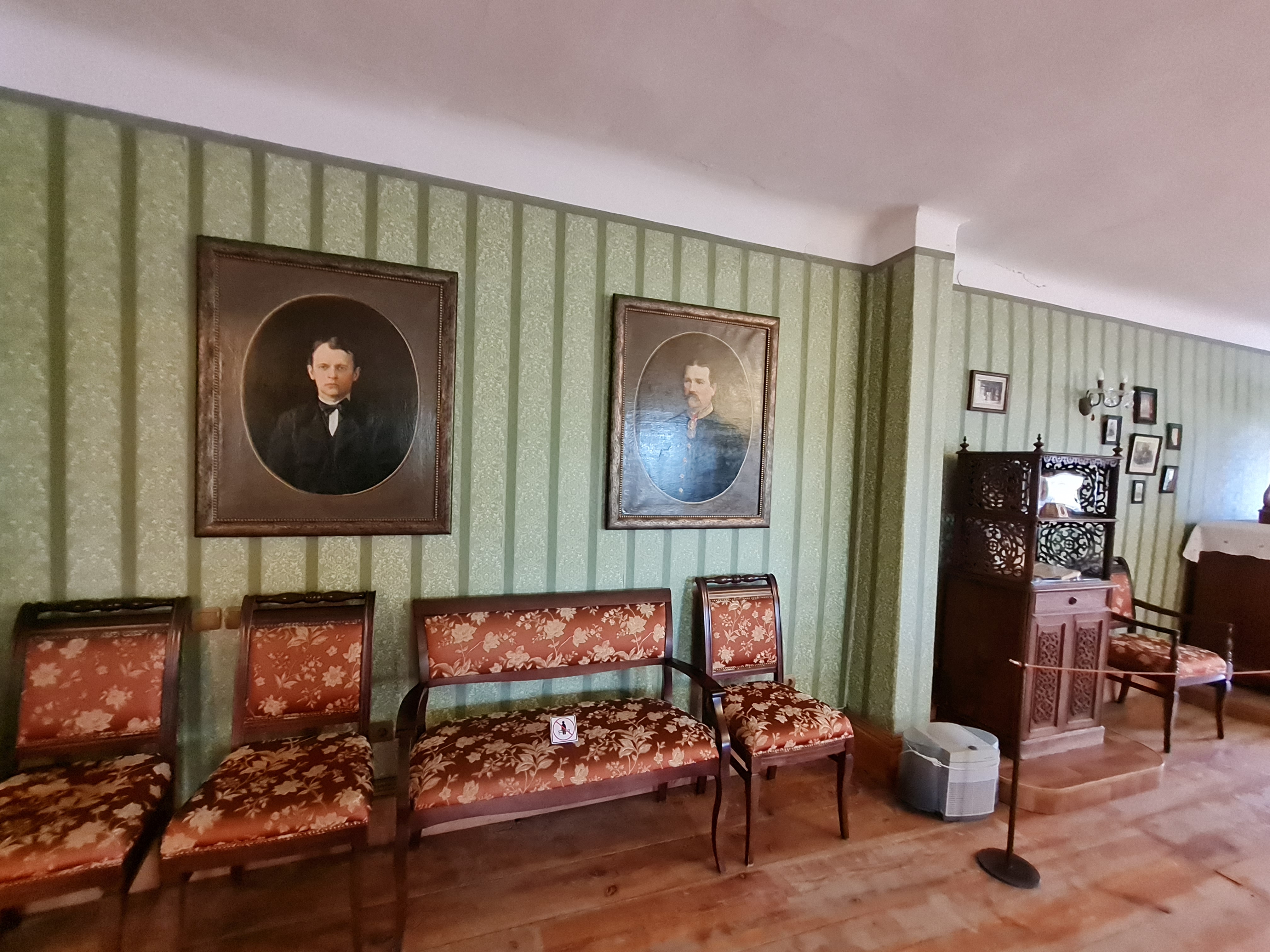
The houses show how different parts of village society lived. The middle peasant's house recreates the living room, passage and storeroom, with a cradle, crockery and kitchenware. The two-storey house of the well-off peasant Kuzovkin, with its carved facade, is furnished in mid-19th-century style down to a Singer sewing machine. The house of the Agapov merchant family, town council members and shop owners, holds the exhibition "Suzdal Merchants: a Portrait in an Interior". Another display, "Peasant Children", follows a child's life in a peasant family from birth to adulthood.
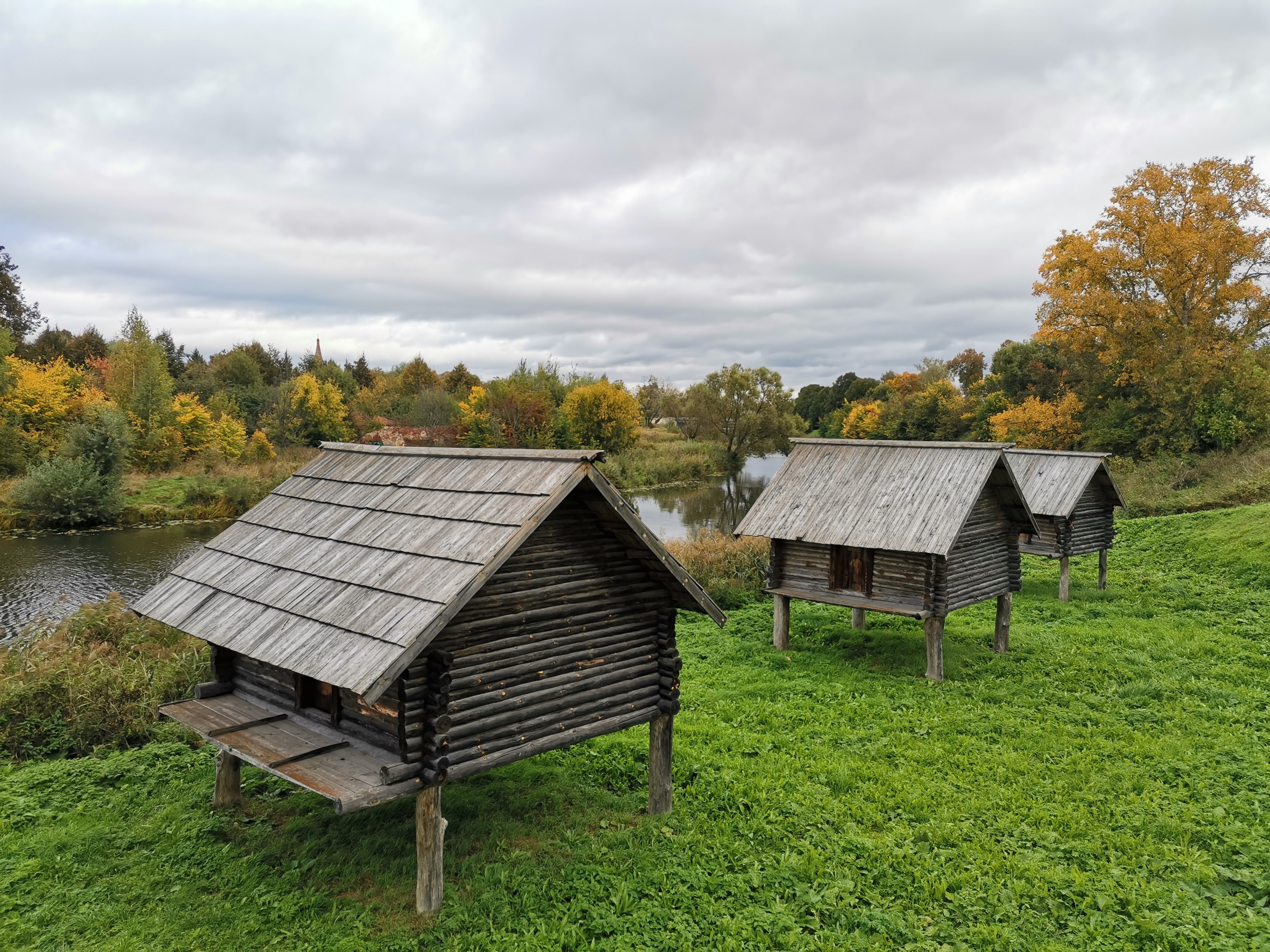
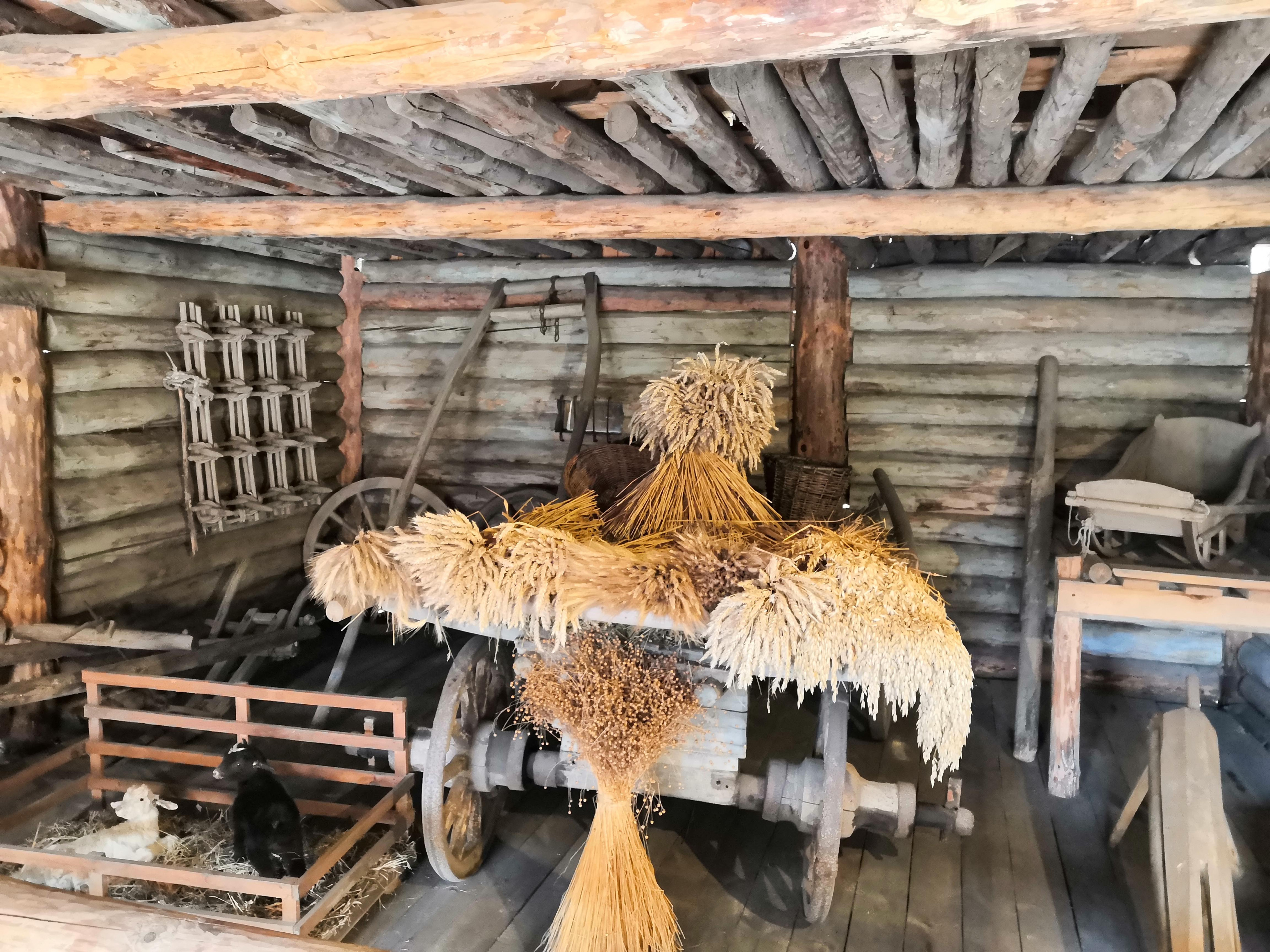
The farmyard has windmills from the village of Moshok, granaries on stilts, bathhouses and a treadwheel well, where water was raised by walking inside a large wheel. One granary houses a collection of locks and keys from the late 19th and early 20th centuries and a carpenter's workshop.
Every summer the museum hosts the Cucumber Festival, Suzdal's best-known folk celebration, which draws more than fifteen thousand visitors. It brings folk concerts, cucumber contests, a craft fair, workshops and tastings of local pickles. In 2026 the festival ran over two days for the first time, on 1 and 2 August.
The museum is about a ten-minute walk from the centre of Suzdal, across the Kamenka by the Kremlin. From the bus station, town buses go to Torgovaya Square and minibuses to the Pushkarskaya Street stop. By car from Moscow the trip takes about 3.5 to 4 hours; by public transport, take a train to Vladimir and then a bus to Suzdal. Opening hours vary by season, so check the museum-reserve's website before you go.
No votes yet


No reviews yet. The first one helps the next travellers.