

Водопад Шарлама
16.1 km7.3k4
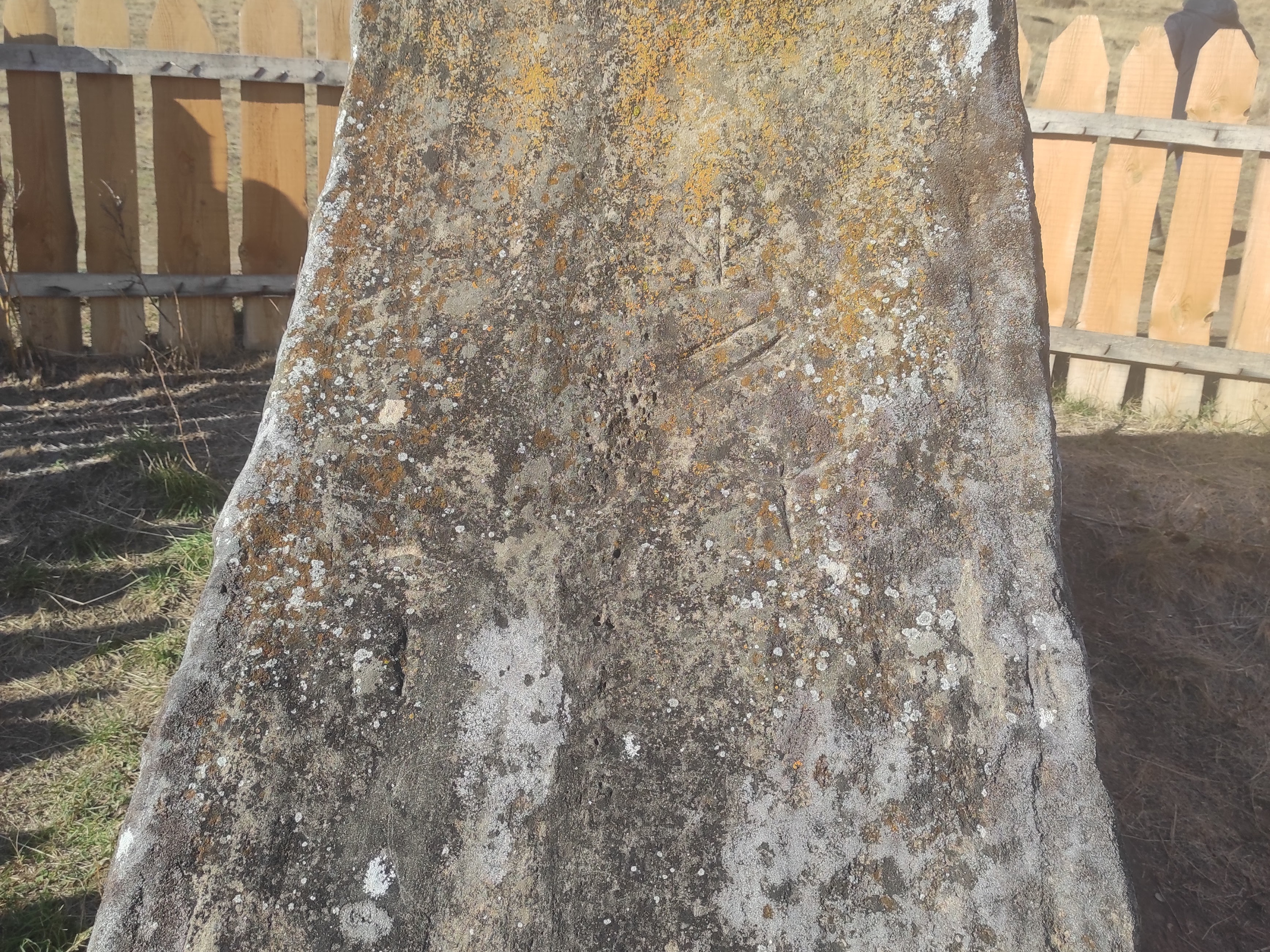
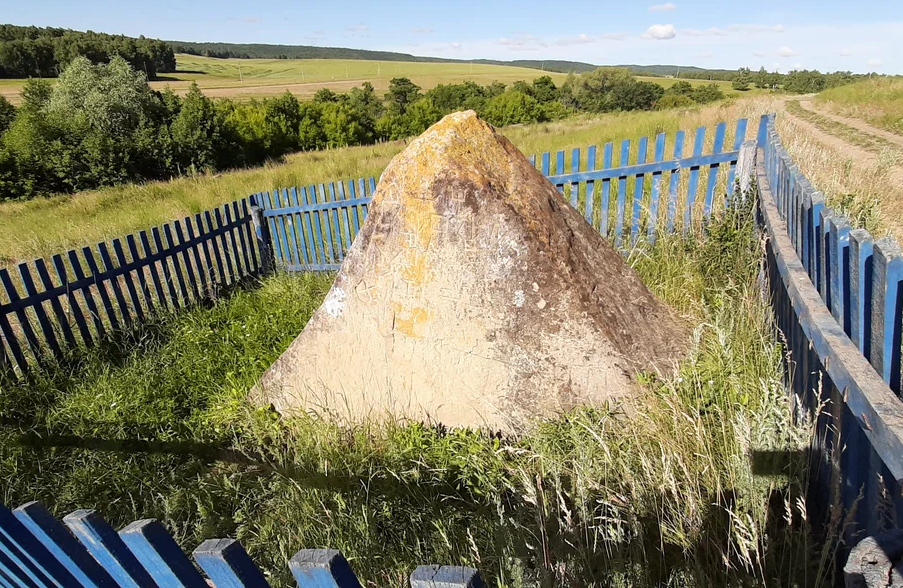
Bashkir tamgas near the village of Tashly are clan marks carved into sandstone boulders on the outskirts of the village, in the Alsheyevsky District of Bashkortostan, Russia. A tamga is a mark of clan and property ownership, a kind of heraldic emblem of a Bashkir clan. The stones with tamgas in Tashly belong to families of the Yaik-Syby-Min clan, who inhabit the surrounding villages. According to historian R. G. Kuzeev, more than 3,500 Bashkir tamgas are known in total.
A tamga (from a Turkic or Mongolic word meaning "brand" or "seal") is a symbolic mark that conveys information about a person's origin and belonging to a particular clan or tribe. Tamgas were one of the key attributes of Bashkir clan symbolism, alongside a clan bird, tree and battle cry. They were used to mark the boundaries of hereditary lands and pastures, to mark bee trees, tools, livestock and household items — stone millstones, wooden mortars, saddles. In the 18th and 19th centuries, Bashkirs often used a tamga instead of a signature on official documents. A tamga was passed down through generations: descendants added new elements to the base sign or modified it to emphasize their belonging to their branch of the clan.
Locals call the main tamga-covered stone in Tashly Kilentash — "the daughter-in-law's stone." It is a large sandstone boulder of a strikingly regular shape, as if it had been hewn. Numerous clan marks are carved into several of its sides. The stone is carefully fenced with wood.
A local legend is attached to the Kilentash stone: according to it, a daughter-in-law was once milking a mare by the stone when a terrible storm suddenly broke out. The storm turned both the woman and the mare to stone, and they have remained at the spot ever since.
The village of Tashly was founded by Bashkirs of the Yaik-Suby-Min volost of the Nogai Road on their own lands and is known from 1745. It stands on the Tashlynka River, a tributary of the Tyulyan. Local residents traditionally engaged in cattle breeding, farming and beekeeping. To see the tamga stones, visitors need to drive through the whole village — the stones lie beyond it, by a dirt road.
The earliest tamgas in the Southern Urals have been found at archaeological sites of the Bronze and Early Iron Ages and are several thousand years old. Besides Tashly, tamgas are carved on rocks and stones along the banks of the Belaya River, Lake Aslykul and Lake Kandrykul, as well as on the Tamga-Tash stone slabs near the village of Staro-Kalmashevo in the Chekmagushevsky District. Researcher R. B. Akhmerov gathered and analysed an extensive collection of such marks in his work "Rock Signs and Ethnonyms of the Bashkirs." By the early 20th century the social role of tamgas had largely faded, but they remain an important monument of the Bashkir people's cultural heritage.
The village of Tashly is located in the Alsheyevsky District of Bashkortostan. It is about 200 km southwest of Ufa and about 100 km from Sterlitamak. The stones lie beyond the village, by a dirt road — you need to drive all the way through the village to reach them.
No votes yet


No reviews yet. The first one helps the next travellers.