 Disaster site


Kaolin quarry (Ural Bali)
13.1 km11.6k4

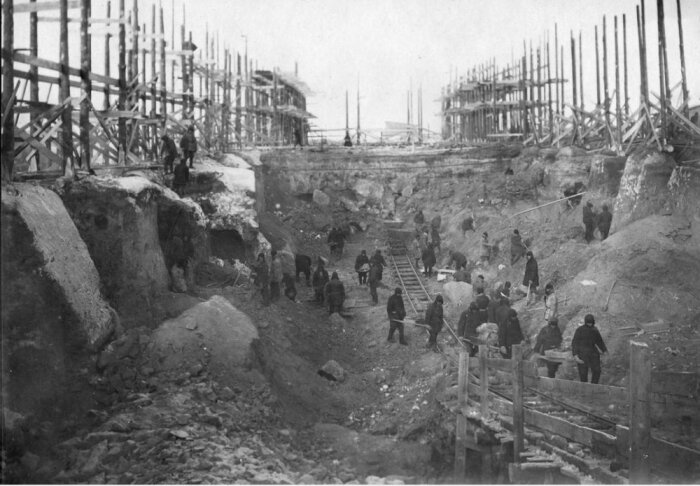

The Kyshtym disaster was the largest radiological accident in the USSR and one of the most severe nuclear incidents in world history: on 29 September 1957, a tank of radioactive waste exploded at the Mayak chemical plant in the closed city of Chelyabinsk-40 (now Ozyorsk, Chelyabinsk Oblast). On the International Nuclear Event Scale (INES) the accident was rated level 6 out of 7 — exceeded only by Chernobyl and Fukushima. The disaster was kept under strict secrecy for more than 30 years and only became publicly known after the 1986 Chernobyl accident. The name "Kyshtym" is conventional — Ozyorsk itself did not appear on maps as a secret site, so the accident was named after the nearest open town, Kyshtym.
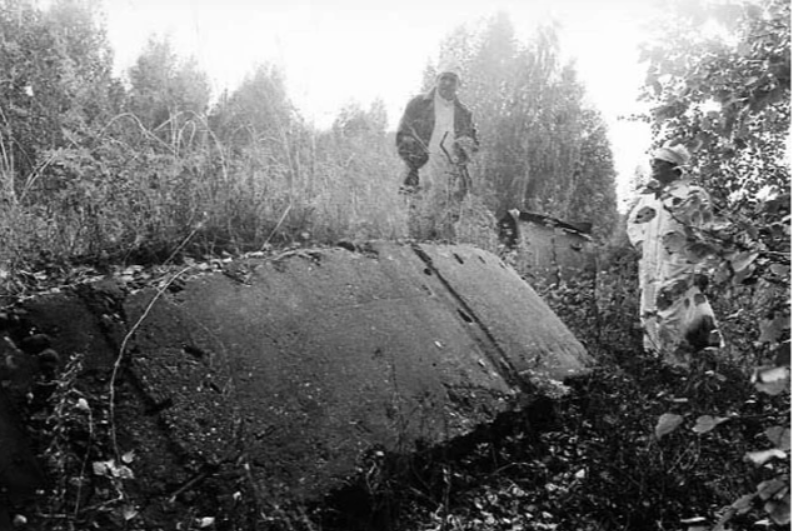
At 16:22 local time (11:22 UTC) on 29 September 1957, tank No. 14, with a volume of 300 m³, exploded at the Mayak industrial site. Between March and April 1957, about 256 m³ of liquid high-level radioactive waste had been poured into it; by the time of the explosion, 70–80 tonnes of dried sediment remained in the tank, containing strontium-90, caesium-137, cerium-144, zirconium-95, niobium-95 and ruthenium-106. The cause of the explosion was a failure of the cooling system: the tank's contents heated up, the liquid evaporated, and a powerful thermal explosion followed. According to the official 1957 assessment by a commission of the Ministry of Medium Machine Building, the explosion's yield was 25–29 tonnes of TNT equivalent, though later independent estimates diverge much more widely, up to 170 tonnes. A 160-tonne concrete slab roof was thrown about 20–25 metres, steel structures were scattered up to 150 metres away, and window glass was damaged within a radius of up to a kilometre. A crater about 10 metres deep and 20 metres in diameter formed where the tank had stood.
About 20 million curies of radioactive substances were released into the atmosphere, most of which settled within the plant's own territory. A southwesterly wind formed the East Ural Radioactive Trace (EURT) — a contamination zone about 300 km long and 20–40 km wide, stretching across Chelyabinsk, Sverdlovsk and Tyumen oblasts in the Southern Urals; by modern estimates, the total contaminated area was about 23,000 km². At the time of the accident, about 270,000 people lived within the EURT zone, in 217 settlements.
The evacuation of the population began with a delay: the first wave affected 1,383 people from 4 nearby villages and took place 7–10 days after the explosion. Over the following years, a total of about 12,800 people from 23 settlements were resettled — the process stretched over several years. Agricultural produce and livestock were confiscated from evacuees, some houses and property were destroyed, and fields were ploughed under. According to official data, no one died directly in the explosion; about 1,000 servicemen and workers involved in the clean-up were exposed to radiation, 12 of whom were hospitalised with acute radiation sickness. The long-term consequences for residents of the EURT zone and the exact number of people affected by long-term exposure remain a matter of debate — no independent repeat statistics have been published.
In 1958 a sanitary protection zone was created in the most contaminated part of the EURT, and in 1968 it became the basis for the East Ural State Nature Reserve, covering about 700 km². This is a unique "atomic reserve" where nature recovers without human interference. Radiation levels here still exceed the norm and, according to scientists' estimates, will not return to background levels for at least another 100 years. Nevertheless, the reserve is home to elk, wild boar, beavers, swans and white-tailed eagles.
The epicentre of the explosion is on Mayak's industrial site within the closed town of Ozyorsk. The exact coordinates of tank No. 14's location vary by several kilometres across open sources — the plant's territory remains a restricted site, and no official diagram of the accident has been published. Access to the closed city is restricted: free visits are impossible, and entry is granted only by pass, for local residents and invited guests. The nearest open town is Kyshtym (about 20 km away); it is 100 km northwest of Chelyabinsk.
No votes yet


No reviews yet. The first one helps the next travellers.