


 Disaster site
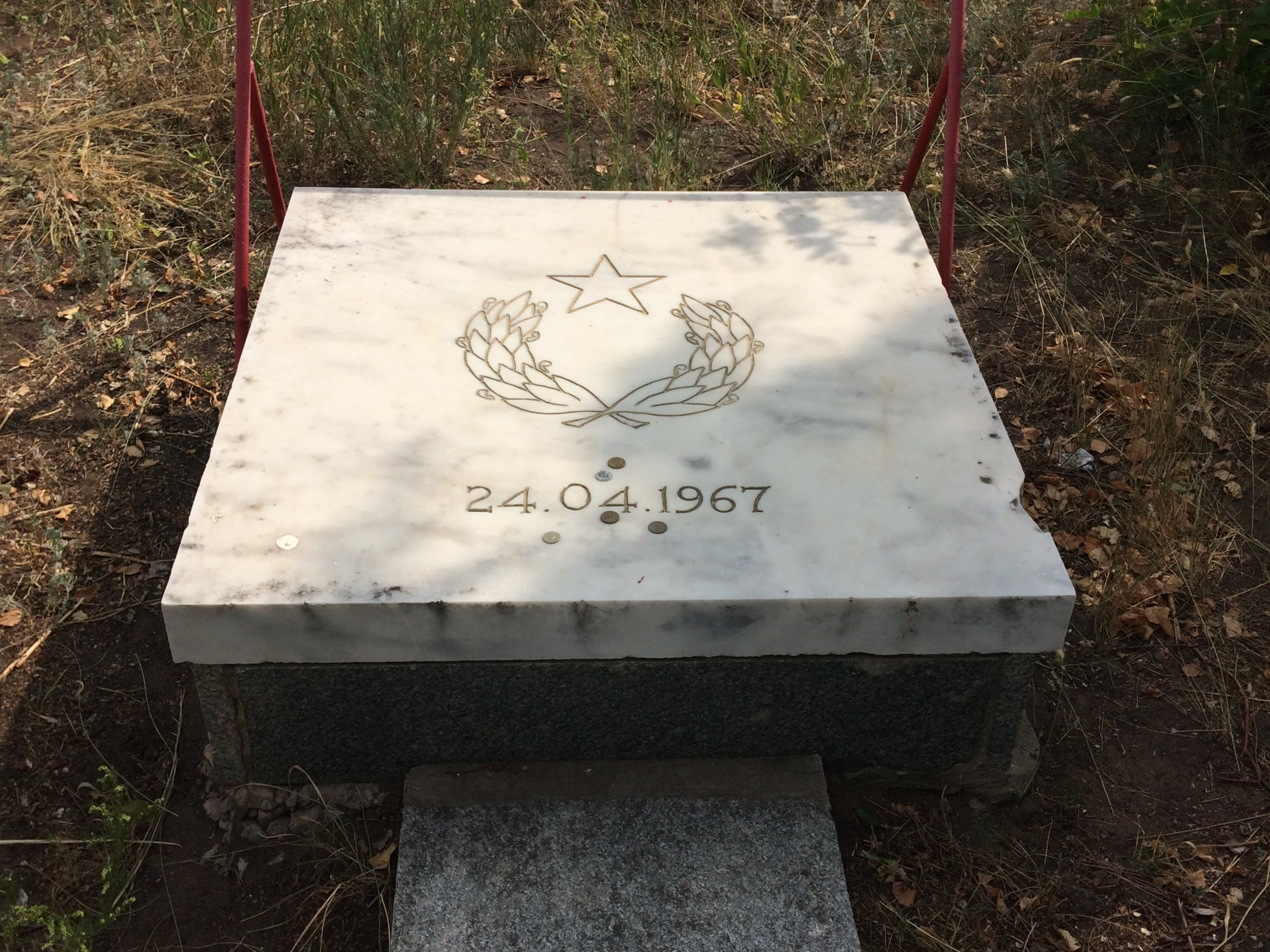
The memorial at the site where cosmonaut Vladimir Komarov died stands in the steppe of Adamovsky District, Orenburg Oblast, Russia, 3 km west of the village of Karabutak. It was here, on 24 April 1967, that the descent module of the Soyuz-1 spacecraft crashed — the first death of a human being during a space flight. Coordinates: 51.362° N, 59.562° E.
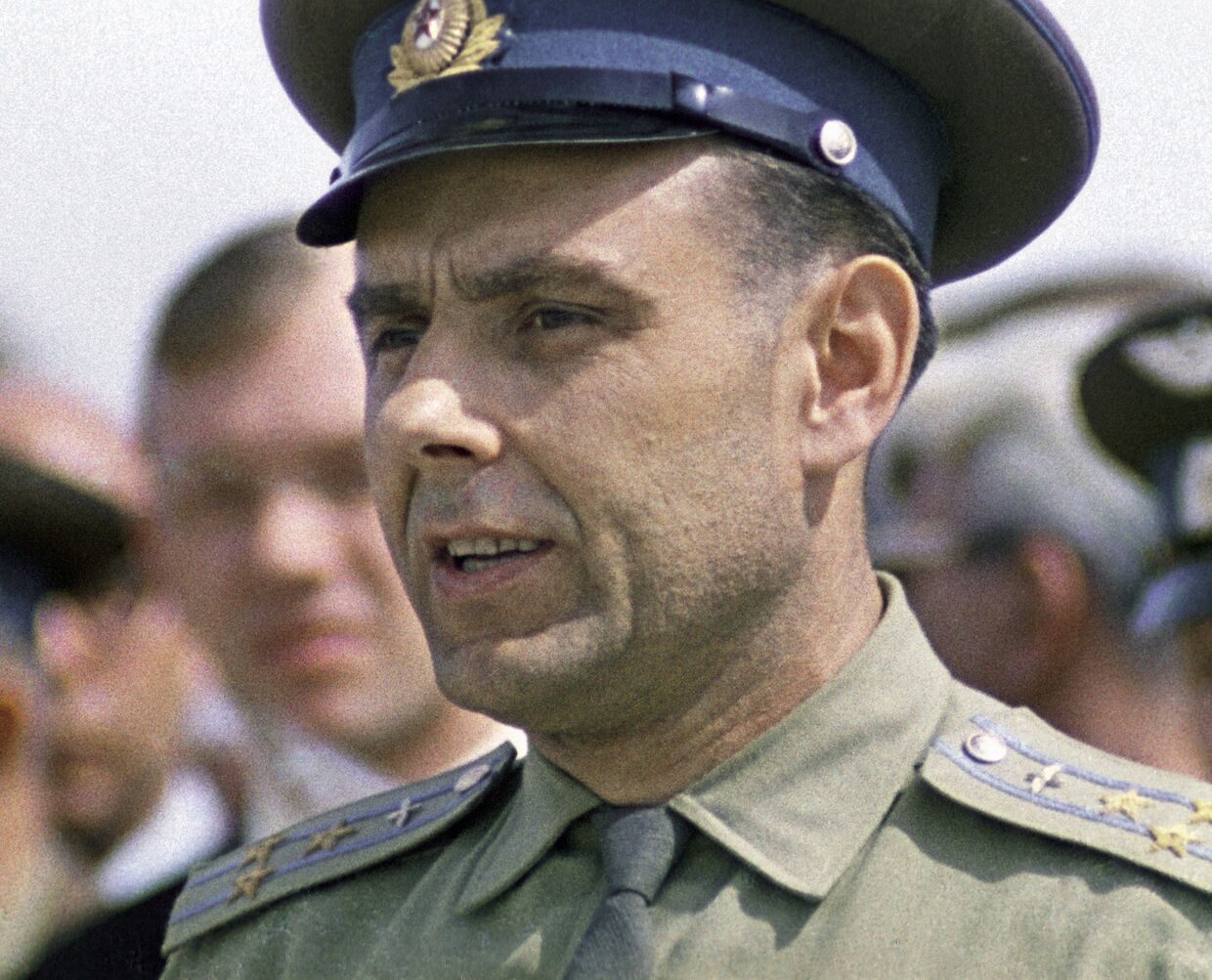
Vladimir Mikhailovich Komarov (1927–1967) was Soviet cosmonaut No. 7, an engineer-colonel and twice Hero of the Soviet Union. He commanded the world's first multi-seat spaceflight: on 12–13 October 1964, together with Konstantin Feoktistov and Boris Yegorov, he flew the three-seat Voskhod-1 spacecraft. Both of his flights were on new types of spacecraft undergoing their first tests.
On 23 April 1967 Komarov launched aboard the new Soyuz-1 spacecraft. The flight was troubled from the start: one of the solar panels failed to deploy, and problems arose with the orientation system. After 26 hours and 47 minutes in flight, mission control decided on an early landing during the 19th orbit, in the area of Orsk.
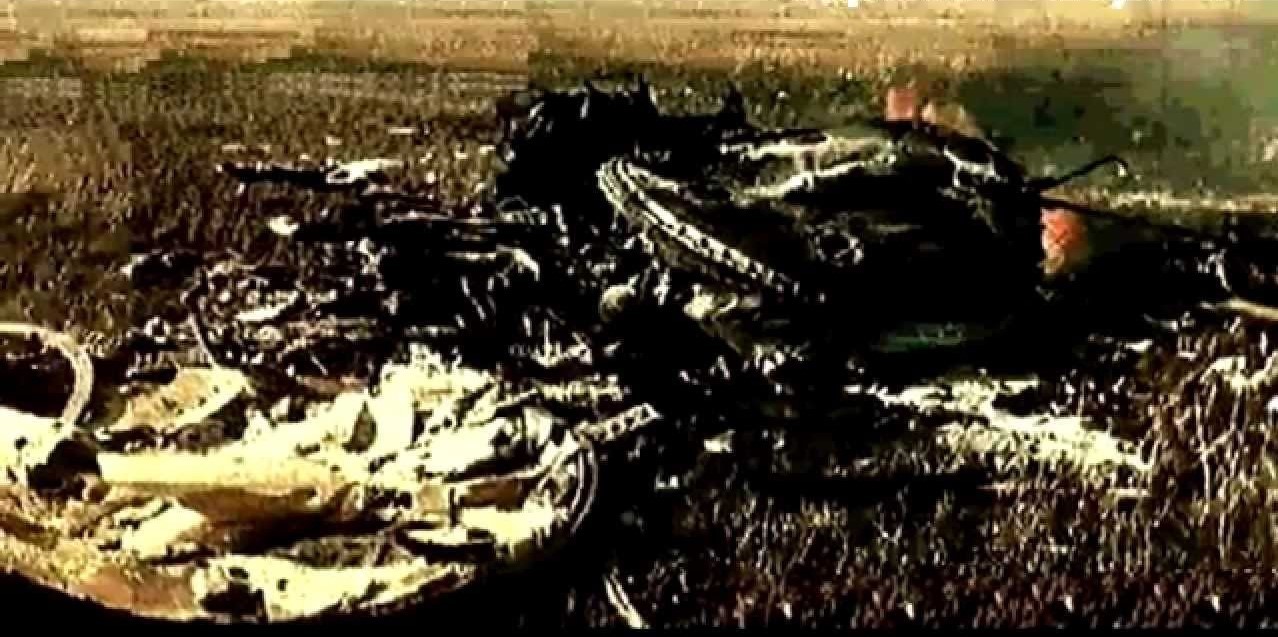
During descent, at an altitude of about 7 km, the main parachute failed to deploy — its drogue canopy opened, but the main canopy stayed in its container. At an altitude of about 1.5 km the reserve parachute was released, but its lines became tangled in the undetached drogue canopy of the main parachute. The descent module hit the ground at a speed of about 180 km/h, was destroyed and caught fire as the hydrogen peroxide in its tanks ignited on impact. Komarov was killed instantly.
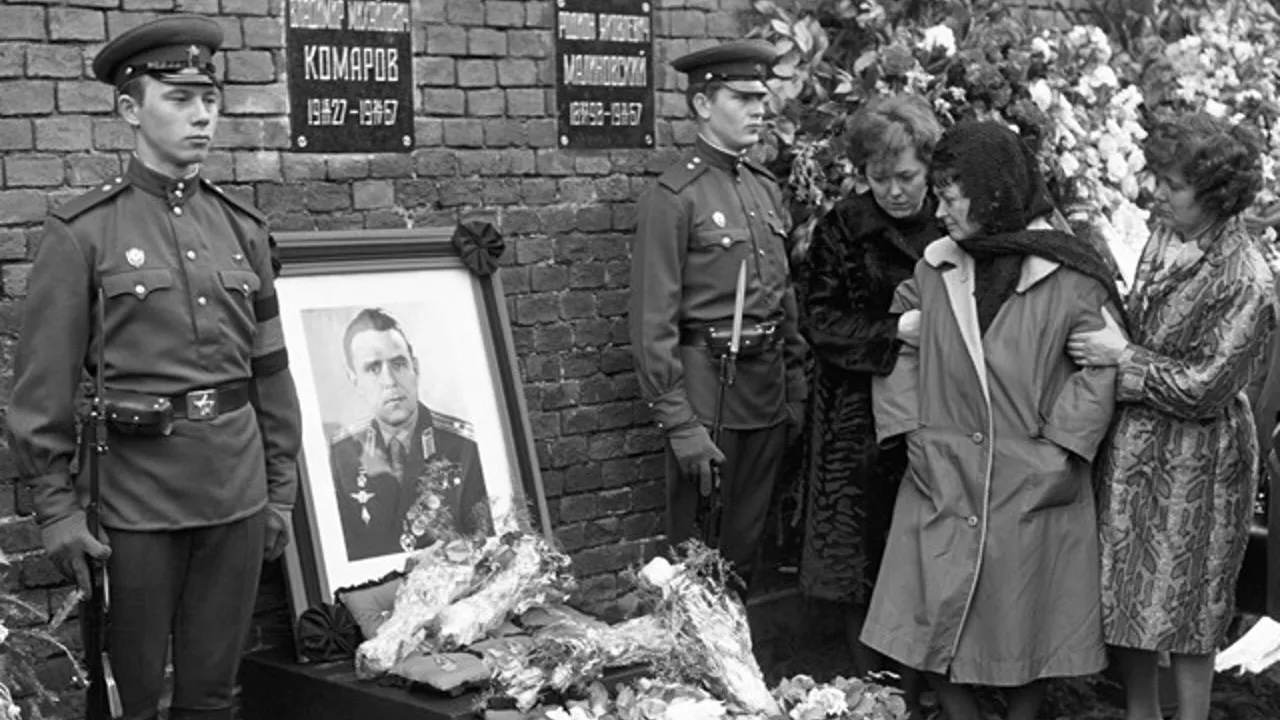
For his heroism he was posthumously awarded a second Gold Star medal. His ashes were buried in an urn in the Kremlin Wall on Red Square. His name is also inscribed on the plaque of the Fallen Astronaut sculpture, left on the Moon by American astronauts.
A first memorial marker was put up at the crash site as early as 11 June 1967, less than two months after the disaster. It was made by a group of rocket forces servicemen: a steel stele with a photo portrait of the cosmonaut and the silhouette of a woman holding flames in her hands, a symbol of a life cut short.
On 27 May 1982 a full memorial complex was formally opened here: a small park with tree-lined walks and a six-metre bronze-alloy column topped with a bust of Komarov. The monument was delivered to Adamovsky District in sections by rail and assembled on site.
A persistent myth holds that a few minutes before impact Komarov was on the radio, saying goodbye to his family and swearing in anger. This version has no confirmation. As a descent module enters the atmosphere, the plasma that forms around it blocks all radio waves; moreover, Soyuz-1's antennas were mounted on the lines of the main parachute, which never deployed, so radio contact was physically impossible.
According to an unofficial account, after the state commission left, specialists who stayed on to continue work at the site found fragments of the cosmonaut's remains. Rather than transporting them to Moscow, they buried them at the crash site.
The memorial stands in open steppe, 3 km west of the village of Karabutak in Adamovsky District, Orenburg Oblast. It is about 350 km east of the city of Orenburg and about 100 km north of Orsk. The access road is unpaved. The site is marked on maps and in navigation apps.


