

Phanagoria Science Center
1.4 km1.4k3

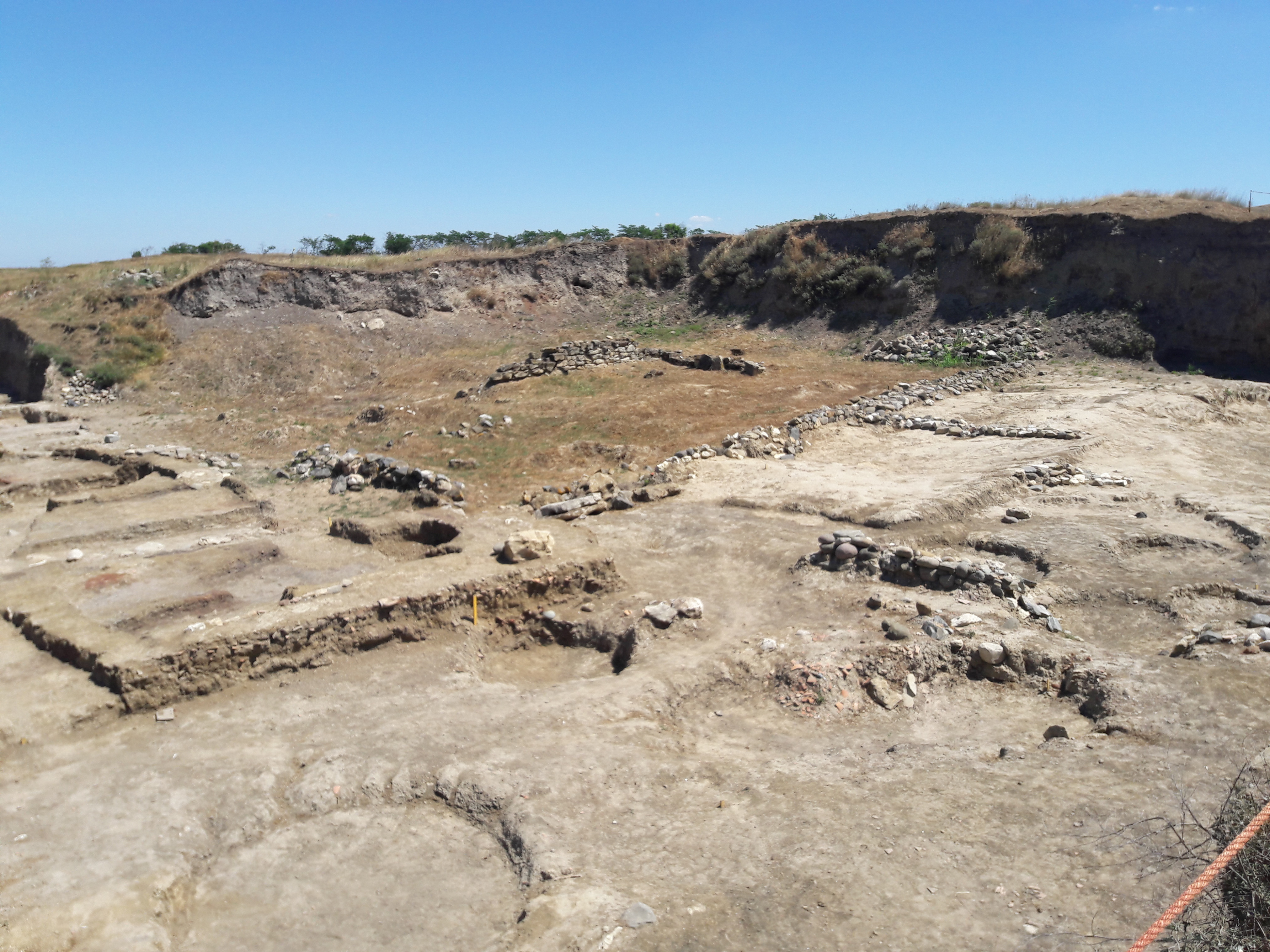

The Phanagoria necropolis is one of the largest necropolises of antiquity in Russia: a chain of burial mounds and flat-grave cemeteries surrounding the ancient Greek city of Phanagoria on the Taman Peninsula, near the village of Sennoy in the Temryuksky District of Krasnodar Krai. The necropolis is traditionally divided into three parts — Eastern, Western and Southern.
The Eastern part begins at the city walls and stretches along the coast of Taman Bay and ancient roads for almost three kilometres: some of the mounds stand on flat plateaus, others on hilly rises, and today most of them are barely visible on the surface. The Western necropolis runs along the sea coast for about three kilometres as well, as far as the village of Primorsky, and likewise consists of chains of mounds along old roads, some of them on a salt marsh. The Southern necropolis, often called the "Avenue of Mounds", stretches south from the city for about another three kilometres along an ancient road. The space between the mounds is called the "ground necropolis" and has archaeological value of its own.
Thousands of burials and artefacts have been found in the necropolis, including rare weapons: most of the swords and daggers discovered come from looted ancient graves and have survived in poor condition, but they remain important evidence of contact between Hellenic and barbarian cultures. In 2010, a long, massive sword was found lying at the entrance to the chamber of one looted crypt — possibly placed there to guard the burial. In crypts of the 4th–5th centuries AD, archaeologists have found belt-set fittings of gold and silver, pointing to the variety of crafts and trade ties of Phanagoria. One of the mounds revealed a complex structure with a central burial in a sarcophagus and ancient stone tombs.
Systematic excavations of Phanagoria and its necropolis have been under way since 1936, with a break during the Great Patriotic War; they were begun by the archaeologist V. D. Blavatsky, and today the work continues under the Phanagoria expedition of the Institute of Archaeology of the Russian Academy of Sciences.


No reviews yet. The first one helps the next travellers.