


 Monument
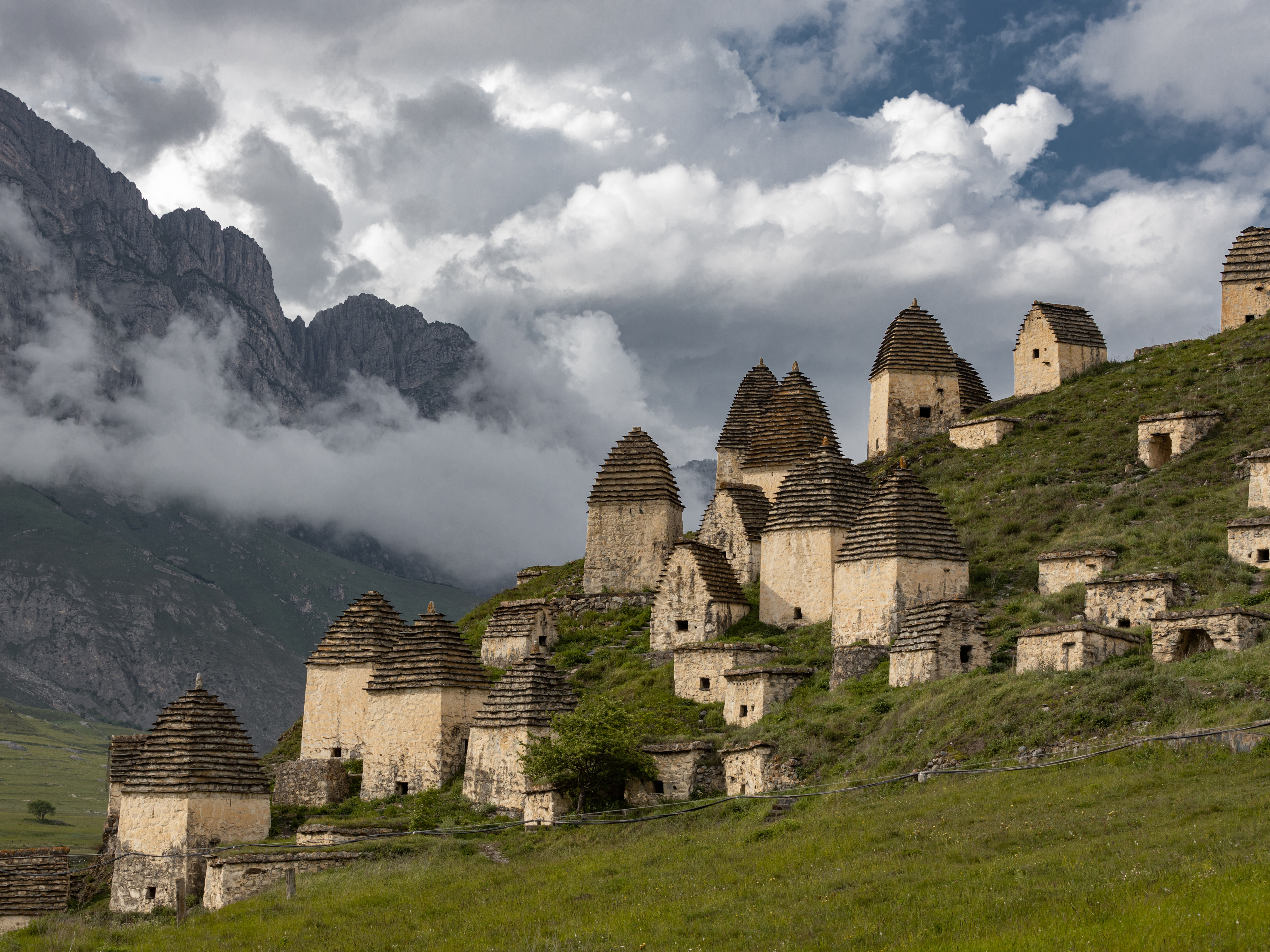
The City of the Dead, or Dargavs crypt burial ground, is a complex of 95 above-ground and semi-underground stone crypts built between the 14th and mid-19th centuries near the village of Dargavs in the Prigorodny District of North Ossetia–Alania, Russia, about 42 km from Vladikavkaz. It is the largest necropolis of its kind in the North Caucasus.
The burial ground stands on a spur of the Rabinyrag ridge in the Dargavs valley, at an altitude of about 1,500 metres. The first scientific description of the necropolis was made by researcher P. S. Uvarova; excavations followed in the 1920s under L. P. Semyonov, and the American scholar Henry Field studied the site in 1934. Archaeologists have recovered more than 1,600 objects there, including pottery, glass, clothing and wooden vessels. Because the crypts were used in tiers over generations, an estimated ten thousand people are buried here. The site is now registered as a cultural heritage object of Russia (registration number 1510115007).
According to local legend, a plague epidemic swept the valley around the turn of the 18th and 19th centuries, and the sick reportedly withdrew into their family crypts to spend their final days there rather than infect the rest of the village; the story is not confirmed by scholarship. What is established is that burial in the crypts stopped by the mid-19th century, giving way to ordinary coffin burial.
The crypts are built of large, roughly worked stones set in lime mortar; the walls are often plastered and range from half a metre to 0.75 metres thick. They were raised without any overall plan, with new structures simply added next to existing ones.
There are two types. Semi-underground crypts hold the most burials: the inner chamber reaches 8 metres in length, with a wooden burial platform sloping toward the entrance, sometimes arranged in two tiers. Above-ground tower-type crypts are multi-storey, with wooden floors resting on supports built into the masonry; openings on the facade lead to the different levels, and the roof — gabled or hipped — is topped with a conical finial.
Burial practices varied: without coffins, in boat-shaped wooden troughs, or in ordinary wooden coffins. The custom is attributed to a shortage of land in the mountains, ancestor worship, and religious and social tradition.


