 Waterfall


Ruins of the Japanese Paper Mill in Dolinsk
20.8 km41
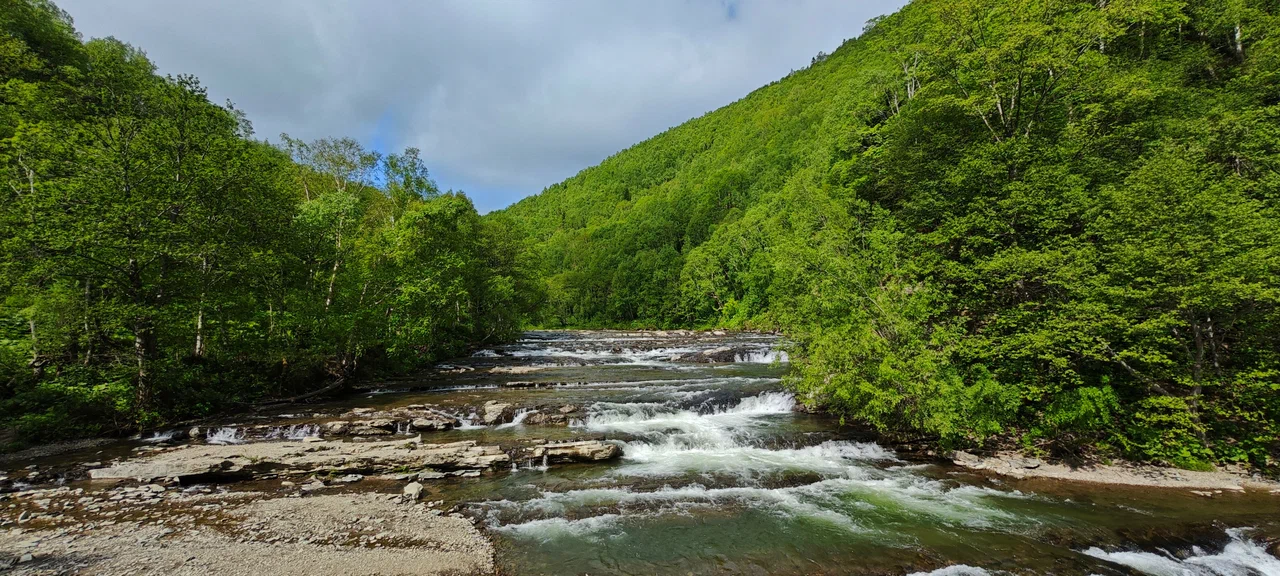
The Bykovskie Rapids, also known as the Zagorsky Rapids, are a cascade of rapids on the Krasnoyarka River, a tributary of the Naiba, in the Dolinsky district of Sakhalin Oblast. The site lies near the village of Bykov, close to the bank where the now-abandoned settlement of Zagorsky once stood, and locals still often call the river itself the Zagorskaya. The drive from the regional capital, Yuzhno-Sakhalinsk, takes about an hour and a half, so the rapids can easily be visited in a single day.
A large waterfall used to block the river here with a single high drop. In 1971 it was blown up to make it easier for salmon, above all pink salmon, to reach the upper river to spawn, since the solid drop had been stopping fish from moving further upstream. After the blast the riverbed changed: instead of one drop, the current here now breaks into a staircase of smaller rapids.
Today the Bykovskie Rapids are an artificially reshaped cascade: the river steps down through a chain of small rapids before ending in a short but loud, deafening waterfall. Where the big waterfall once stood, many separate rocks now jut out of the water across the riverbed. A huge rock that once served as a natural dam for the waterfall is now used by visitors as a viewpoint over the river. Swimming is possible both in the rapids themselves and below the waterfall, so in summer the spot draws people looking to relax by the water, not just to admire the view.
A dirt road about 8 km long leads from the village of Bykov to the rapids, so budget extra time for it on top of the drive from Yuzhno-Sakhalinsk. The turn off the main road is marked with ribbons tied to trees — without them it is easy to miss. From there, reaching the waterfall itself means walking down a narrow, steep path along the edge of the drop, which calls for care. The best time to visit is spring through autumn, since the dirt road to the rapids is not cleared in winter and becomes hard to pass.
No votes yet


No reviews yet. The first one helps the next travellers.