

RTF-32 Radio Telescope (Zelenchukskaya Observatory)
4.6 km2.1k3
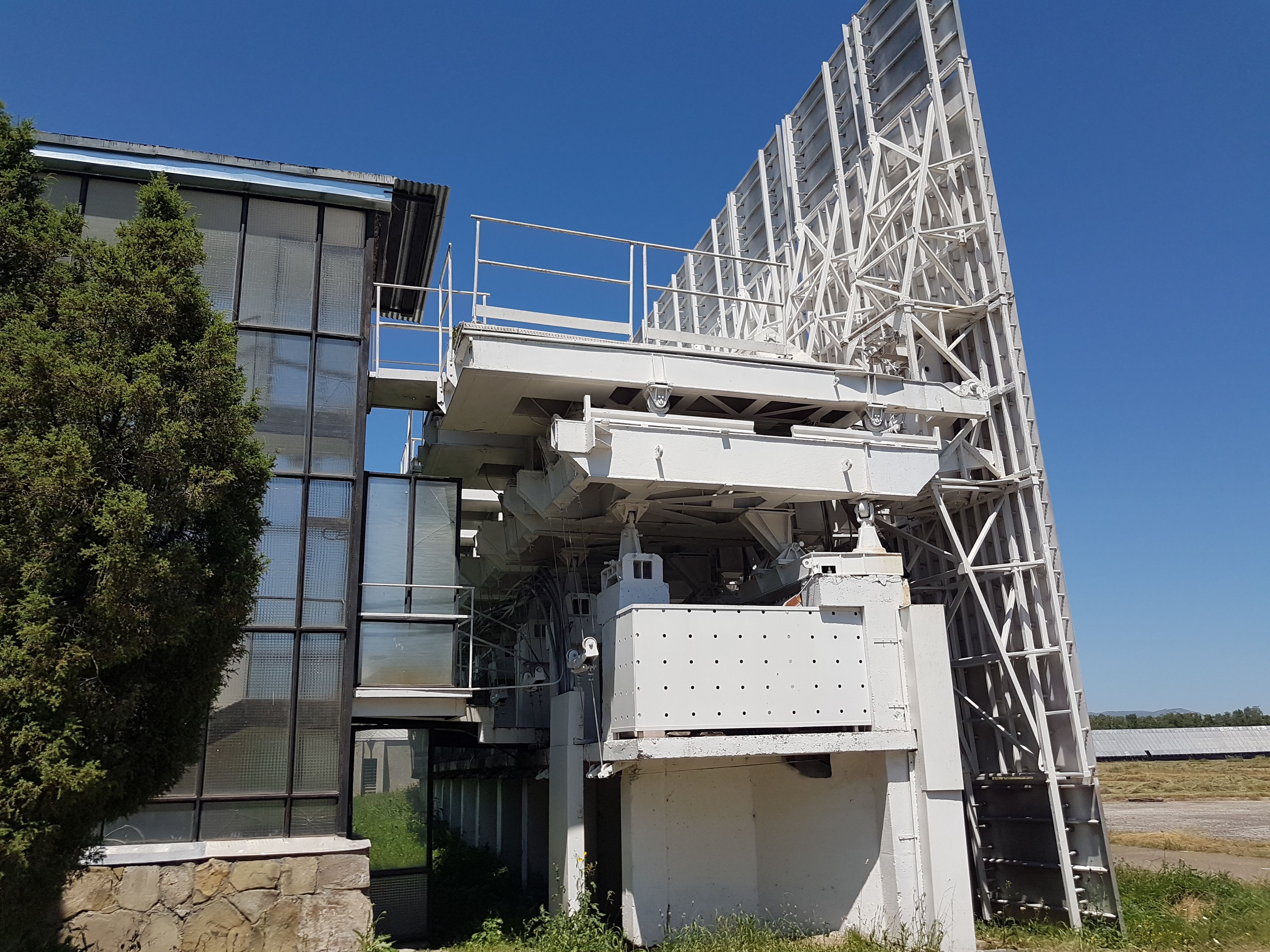
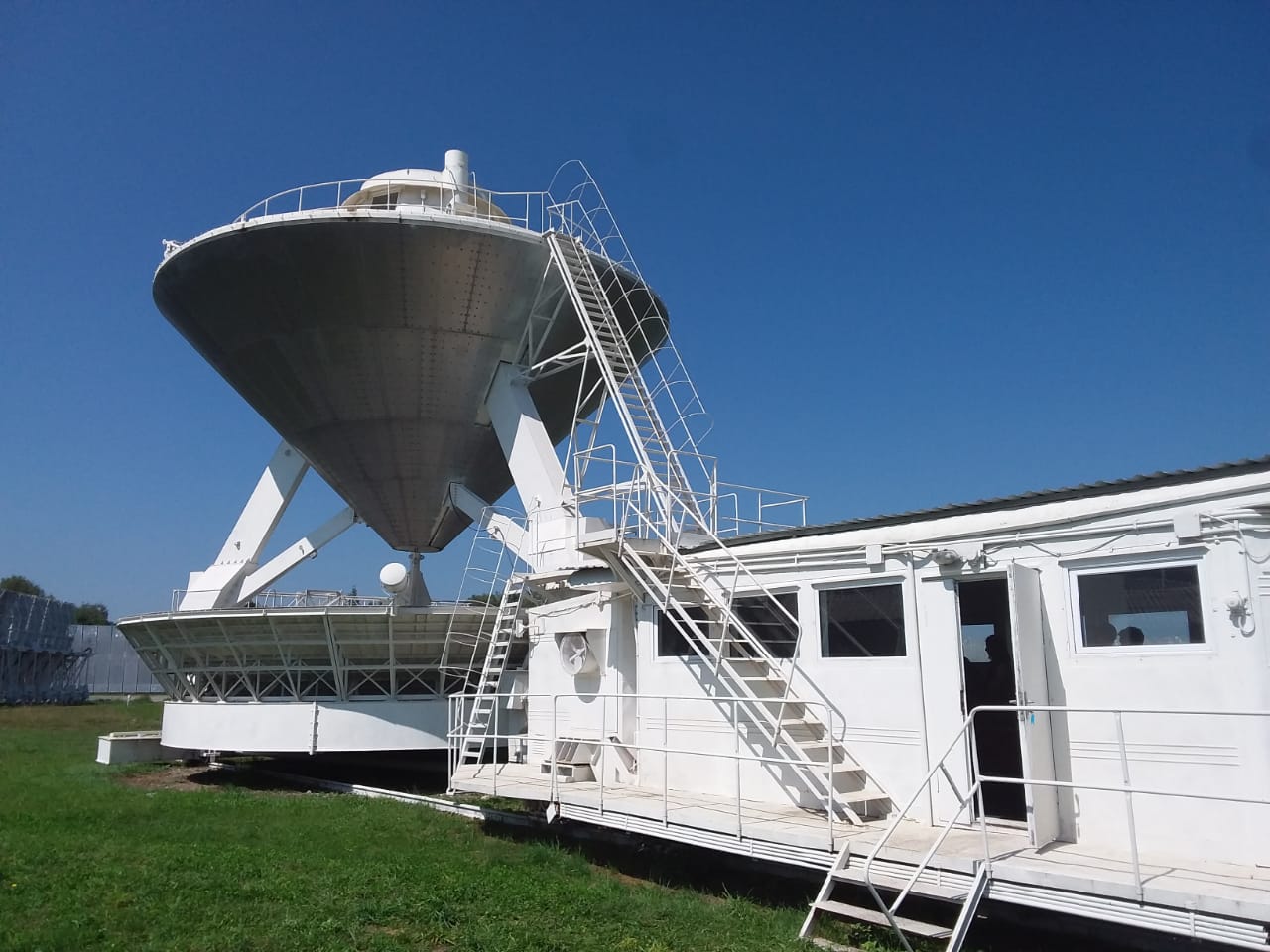
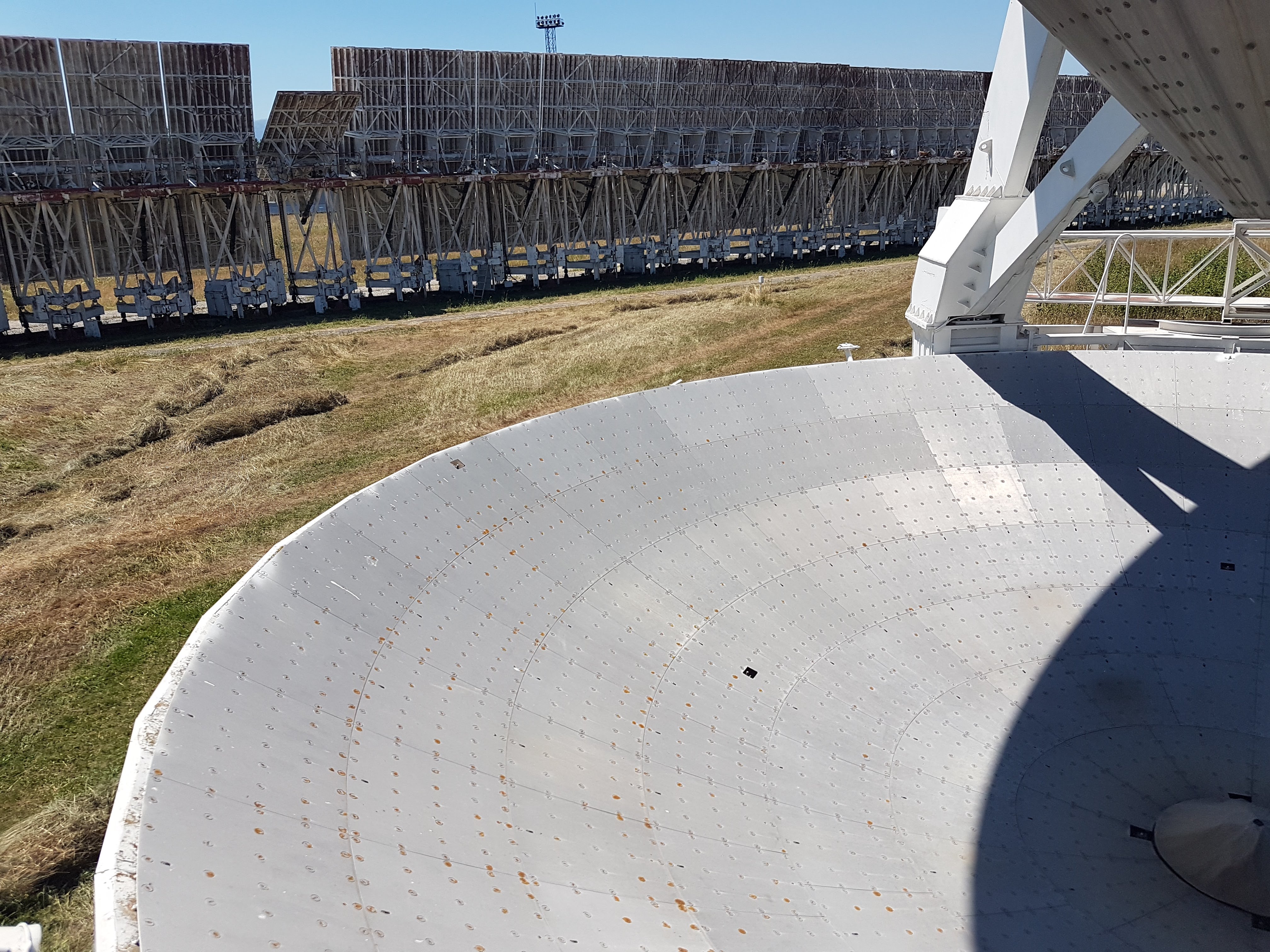


RATAN-600 (Radio Astronomy Telescope of the Academy of Sciences) is the world's largest radio telescope with a variable-profile ring antenna: the main reflector is about 600 metres across, 576 metres to be precise. It stands near the stanitsa of Zelenchukskaya in Karachay-Cherkessia, at an altitude of 970 metres above sea level, and belongs to the Special Astrophysical Observatory of the Russian Academy of Sciences (SAO RAS).
The ring antenna is made up of 895 flat reflecting panels, each 11.4 × 2 metres, with a combined reflecting area of about 12,000 m². This variable-profile design gives high brightness-temperature sensitivity and lets the telescope observe at several frequencies at once — 1.2, 2.3, 4.7, 8.2, 11.2 and 22.3 GHz — with an overall operating range of 0.8 to 50 cm. RATAN-600 is used for large-scale measurements of galactic and extragalactic radio sources and remains a shared-use instrument, with scientists from around the world working on it.
The idea of a variable-profile antenna belongs to Professor Semyon Khaikin and Doctor of Physical and Mathematical Sciences Naum Kaidanovsky. It was first tested at the Pulkovo Observatory, and that design served as the basis for building the larger RATAN-600.
The design brief was approved in 1965, construction began in the summer of 1968, the telescope made its first observation on 12 July 1974, and it was fully commissioned in December 1976.
Together with the RTF-32 radio telescope, located 4.5 km to the south, RATAN-600 forms the core of the region's radio astronomy infrastructure.
The telescope is located about 25 km from the settlement of Nizhny Arkhyz. The antenna can be visited on a SAO RAS guided tour; booking is required in advance, and the tour itself takes about an hour, showing visitors the antenna and the control room console while explaining the telescope's design and history.
No votes yet


No reviews yet. The first one helps the next travellers.