 Manor


Pskov Stud Farm Stele (Volyshovo)
6 km1.2k1

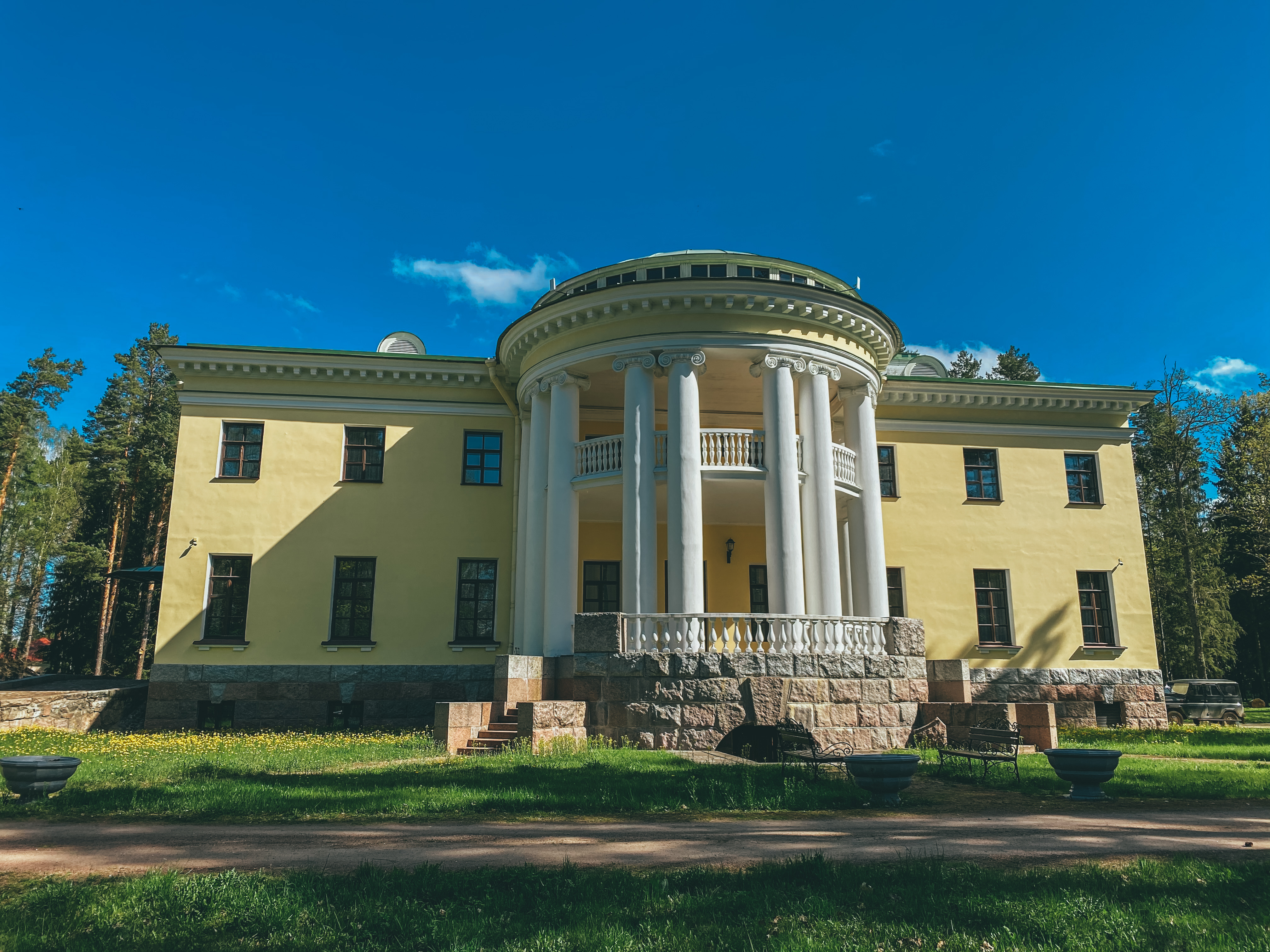
Kholomki is the estate of Prince Andrei Grigorievich Gagarin on the high right bank of the Shelon River in the Porkhov District of Pskov Oblast, about 15 km from the town of Porkhov. The house was built in 1912–1913 to a design by the architect Ivan Fomin. Today the Gagarin estate belongs to Peter the Great St. Petersburg Polytechnic University and serves as an educational and historical reserve. It is a cultural heritage site of federal significance.
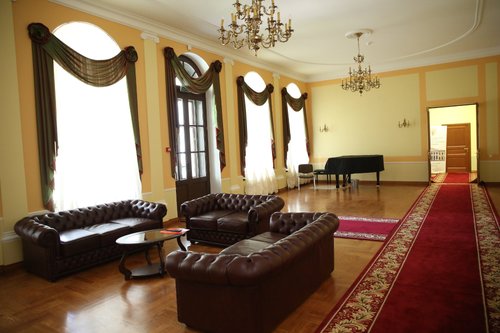
Prince Andrei Grigorievich Gagarin (1855–1920), a scientist, engineer and the first rector of the St. Petersburg Polytechnic Institute, bought about 104 hectares of land on the Shelon from N. I. Novosiltsev in 1911, part of the Belskoye Ustye estate. He commissioned the house from Ivan Aleksandrovich Fomin. The architect drew on the classical tradition of Quarenghi, Starov and Lvov: outside the house is neoclassical, with a columned portico, while the rooms were decorated in the Art Nouveau style. The house had a telephone and running water. Construction was finished in June 1914, and the Gagarin family moved in.
During the First World War the prince set up and maintained a 15-bed hospital on the estate. In 1918 the estate was nationalised. Andrei Gagarin died in December 1920 and is buried by the Church of the Ascension in the neighbouring village of Belskoye Ustye, two kilometres from Kholomki.
In 1920 Kholomki was handed over to the Petrograd House of Arts. In the summer of 1921 a whole colony of writers and artists settled here to escape the famine. Korney Chukovsky, Mstislav Dobuzhinsky, Yevgeny Zamyatin, Vladislav Khodasevich and Mikhail Zoshchenko stayed for long periods. Among the artists were also V. A. Milashevsky, G. S. Vereisky, N. E. Radlov with his wife E. Ya. Zander, and B. P. Popov. Osip Mandelstam and N. M. Volkovysky came for a few days. The Gagarin family, still living on the estate, organised themed evenings and home performances, and Kholomki became a notable cultural centre of the Porkhov district.
Later the house held a medical institution and the Kholomki children's sanatorium, and then, until 1987, a children's home for patients with lung diseases. According to accounts, the building survived the Second World War because German airmen were quartered in it. By the 1990s the estate had almost lost its original appearance.
In 2000 the estate was transferred to the Polytechnic University, which has been restoring the main house and outbuildings since 2004. The restored manor house was formally opened on 24 May 2013.
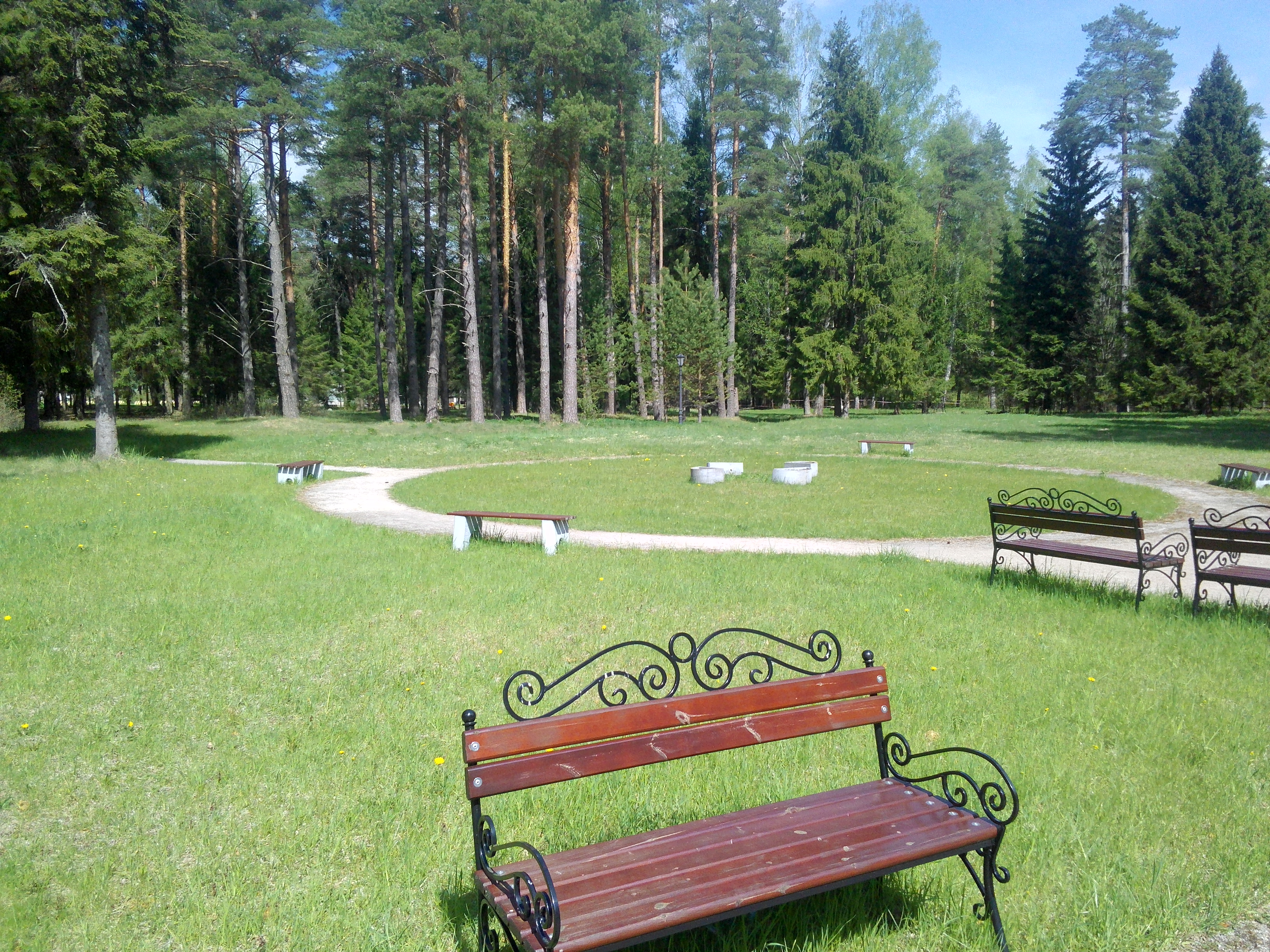
The main sight is the restored Fomin house and its tours: the reserve hosts themed excursions and interactive programmes, as well as the Kholomki local history readings and seminars. Around the house the landscape park survives, with lime alleys on the southern slope and an arboretum section with trees brought from Europe and the USA. The eastern part of the estate is covered by about 80 hectares of woodland. Modern buildings in the northern part noticeably alter the historic look of the estate.
It is easiest to come by car via Porkhov: Kholomki is about 15 km from the town and about 100 km from Pskov. From other regions, first travel to Pskov by train or bus. The trip combines well with the Nikandrov Monastery, the 15th-century stone fortress of Porkhov and the Stroganov estate at Volyshovo.
No votes yet


No reviews yet. The first one helps the next travellers.