

Monument to P. P. Bazhov
0.1 km1.7k1
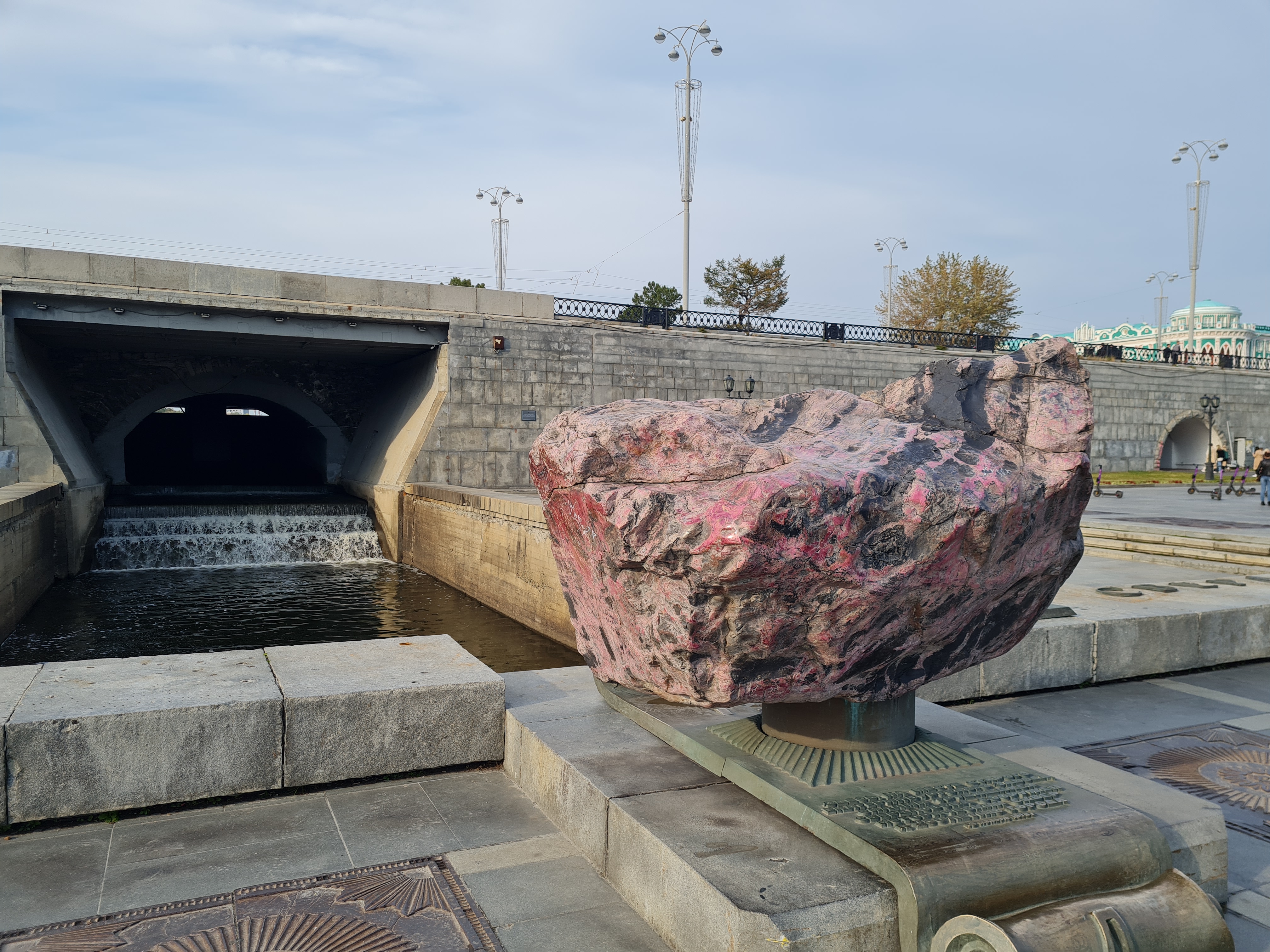
The Rhodonite on the Plotinka is a memorial stone in the Historical Square of Yekaterinburg, on Lenin Avenue by the city dam. A large block of pink Ural rhodonite marks the spot where the Yekaterinburg ironworks began operating in 1723, the plant from which the city grew. Locals call it the "stone of love".
The founding of Yekaterinburg is tied to Vasily Tatishchev and Wilhelm de Gennin. Tatishchev chose a site on the Iset River for a new state-owned plant, but obstacles from the Berg Collegium and his conflict with the Demidovs halted construction. De Gennin took over: in 1723 a dam and an ironworks were built on the Iset, and the settlement around them was named Yekaterinburg after Empress Catherine I.
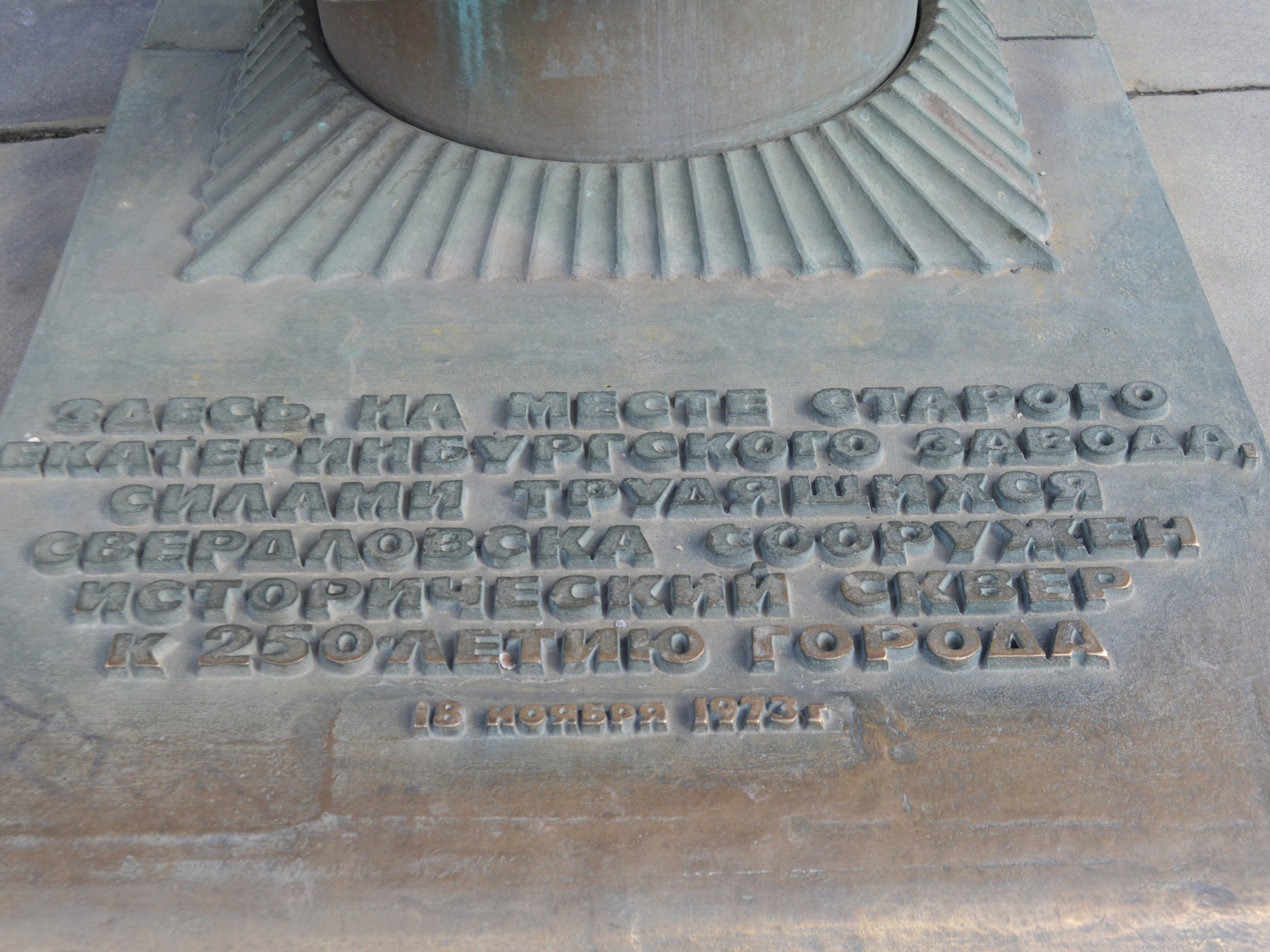
The factory buildings eventually disappeared, but the dam, known locally as the Plotinka, remained the heart of the city. For Yekaterinburg's 250th anniversary in 1973, the Historical Square was laid out on the site of the former plant. Around the same time, according to available accounts, a rhodonite block weighing several tonnes was placed here with an inscription commemorating the founding of the plant and the city.
Rhodonite is an ornamental stone the Urals are famous for. Manganese gives it its pink colour, while dark veins form patterns on the surface. The stone for the monument came from a Ural rhodonite deposit; the best known of them, Malosedelnikovskoye, lies not far from Yekaterinburg.
Because of its colour, rhodonite is nicknamed the "stone of love". A local belief holds that if a couple in love touches the stone, their marriage will be strong and happy. That is why newlyweds come to the rhodonite on the Plotinka after their wedding, and it is a popular place for dates and photo shoots.
The stone stands at the start of the dam, next to the spillway where water from the City Pond flows into the Iset. Around it are the other sights of the Historical Square: the old water tower, a time capsule, an open-air display of industrial machinery and the Museum of the History of Ural Architecture and Industrial Technology in former factory buildings. It is a good starting point for a walk along the pond embankments and through the city centre.
The Historical Square is in the very centre of Yekaterinburg, where Lenin Avenue meets Gorky Street, by the Plotinka. The nearest metro station is Ploshchad 1905 Goda, a few minutes' walk along Lenin Avenue. Tram and bus stops are close by.
No votes yet


No reviews yet. The first one helps the next travellers.