

Catherine II's Carriage (Kazan)
0.2 km1.3k1
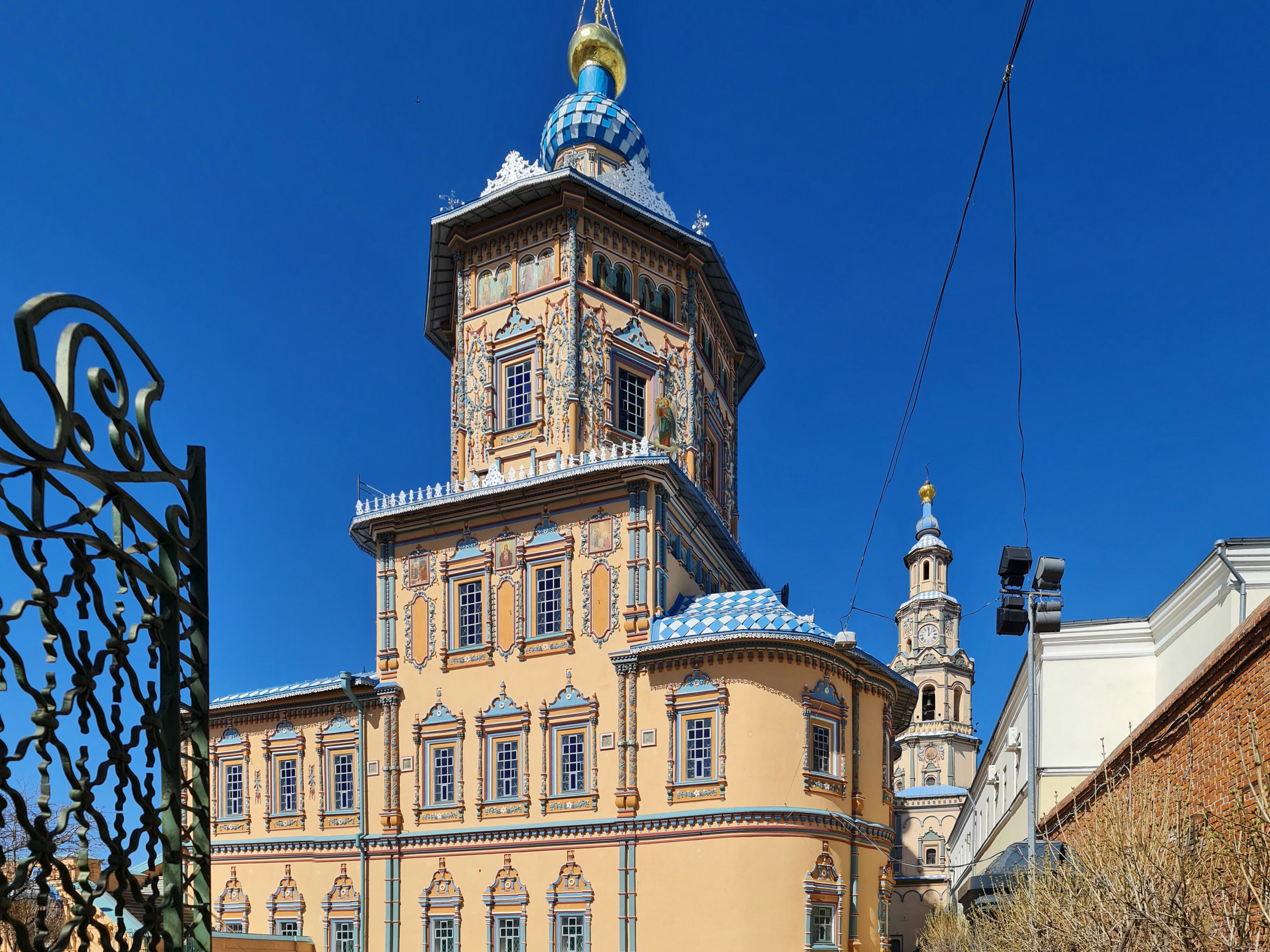

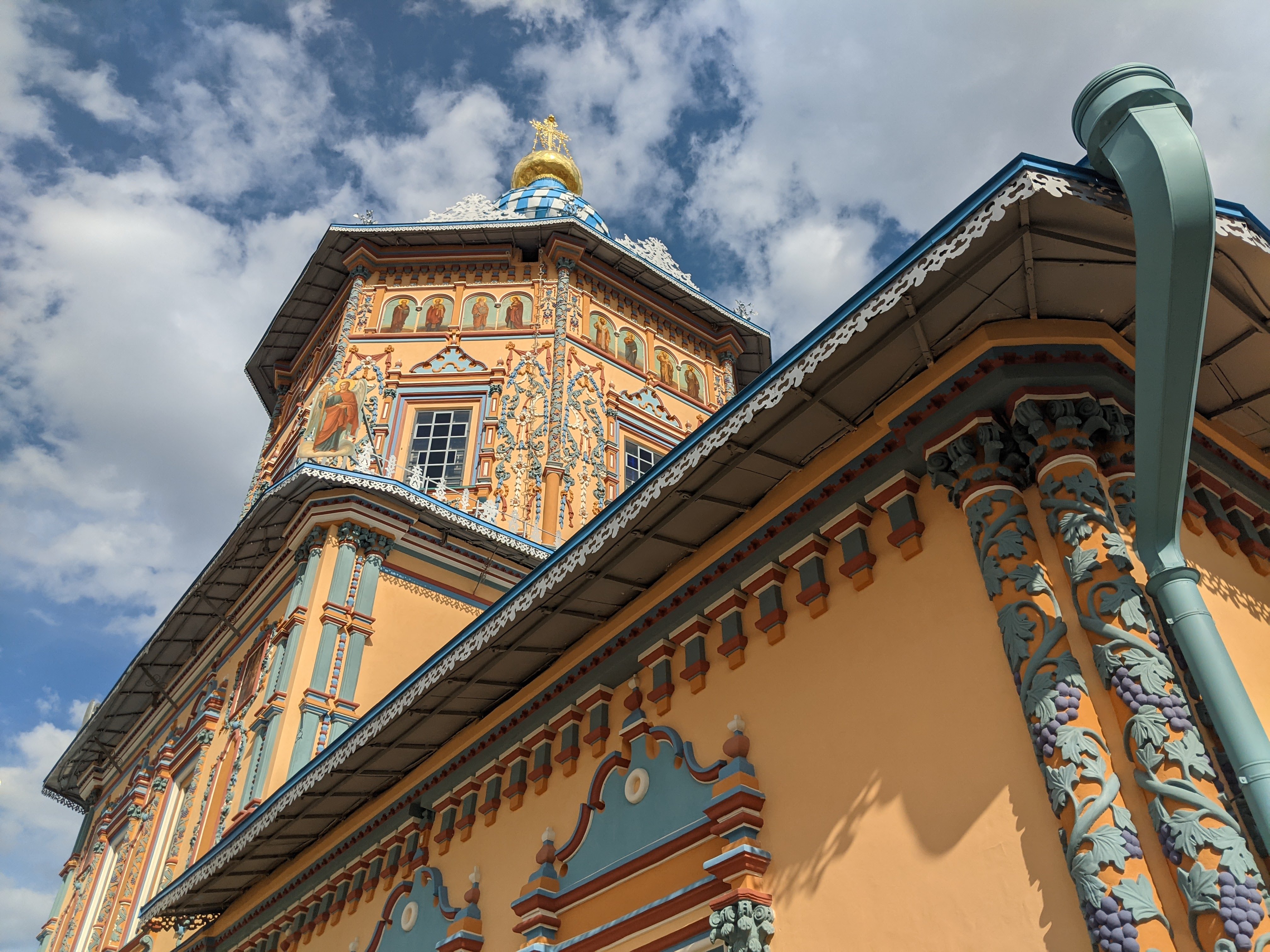
The Peter and Paul Cathedral in Kazan is an early 18th-century Orthodox church on Musa Jalil Street, in the historic centre of the city close to the Kremlin and Bauman Street. Built in 1723–1726 at the expense of the merchant Ivan Mikhlyaev, it is considered one of the finest examples of Russian Baroque in the Volga region and the main monument of Peter the Great's era in Tatarstan.
A wooden church of Saints Peter and Paul had stood on the site since the 16th century. In May 1722 Peter I, on his way to the Persian campaign, stayed in Kazan at the house of the merchant Ivan Afanasyevich Mikhlyaev. Grateful for the tsar's visit, the merchant decided to replace the wooden church with a stone cathedral dedicated to the apostles Peter and Paul. It was built between 1723 and 1726.
Over two centuries the cathedral survived several major fires, in 1742, 1749, 1774 (when Pugachev's troops took Kazan), 1815 and 1842, and was restored each time. In 1939 it was closed and turned into a Party archive; later it housed a planetarium. Services stopped for about fifty years: the cathedral was returned to the Church in the late 1980s, when the first restoration took place. Large-scale work on the foundations, facades and interiors has been under way since about 2016; by 2026 the lower church and the refectory of the upper church had been restored.
The ensemble consists of the two-storey cathedral, about 52 metres high, a bell tower standing apart in the courtyard, and the clergy house. With its open galleries and staircases on a hill, the cathedral looks different from every side. Its walls are covered in lavish moulding of vines, flowers and fruit, carved window frames and painted tiles on the gallery. This decoration earned it the nicknames "the gingerbread church" and "the hanging stone gardens of Kazan".
The highlight of the upper church is a gilded seven-tier iconostasis about 25 metres high, carved in deep Baroque relief. The lower church keeps Baroque wall paintings in grisaille.
The cathedral is an active church. It keeps the miracle-working Sedmiozernaya icon of the Mother of God, credited with saving Kazan from the plague of 1654–1655; it is brought out of the sanctuary for prayer services. The lower church holds the relics of Metropolitan Ephraim of Kazan, who crowned Tsar Michael Romanov in 1613, and there is also an icon with a relic of Saint Matrona of Moscow.
For a long time people in Kazan said that Peter I himself took part in laying the cathedral's foundation, but no document confirms it: construction began after he had left the city.
Address: 21 Musa Jalil Street, Kazan. The cathedral is about a 10-minute walk from Kremlyovskaya metro station and the Kremlin walls, down Musa Jalil Street, and about 20 minutes on foot from the railway station. The terrace in front of the upper church entrance looks out over the rooftops of old Kazan.
No votes yet


No reviews yet. The first one helps the next travellers.