


 Archeology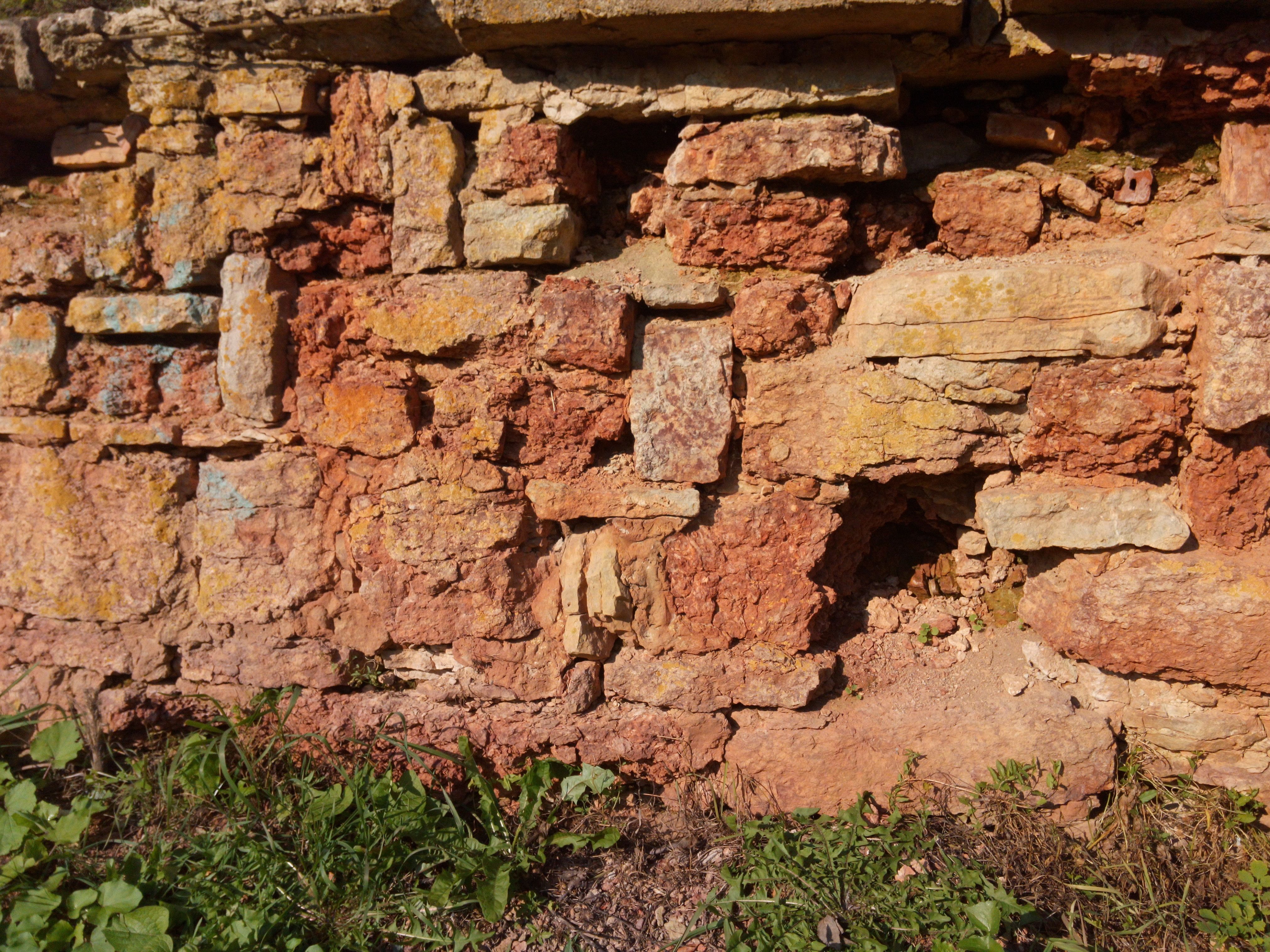
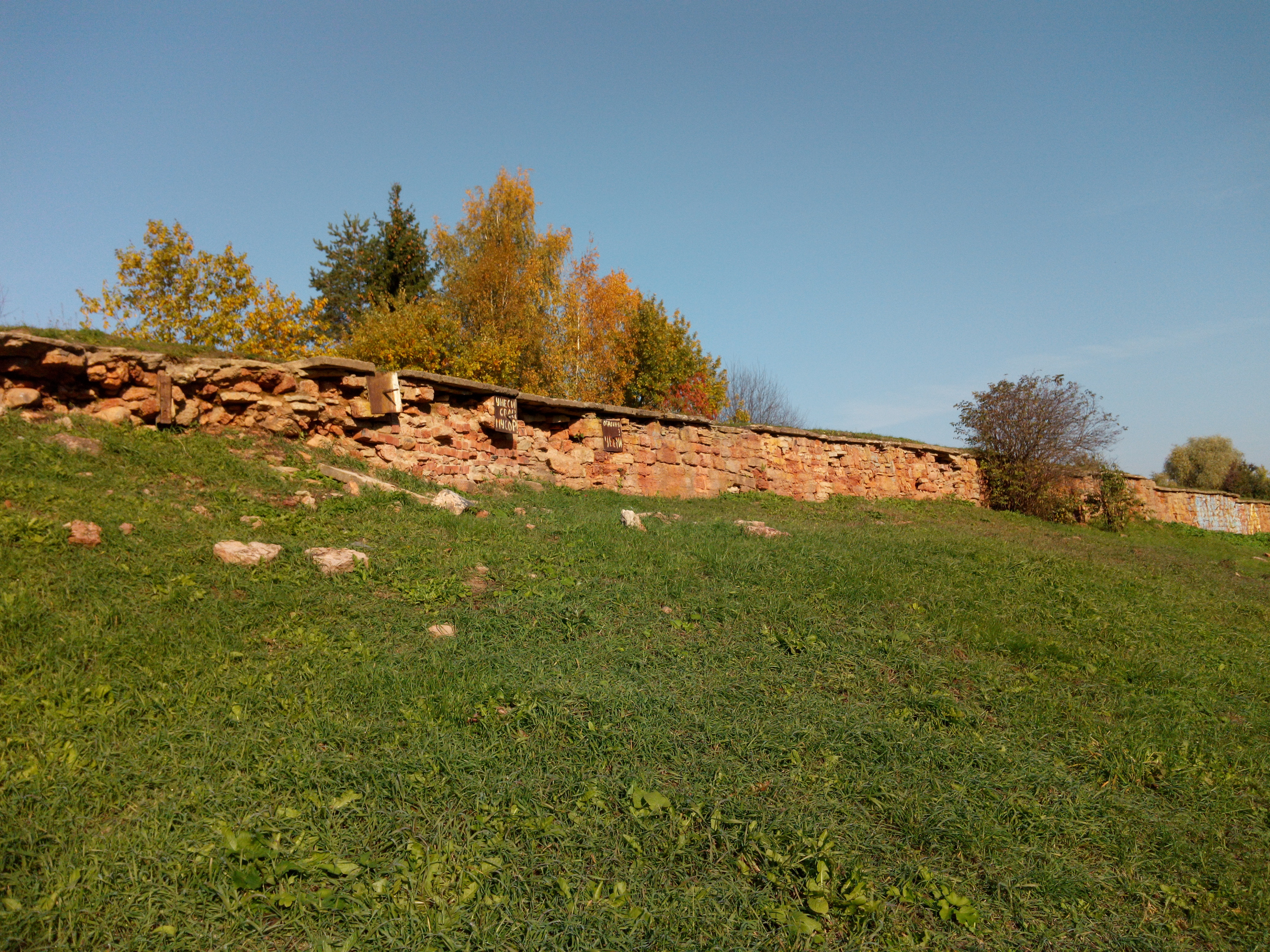
This stretch of stone masonry on Pankratova Street in Veliky Novgorod, Russia, is a surviving fragment of an ancient town defensive rampart, part of the medieval fortification system of Novgorod.
Novgorod was ringed by several lines of fortifications. The largest was the Okolny Gorod (Ostrog) line: it encircled the whole city on both banks of the Volkhov River — the Sofia Side and the Trade Side. Permanent fortifications of the settlement were built between 1372 and 1392: wealthier districts got stone walls, poorer ones earthen ramparts, and by 1391 stone gate towers stood at the start of the streets (source: Russian Wikipedia, "Okolny Gorod"). Today the earthen ramparts of the Okolny Gorod survive for up to 6 km, in places with exposed ancient stone masonry.
Inside the Okolny Gorod stood three more lines of fortifications. The Maly Zemlyanoy Gorod (Small Earthen City) was built in 1582-1583 by order of Ivan the Terrible, not far from the Detinets, with wooden walls and eight towers on an earthen rampart. The Detinets (the Novgorod Kremlin) had stone walls and towers and served as the seat of the city's power, and inside it stood the Vladychny Dvor, the residence of the archbishop, head of the Novgorod feudal republic.
By the late 17th and early 18th century the fortifications had lost their military importance, and in 1701 Peter I ordered all wooden walls and towers torn down. Only isolated remains of Peter's bastions survive in Novgorod today — the Nikolsky and Spassky bastions. Archaeologists have found masonry of similar technique — boulders and stone bound with lime mortar — at various points along the ramparts of medieval Novgorod: on Ilyina Street, for example, a long (up to 65 m) and tall (up to 3 m) stretch of wall survives, exposed by artillery shelling during World War II and named after the archaeologist who studied it, Alexander Mongait (sources: vnovgorode.ru, arheologija.ru).


