
Стоянка на берегу р.Бердь
5.0598.1 km1.9k

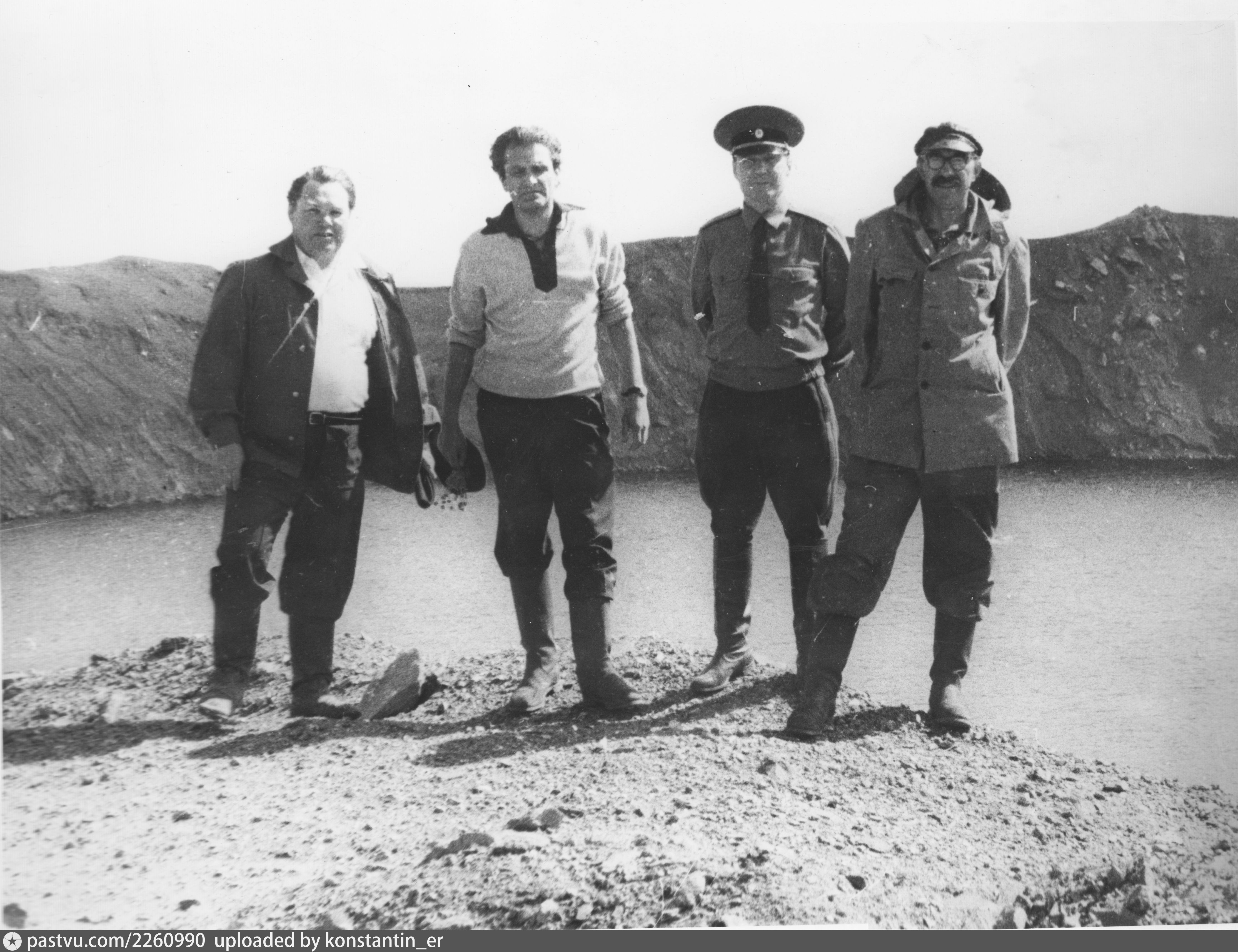
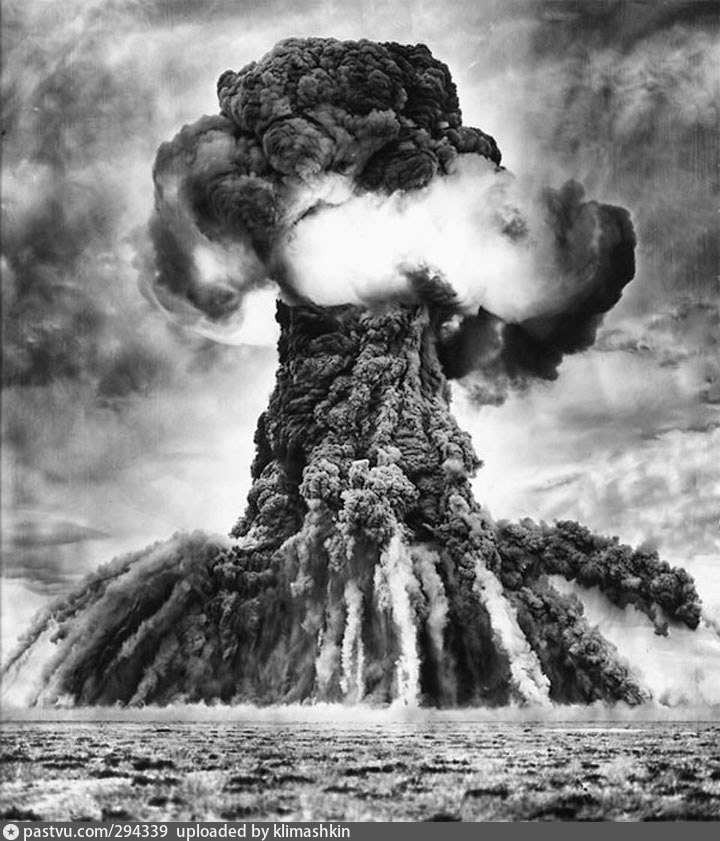


"Chagan" (also known as Test 1004) was the first Soviet industrial thermonuclear explosion, carried out on January 15, 1965, at the Semipalatinsk Test Site in Kazakhstan, at the Balapan site, about 100 km southwest of Semipalatinsk. The charge was detonated in a borehole about 700 mm in diameter, and the resulting crater later turned into an artificial reservoir known as Atomic Lake, or Lake Chagan.
The explosive device had a yield of 170 kilotons (for comparison, the Hiroshima bomb had a yield of about 20 kilotons). The device was a container 86 centimeters in diameter and 3 meters long, placed in borehole No. 1004 at a depth of 178 meters.
At 05:59:59 GMT on January 15, 1965, the charge was detonated. 2.5 seconds after detonation, a cloud of superheated gases began to form, rising to a height of 4,800 meters within 5 minutes. The blast threw 10.3 million tons of soil to a height of 950 meters, forming a crater 430 meters in diameter and about 100 meters deep, surrounded by an earthen rim up to 35 meters high. Rock fragments weighing thousands of tons, along with soil, blocked the course of the Chagan River.
According to available data, the cloud from the explosion covered the territory of 11 settlements with a population of about 2,000 people. The calculated thyroid radiation doses for residents of the most contaminated areas over the first year and a half after the explosion exceeded 14 rem (against a permissible limit of 0.5 rem per year, or 5 rem over 50 years).
The gamma radiation level in the ejecta around the crater reached 30 roentgens per hour by the end of the first day after the explosion, falling to 1 roentgen per hour after 10 days. At the bottom of the crater, the contamination level measured on March 26, 1965, ranged from 150 to 400 milliroentgens per hour — almost half that at the edges of the crater, where most of the radioactive explosion products were concentrated.
In spring 1965, the course of the Chagan River was connected to the crater by a channel built using conventional chemical explosives and earth-moving equipment. 182 people worked in the contaminated zone, though some sources suggest there were around 300 workers. The Deputy Minister of Health of the USSR set a planned emergency dose for them of 30 roentgens (against a norm of 5 roentgens per year).
According to official data, of the 182 workers, 121 received a dose of up to 3 roentgens, 37 received 3 to 5 roentgens, and 24 received 5 to 9 roentgens. It is believed that no worker received a dose above 9 roentgens. According to published recollections, nearly all participants in the work suffered from chronic illnesses afterward.
Lake Chagan (also known as Atom Kol, or Atomic Lake) consists of two basins. The outer one, with an area of about 3.5 square kilometers and a volume of about 10 million cubic meters, is part of the Chagan riverbed and is connected by a narrow channel to the inner basin — the crater itself, with a glassy bottom, covering about 0.14 square kilometers and holding about 7 million cubic meters of water. In 1966, a rock-and-earth dam with spillway structures was built into the earthen rim.
From 1965 to 1974, an experimental station operated at the lake: fish, mollusks and amphibians were introduced into the water to study the effects of radiation on living organisms; the station closed in 1974 (according to zakon.kz and courses.bowdoin.edu).
The radiation background around the lake and its surrounding rim remains elevated to this day — experts advise against swimming or fishing in the lake (zakon.kz).
There are no official tours to the site: attempts to organize tours have been made, but they never went beyond promotional brochures — the trip is expensive, and no one wants to take responsibility for visitors' health. The site is poorly guarded or not guarded at all, so it is sometimes visited independently, but approaching the lake and crater without a dosimeter, respirator and protective suit is unsafe (caravan.kz).


No reviews yet. The first one helps the next travellers.