

Покорителям космоса
2.03.9 km3.3k1
Sokolniki Park (Sokolniki) is one of Moscow's largest and oldest parks, covering over 500 hectares in the northeast of the city, between Rusakovskaya Street and Sokolnichesky Val. The main entrance faces the metro station of the same name, a few minutes' walk from the exit. Most of the territory is natural forest — lindens, birches and pines that have survived since the time when Moscow's princes and tsars hunted here.
From the 14th-15th centuries the site was covered by dense forest that served as hunting grounds for the Moscow princes. Falconry was practised here, which gave the place its name: "sokolniki" were the people who bred and trained hunting falcons. Under Tsar Alexei Mikhailovich a Falcon Court was kept in this area, holding tens of thousands of birds of prey. By the end of the 17th century the forest was divided into three groves — Alekseyevskaya, Olenya and Sokolnicheskaya.
In the 18th century Sokolniki became a recreation spot for Muscovites: dachas and estates of the nobility were built around the groves. In 1878 Sokolnicheskaya Grove officially became a city public park, bought out by the city for 300,000 rubles. The territory received the status of a park of culture and leisure on 23 May 1931, and was formally opened to visitors on 16 May the same year.
In 1956 the Sokolniki Sports Palace opened in the park, becoming the training base for Spartak's hockey and figure-skating teams, and in 1980 it served as a venue of the Moscow Olympics, hosting the handball tournament. For the 1957 World Festival of Youth and Students, the park laid out its Great Rosarium and built new pavilions. Two years later the American National Exhibition opened here, during which Nikita Khrushchev and US Vice President Richard Nixon held their famous "Kitchen Debate".
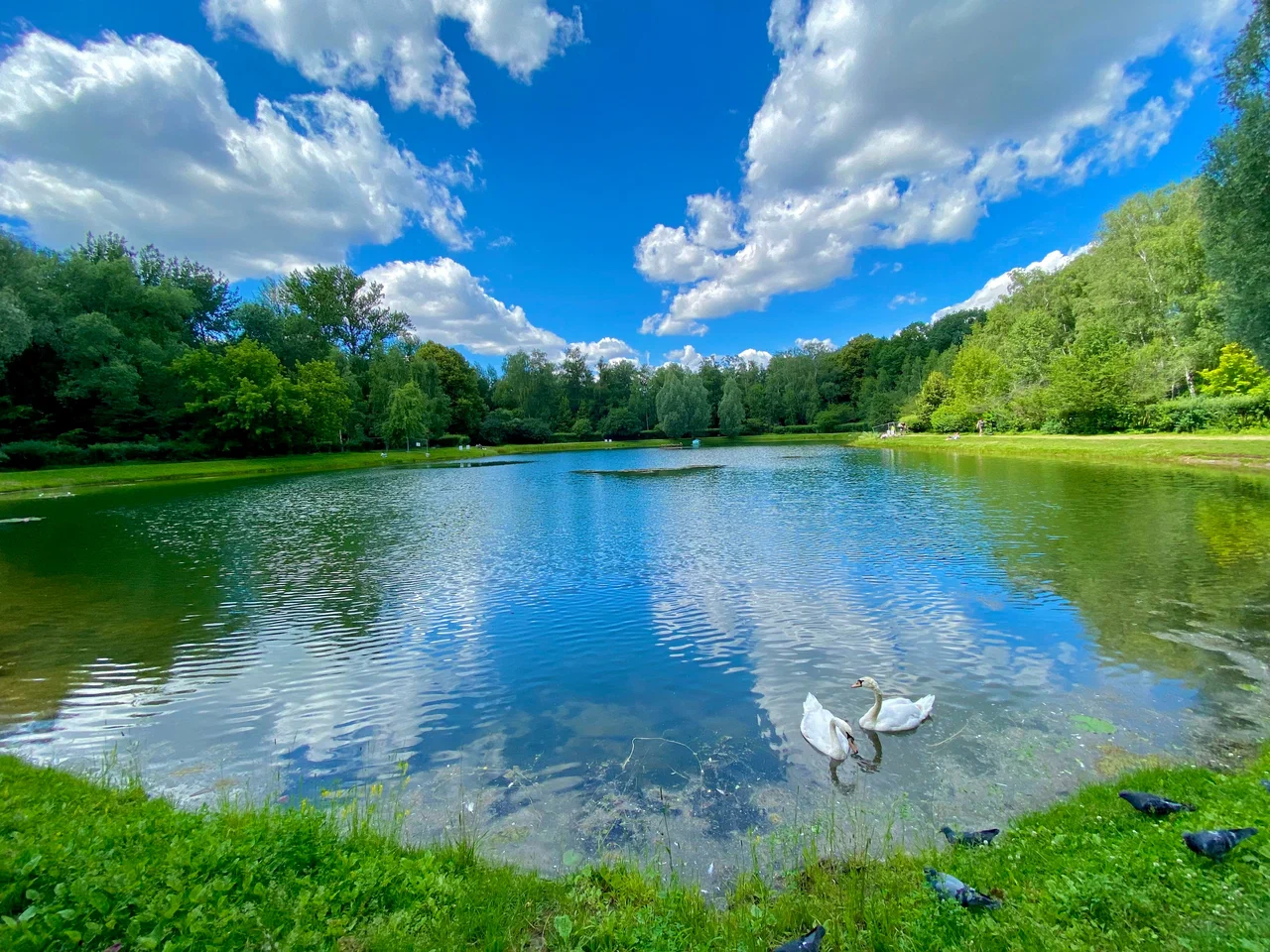
The park has 13 bodies of water. The Putyaevsky ponds form a cascade of six ponds in the northeastern part of the territory; the lowest one is of natural origin, the rest were dug artificially. There is also a cascade of five Olenyi (Deer) ponds and separate Sobachy (Dog) and Zolotoy (Golden) ponds. The Upper Putyaevsky pond has a beach and a wakeboard park in summer, while an ice rink is flooded around the ponds in winter.
The Great Rosarium, opened in 1957 on the site of an old nursery, is divided into several themed gardens: a fragrance garden with roses, lavender and thyme, a golden garden with tulips and helenium, a blue garden with irises and delphiniums, a red garden with poppies and bee balm, a phlox garden, a shade garden and a spirea garden. Nearby is an ornitharium that houses and treats parrots, ravens and golden eagles, as well as a husky park with about two dozen sled dogs.
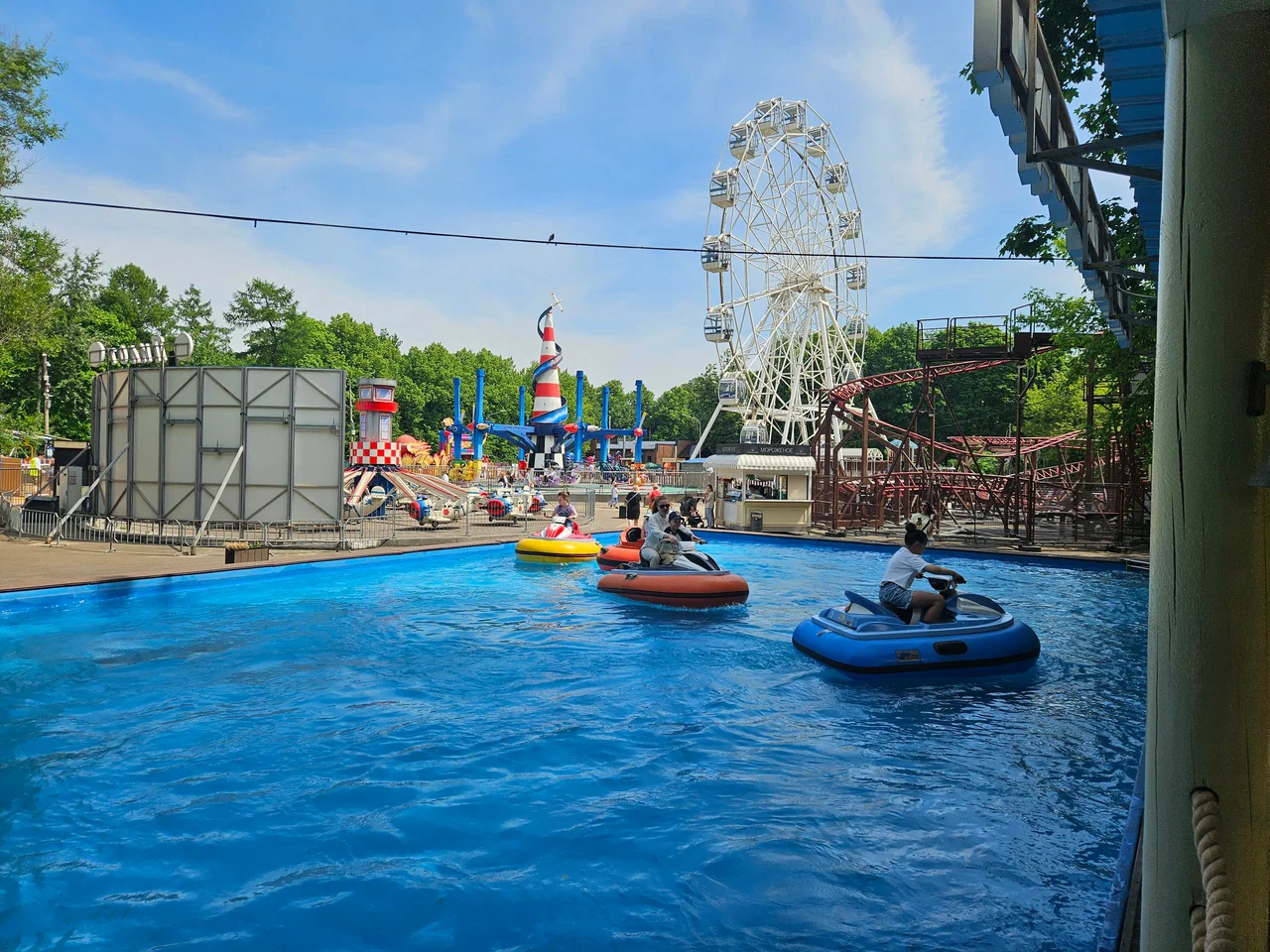
Among the surviving structures is the 17th-century Spasskaya Tower, once a watchtower. The park also has a Museum of Time and Clocks, an exhibition complex with a congress hall, the "Bukvodom" library, a summer cinema and a 35-metre Ferris wheel among roughly two dozen other attractions.
The main entrance is a few minutes' walk from Sokolniki metro station on the Sokolnicheskaya line — one of the first stations of the Moscow Metro — with a station of the same name on the Bolshaya Koltsevaya (Big Circle) line nearby. Since August 2024 the metro has an above-ground transfer to Mitkovo station of the Moscow Central Diameters. Buses No. 40, 75, 78, 140, 265, 716 and 975 and trams No. 4, 25 and 50 also run to the park. The park is open around the clock.
No votes yet


No reviews yet. The first one helps the next travellers.