 Archeology


Sunduki Ridge
3.1 km5
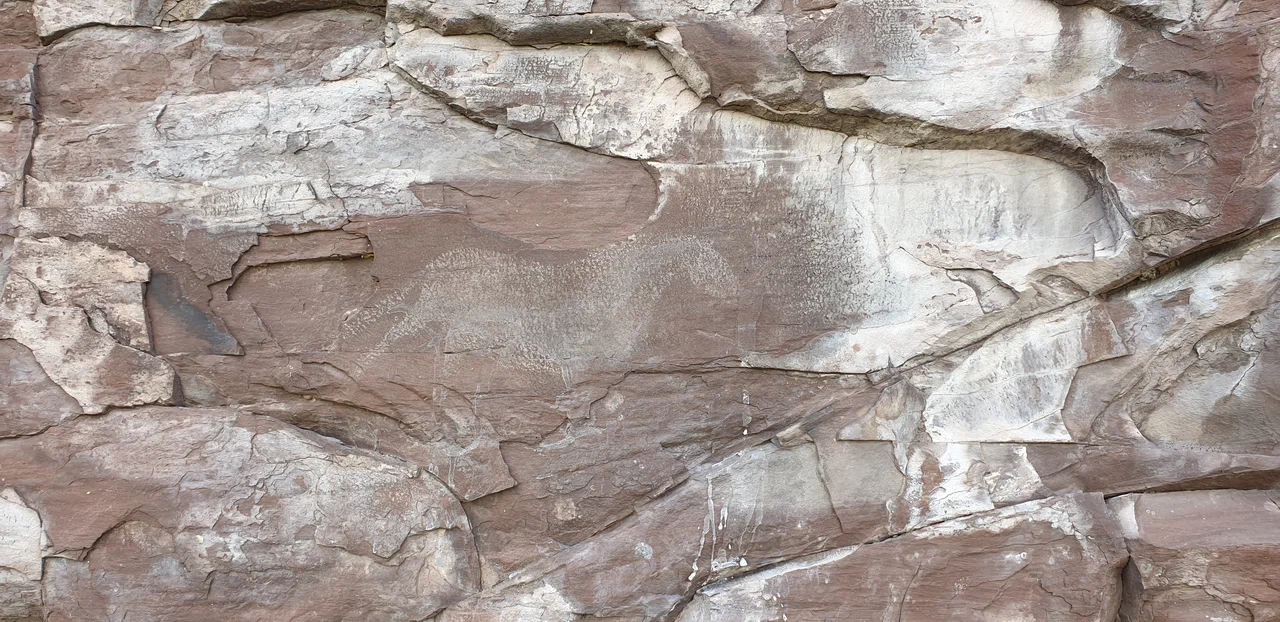
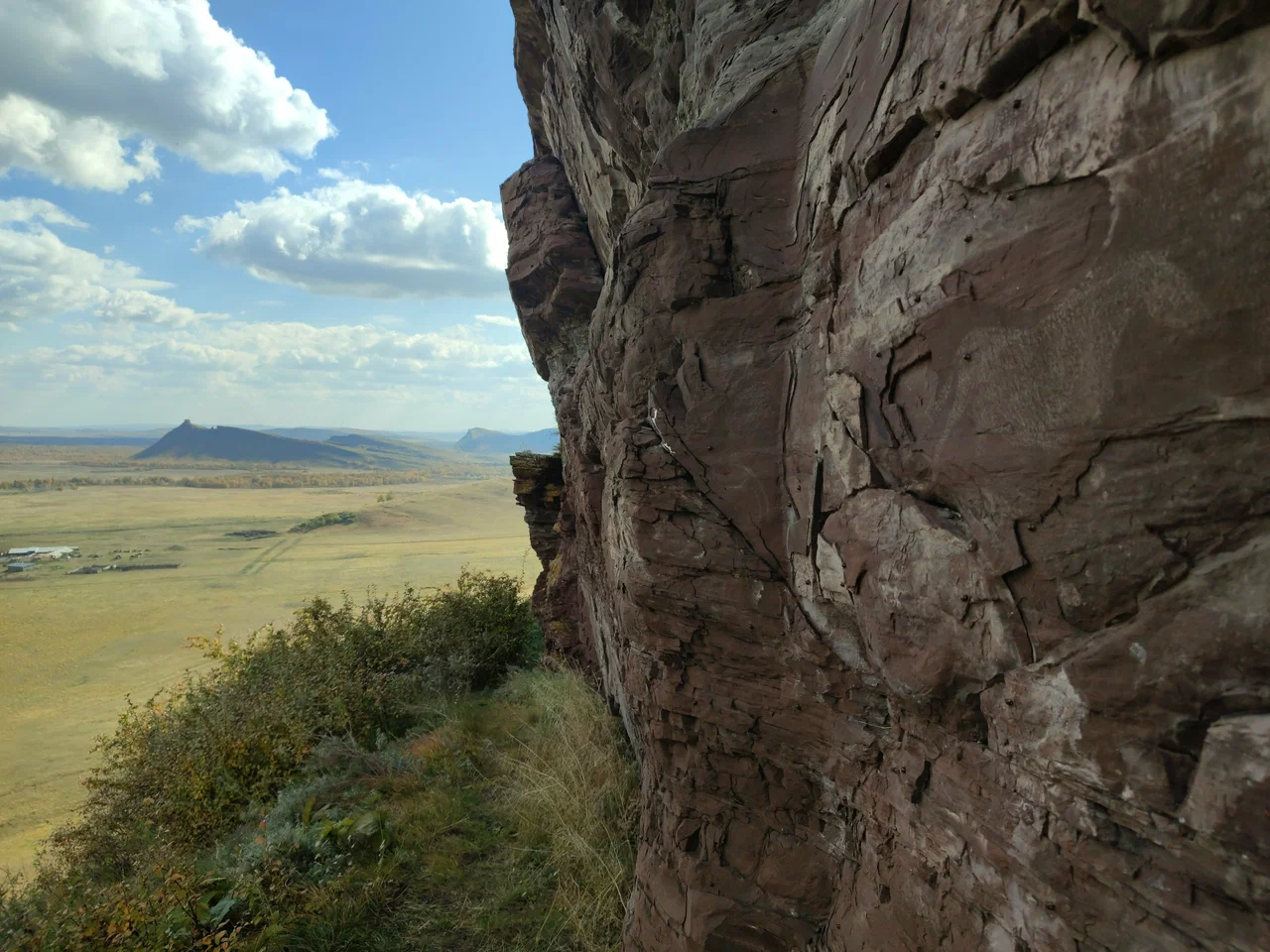
The White Horse petroglyph (Belaya Loshad) is a rock carving of a galloping horse on Mount Karatag, in the Ordzhonikidzevsky district of the Republic of Khakassia, a few kilometers from the Sunduki tract. The mountain's name comes from Khakas and translates as "black mountain," while the carving got its own name from the white color of the rock surface at the spot where the figure is drawn.
The image of the horse is carved into a rock ledge on the mountain's southeastern slope. The white color of the lines is not paint but a natural mineral deposit — calcite that has surfaced on the stone at this exact spot. Sources disagree on the exact height of the ledge with the drawing above the base of the slope, giving figures ranging from about a meter and a half to several dozen meters.
Researchers date the petroglyph to the Upper Paleolithic, estimating its age at roughly 14,000 to 16,000 years. The site lies right next to the Sunduki archaeological complex, one of the best-known and most studied locations of ancient rock art and archaeology in Khakassia.
Mount Karatag is tied to a Khakas legend about the love between a girl named Oye and a young man named Kulumyse. According to local tradition, the galloping horse on the rock recalls this story, although the sources do not draw a direct link between the legend and the creation of the carving itself. Today the petroglyph is listed in local guides to the antiquities of Khakassia as one of the notable monuments of the region's rock art.
The petroglyph is within walking distance of the Sunduki tract, in the Ordzhonikidzevsky district of Khakassia. The hiking route to the carving starts at coordinates 54.680099 N, 89.692597 E and runs for about 4.5 km up the slope of Mount Karatag. Most visitors combine the walk with a visit to Sunduki itself: they first tour the archaeological complex, then climb or skirt Mount Karatag to find the rock with the horse.
The petroglyph sits in the open, with no fence or signposts, so it is easier to find with an experienced guide or a clear route description from the Sunduki tract. The carved surface is fragile: the mineral deposit that gives the drawing its white color can be damaged by touch, so visitors should avoid touching the rock.
No votes yet


No reviews yet. The first one helps the next travellers.