

Pionerskaya station (Orenburg Children's Railway)
0.2 km1.7k3
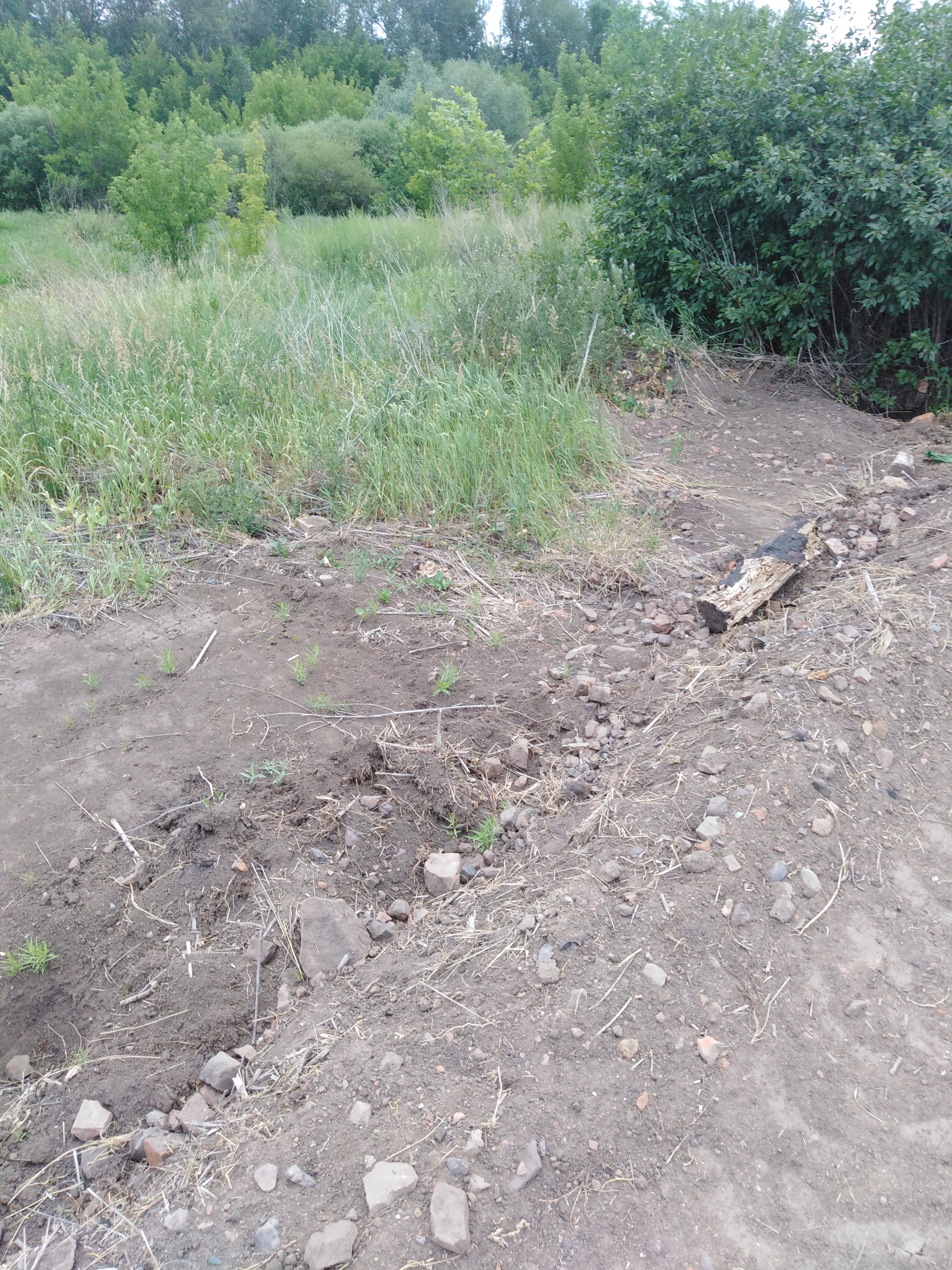


The remains of the Orenburg Fortress baths are a small archaeological site in Orenburg, Orenburg Oblast, Russia. In the 18th century bathhouses used by the garrison and townspeople stood here, next to the fortress defences; today all that is left are grassy mounds, broken bricks and building debris beside a shallow, swampy lake.
The Orenburg Fortress was founded on its present site in 1743 as a stronghold on the south-eastern frontier of the Russian Empire, near the point where the Sakmara flows into the Ural. The town was enclosed by an earthen rampart with bastions, giving the defences the shape of a many-pointed star. Soldiers, Cossacks, merchants and craftsmen lived inside and around it.
In a settlement like this the bathhouse was part of everyday life and more than a place to wash: people went there to treat ailments, to rest and to meet, and it was one of the few places for company and leisure. For a garrison on the edge of the steppe the baths also mattered in practical terms, helping to keep people healthy and the fortress ready to fight.
By 1862 the frontier had moved far to the south and east, and Orenburg lost its status as a fortress. The ramparts and bastions were levelled and the town spread beyond its old limits. Along with the defences, the service buildings around them fell into decay, the baths among them; their ruins gradually sank into the ground and became overgrown.
The baths themselves have not survived, but the site can still be read in the landscape. Low mounds in the grass mark the former buildings, and bricks and pieces of old masonry turn up in the soil. Next to them lies a shrinking lake that is slowly turning into a marsh; together with the mounds it helps to picture this corner of fortress-era Orenburg more than two hundred years ago.
Part of the former bathhouse grounds has already been built over with stables, an equestrian club and a power station. That makes the remaining patches all the more valuable: they are one of the few traces of everyday life in the Orenburg Fortress rather than of its walls and churches.
No detailed published information on how the baths were built could be found. Archaeological research could tell much more about the daily life and customs of 18th-century Orenburg. If you come across old bricks or pottery shards, leave them where they lie: they are part of the site. The equestrian club and the power station occupy the land nearby, so keep to open ground and stay out of fenced areas.


No reviews yet. The first one helps the next travellers.